With over 160 adventure companies in Moab and most promising "the experience of a lifetime," how do you cut through the marketing noise? Here's what actually matters when picking a tour company, including insider details most operators won't tell you upfront.
The Geographic Reality No One Talks About
Here's something crucial: 80% of Moab's visitors arrive via I-70 and hit town from the north. This means the first tour companies you'll see, Area BFE, various Jeep and Hummer rentals, get customers simply by being there.
But location convenience rarely equals quality experience.
The best operators might be a mile further south (Moab is only 7 square miles total), but that extra 5-minute drive often means:
- Newer equipment that isn't beaten up by impulse renters
- Lower prices due to reduced overhead
- More personalized service since they work harder for bookings
- Faster trail access to popular areas like Hell's Revenge and Sand Flats
The Paper Map Problem (And Why It Matters)
Most Moab tour companies hand you a photocopied paper map that's been duplicated a thousand times—you can barely read the trail names, let alone navigate safely.
The Old Way:
- Blurry paper map with zero context
- "Good luck, see you at 5 PM"
- No indication of danger zones or skill requirements
- Tourists regularly get stuck in areas beyond their ability
What to Look For:
- Pre-loaded GPS units with curated routes
- Trail-specific guidance based on your experience level
- Marked photo opportunities and lunch spots
- Clear warnings about no-go zones (crucial in Moab where even capable vehicles can get trapped)
The Truth About Moab's Vehicles
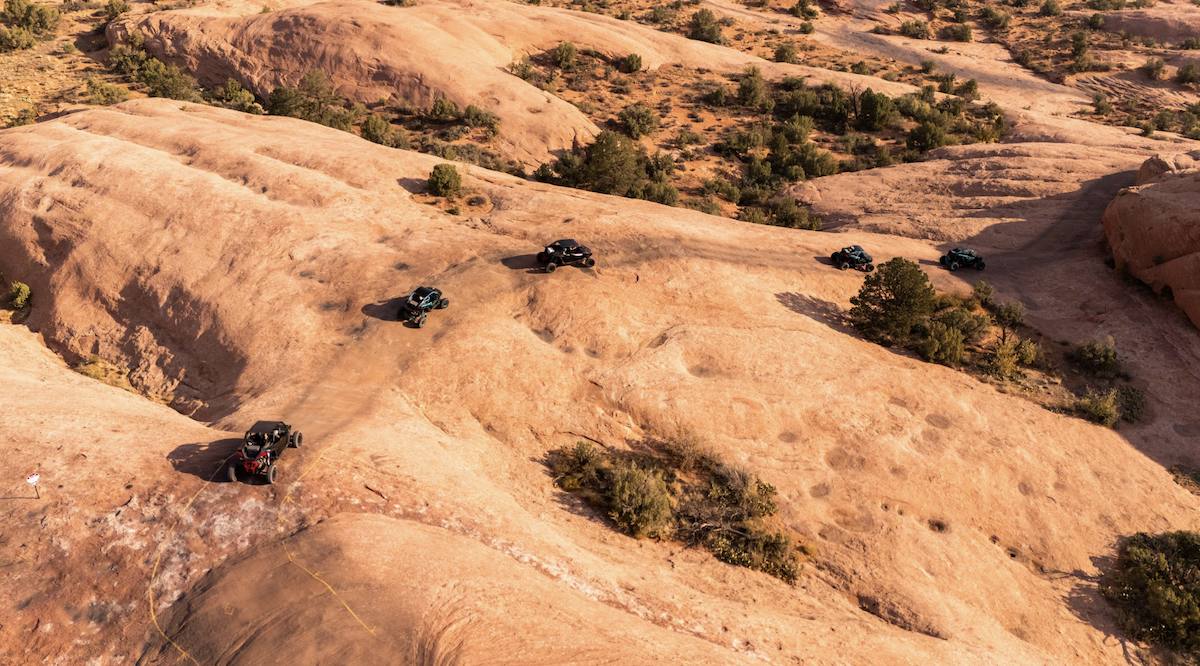
The Polaris Preference
While Can-Am makes solid machines, Polaris RZR Pro-R models are specifically better for Moab because they're naturally aspirated, meaning better performance at elevation without the turbo lag that affects other brands on technical climbs.
What "Climate-Controlled" Actually Means
Only one company in Moab (Epic 4x4 Adventures) currently offers fully enclosed, climate-controlled UTVs. This isn't just about comfort:
- Summer reality: It's not uncommon to see tourists suffering from heat exhaustion by noon
- Dust storms: Moab's afternoon winds can create zero-visibility conditions
- Multi-generational groups: Grandparents can actually enjoy the ride instead of enduring it
The 6-Point Harness Difference
Most operators use standard lap-and-shoulder seatbelts.
Companies with 6-point harnesses offer:
- Better weight distribution during extreme angles
- Reduced fatigue on technical sections
- Confidence to tackle more challenging obstacles
- Professional racing-level safety
Hell's Revenge: What Tour Companies Don't Tell You
Hell's Revenge is Moab's most famous trail, but here's what matters:
Morning vs. Sunset Tours:
- Morning: Cooler temps, better traction on slickrock, less crowded
- Sunset: Dramatic photography, but busier and hotter climb up
The Real Obstacles:
- Hell's Gate: Despite the scary name, it's optional. Good guides know the bypass
- Mickey's Hot Tub: Looks terrifying in photos but is actually smoother than many other sections
- Tip-Over Challenge: The one spot where poor guiding can actually flip vehicles
Speed Reality: You'll average 7-20 mph. It's technical rock crawling, not sand dune racing.
Insurance: The Hidden Cost Bomb
Here's what most tourists discover too late:
Industry Standard:
- You must provide proof of auto insurance
- Damage liability: You're on the hook for up to $5,000
- Your auto insurance likely doesn't cover off-road rentals
- Additional insurance adds $50-100/day
What Premium Operators Include:
- Damage liability capped at $1,500-3,000
- Medical coverage including helicopter evacuation
- No proof of insurance required
- Often cheaper total cost despite higher base price
Booking Insights That Save Money and Hassle
The Rental vs. Tour Economics
- Rentals: 2:1 preference over tours industry-wide
- Hidden math: Guided tours often cost less per person than rentals when you factor in insurance, gas, and recovery fees
- Age trap: Most require 25+ for rentals but only 16+ for guided tours
Peak Season Realities
- Easter Jeep Safari week: Book 90+ days out or pay triple
- March-May: Perfect weather but 30-40% higher prices
- August secret: Prices drop but only climate-controlled vehicles are bearable
- November-February: 50% discounts, empty trails, spectacular snow-capped views
Group Size Sweet Spots
- 4 vehicles max: Maintains trail flow and guide attention
- 2 couples: Often triggers group discounts
- 5+ people: Single vehicle tours become very economical
Red Flags: When to Walk Away
Company Warning Signs:
- Can't specify guide training beyond "experienced"
- Vague about insurance coverage
- Fleet photos showing different vehicles than inventory
- No response about vehicle age or maintenance
- Pushing ONLY their easiest/most expensive tours
The "Biggest/Oldest/Original" Claims
Every second Moab tour company claims to be the "original" or "largest." What matters:
- Current fleet quality, not historical claims
- Recent reviews (last 6 months), not cumulative ratings
- Specific trail expertise, not years in business
The Unspoken Hierarchy of Moab Experiences
Budget Reality Check:
Under $100/person: Basic transportation, minimal guidance $100-150/person: Standard tours with decent equipment $150-250/person: Premium experiences with superior vehicles and expert guides $250+/person: Private tours or specialty adventures
The jump in quality between tiers is significant—this isn't where you want to bargain hunt.
Questions That Reveal Everything
Skip the basic questions. Here's what to actually ask:
- "What percentage of your fleet is less than one year old?" (Should be 50%+)
- "How many hours of trail time versus transportation?" (Look for 80%+ on trails)
- "What happens if someone in our group can't handle the trail difficulty?" (Good companies have contingency plans)
- "Do your guides get paid hourly or receive tips?" (Tip-based often means better service)
- "What's your actual cancellation rate due to weather?" (Under 5% shows they run tours in various conditions)
The Bottom Line: Value Indicators That Matter
Worth Paying Extra For:
- Climate control in summer/winter
- 6-point harnesses on technical trails
- Guides who can name specific rock formations and their age
- Pre-loaded GPS with multiple route options
- Inclusive insurance under $2,000 liability
Not Worth Premium Pricing:
- Claims of being "original" or "largest"
- Basic transportation to trailheads
- Paper maps and "follow the leader" touring
- Standard seatbelts on extreme trails
- Requiring your personal auto insurance
Final Insider Tip
The best Moab tour companies are booked by researchers 30-60 days in advance. The leftovers available last-minute are usually leftovers for a reason. If you're reading this article, you're already the type who values quality over convenience; book accordingly.
Ready to experience Moab's backcountry the right way? Skip the tourist traps near the highway and find an operator who's invested in your experience, not just their location.