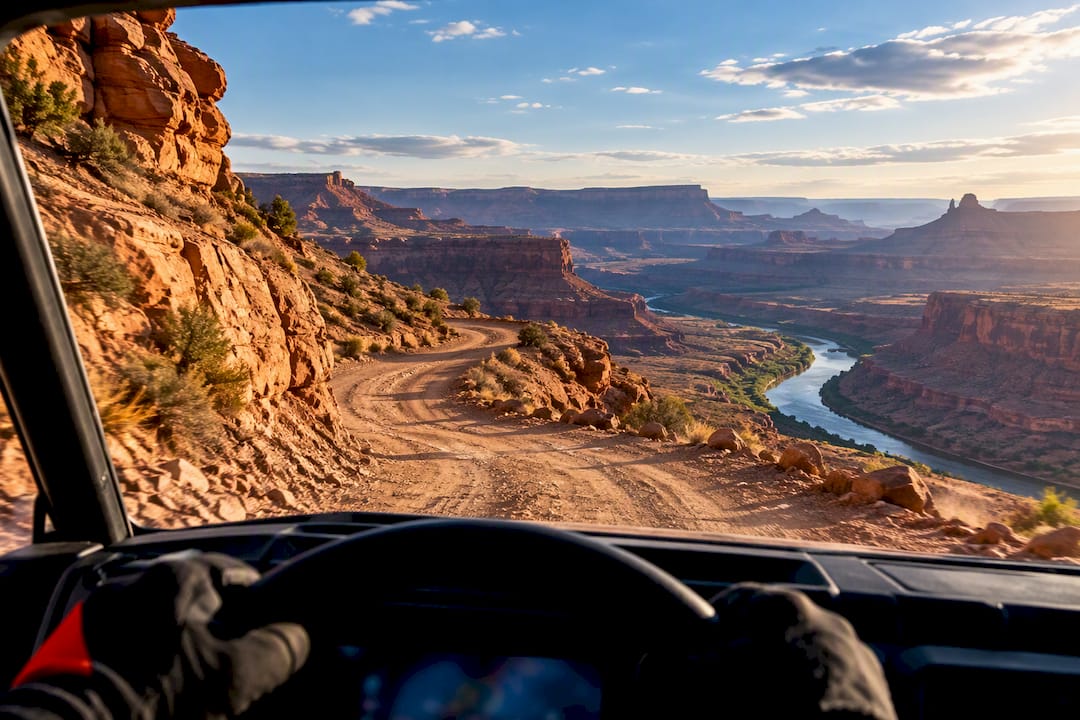
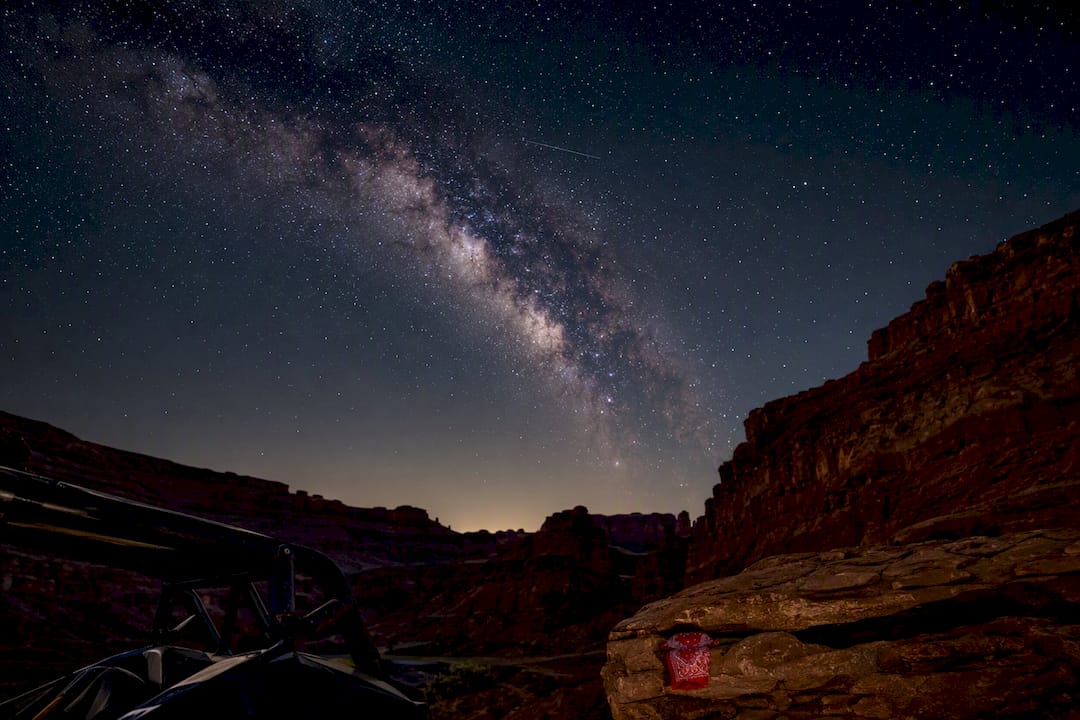
Travel blogs about Utah's Mighty 5 almost always recommend the same itinerary: start at Zion, work north to Bryce, push east to Capitol Reef, then finish at Arches and Canyonlands. It sounds logical on a map. What actually happens is that most groups hit Capitol Reef exhausted, race through it in three hours, and wonder why it felt underwhelming. Here's what works instead: flip the pairing. Put Capitol Reef and Moab together as a two-destination focus, give both the time they deserve, and the entire trip recalibrates.
Why Capitol Reef and Moab Belong Together
The distance between Capitol Reef National Park and Moab is about 160 miles on Highway 24 east and then I-70 to US-191. That's roughly two and a half hours — a comfortable morning drive that lets you spend proper time in Torrey and arrive in Moab in time for an afternoon explore or an early dinner and a full next day on the trails.
The two destinations are also thematically complementary in a way that Zion-Bryce isn't. Capitol Reef is geology in the purest sense: the Waterpocket Fold, a 100-mile-long wrinkle in the earth's crust that makes the landscape feel genuinely alien. Moab is geology in motion — you're not just looking at the formations, you're driving over them at speed. Together they tell a complete story about what the Colorado Plateau is made of.
What to Do at Capitol Reef Before You Drive to Moab
Most visitors who feel like Capitol Reef was a disappointment made one mistake: they drove the scenic road, read a few roadside panels, and left. Capitol Reef rewards the people who get out of the vehicle.
Cassidy Arch Trail is the standout — a four-mile round trip with 670 feet of elevation gain that ends at a natural arch spanning a canyon. Grand Wash and Cohab Canyon are shorter and still dramatic. If you're arriving in summer, the historic Fruita orchards offer seasonal fruit picking that sounds touristy until you're standing under a cherry tree in the Utah desert in June.
Allow four hours minimum. Leave by noon if you want to reach Moab with daylight to spare and avoid arriving too tired to appreciate it.
The Drive from Capitol Reef to Moab
Highway 24 east to I-70 and then south on US-191 is straightforward and genuinely scenic. The stretch through the San Rafael Swell on I-70 is one of the least-appreciated drives in Utah — big open desert, mesa country, and virtually no traffic compared to the southern parks corridors. Stop at the San Rafael Overlook if you have time. It costs nothing and the view is legitimately stunning.
Arrive in Moab in the late afternoon and your first stop should be the Colorado River overlook on US-191 just north of town. You don't need a trail permit or a UTV for this one — it's a roadside pull-off that will recalibrate your sense of scale for the trails you're about to ride.
Which Epic 4x4 Tours Work Best for This Itinerary
If you're building a Capitol Reef + Moab pairing, you likely want at least one full day in Moab and ideally two. With a single full day, the Gateway to Hell's Revenge + Fins & Things tour covers two of Moab's signature slickrock routes in a single morning — leaving your afternoon free for Arches National Park, which is only 20 minutes from downtown.
With two days, add the Moab Slick Rock Discovery for a different terrain perspective on day two, or step into the Poison Spider Mesa tour if your group is comfortable with technical terrain and wants to push further.
All Epic 4x4 tours use a guide-led caravan format — you drive your own Polaris UTV with the guide setting the route and pace. You're not being shuttled through the landscape; you're actually driving it. That distinction matters more than most people realize until they're halfway up a slickrock face and the guide gives them the line and they make the call themselves.
Practical Notes for This Trip
Book your Moab UTV tours before you finalize lodging. Tour availability is the constraining variable in Moab, not hotels. Once your tour dates are confirmed, you can reverse-engineer your accommodation around them. Trying to do it the other direction often means compromising on tour dates to match lodging you've already paid for.
In Capitol Reef, fuel up in Torrey — there are no services inside the park. In Moab, a grocery stop the evening before your tour day means one fewer errand on a morning that already has a lot moving.
Frequently Asked Questions
How many days should I plan for a Capitol Reef and Moab focused trip?
Three to four days gives you room to breathe. One full day at Capitol Reef, a half-day drive to Moab with the San Rafael Swell stop, and then two days in Moab for tours plus a visit to Arches or Canyonlands. Anything shorter and you'll be rushing at least one of the destinations.
Do I need a permit for Capitol Reef National Park?
Capitol Reef requires a vehicle entrance fee — currently $35 per vehicle for a 7-day pass. No timed entry reservation is required as of 2026, though that can change during peak season. Check the park's official site before your visit to confirm current entry requirements.
Is the drive between Capitol Reef and Moab manageable with kids?
Yes — it's a straightforward paved highway with good visibility, minimal turns, and easy pull-off points throughout. The San Rafael Swell section of I-70 is genuinely interesting rather than just monotonous, which helps with younger passengers. Factor in one stop and the drive feels shorter than the mileage suggests.
Can Epic 4x4 tours accommodate groups with mixed experience levels?
Yes. The guide-led caravan format is well-suited for mixed groups — the guide reads your group's comfort level and adjusts pace accordingly. First-timers in a Polaris Xpedition XP5 Northstar, with its climate-controlled cab and six-point harnesses, typically find the experience far more manageable than they expected. Let us know your group's makeup when you book and we'll match you to the right tour. Contact us here.