If you've been running a Moab versus Hatfield-McCoy comparison, you're probably coming at it from the Southeast, where the Appalachian trail network is genuinely the best off-road riding in your region. Hatfield-McCoy is an impressive system — thousands of trail miles across West Virginia, designed for ATVs and side-by-sides, with meaningful difficulty variety and strong regional infrastructure. Here's what actually happens when you ask someone who's ridden both: the comparison doesn't stay balanced for long. The terrain, the scenery, and the kind of story you bring home are in different categories. That doesn't mean Hatfield-McCoy isn't worth doing — it means the two destinations are solving different problems.
Two Different Landscapes — Two Different Experiences
Hatfield-McCoy puts you in forested mountain terrain — hardwood ridgelines, creek crossings, and dense Appalachian canopy. The riding is technical in places, scenic in others, and the green landscape is genuinely beautiful if you're drawn to that kind of topography. Trails are well-maintained and clearly marked across multiple county systems.
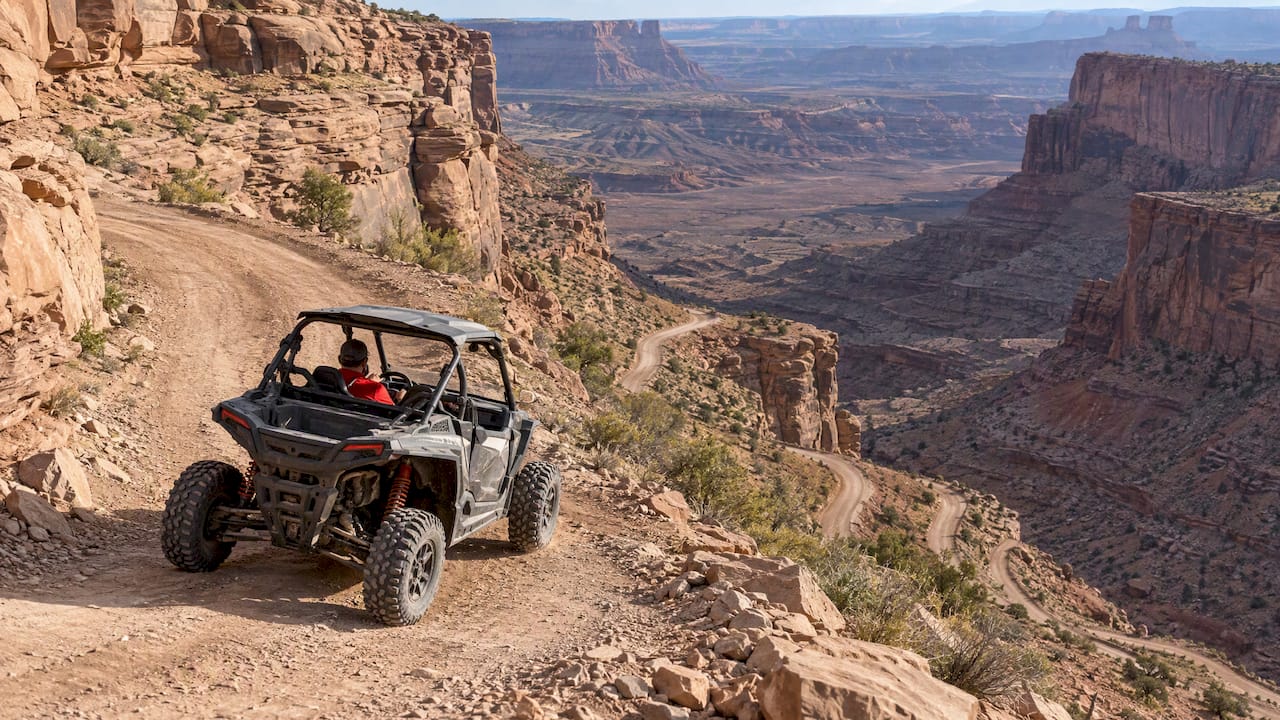
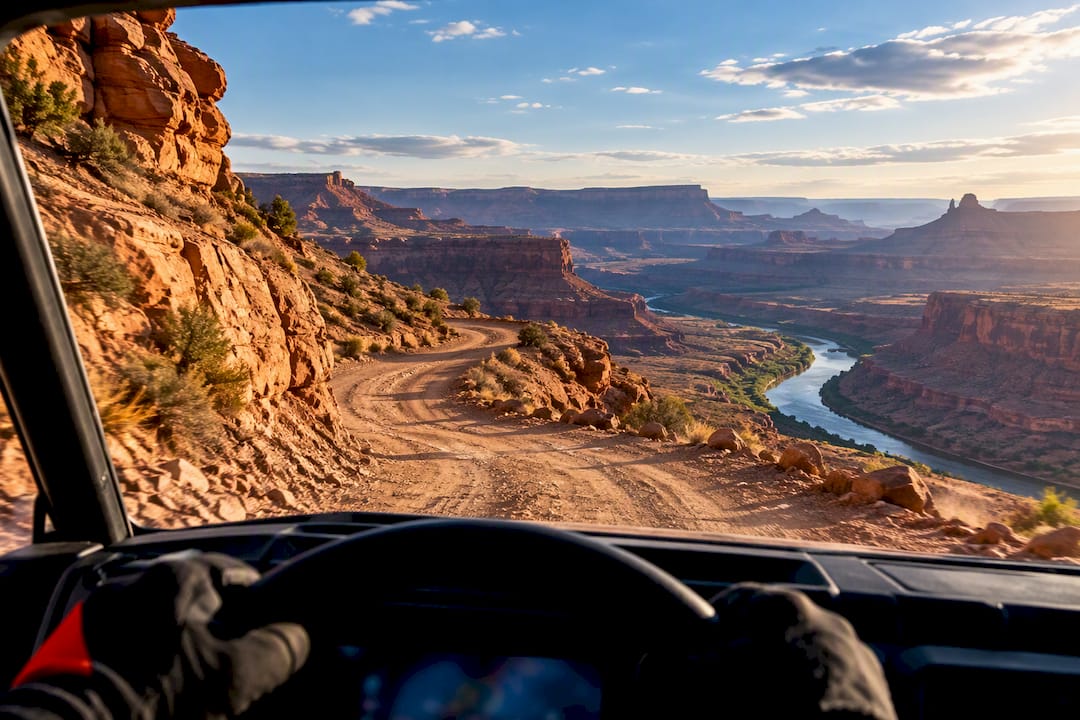
Moab puts you on exposed sandstone plateaus with canyon views that don't have a close comparison anywhere in North America. Hell's Revenge crosses slickrock ledges with sheer drops and 360-degree canyon views. Top of the World Trail ends at a viewpoint that makes most riders go quiet for a moment. The terrain itself — sandstone slabs, rocky technical climbs, high-angle scrambles — is different in character from anything in Appalachia. It doesn't need to win on some abstract scale. It just produces a different day, and a different memory.
The Vehicle Question
At Hatfield-McCoy
Hatfield-McCoy welcomes ATVs, side-by-sides, dirt bikes, and some street-legal vehicles on designated corridors. Most riders bring their own vehicles or rent from local operators near the trailhead communities. The system is designed around self-guided exploration — you get a trail map and go. The social experience is often campground-based, with groups setting up for multi-day rides across different trail systems.
In Moab
In Moab, the guided tour format changes the calculus significantly. Epic 4x4 Adventures runs drive-yourself UTV caravans — your group operates its own Polaris fleet with a guide leading the route, monitoring conditions, and handling logistics. You don't need to tow a vehicle to Utah. The Polaris Xpedition XP5 Northstar's climate-controlled enclosed cab directly addresses the desert heat; the RZR Pro R delivers performance for riders who came to push. Preloaded GPS navigation and six-point harnesses are standard across the fleet. The infrastructure is built into the experience rather than something you organize around it.
Difficulty and What Technical Means in Each Place
Hatfield-McCoy runs from easy green trails to demanding black diamond terrain — loose surfaces, steep grades, and genuine technical sections that reward experienced operators. The beginner access is good and well-marked. Multi-day itineraries can string together meaningful variety across the county systems.
Moab's difficulty spectrum is anchored differently. Entry-level tours like the Moab Discovery Tour cover spectacular terrain with manageable technical demands. The upper end — Hell's Revenge, Poison Spider Mesa — involves high-angle slickrock, significant exposure, and sections that put genuine demands on the driver. What separates the most challenging Moab terrain from its Appalachian equivalent isn't just technical difficulty — it's the visual context. You're navigating extreme terrain with canyon walls dropping away on both sides. That combination of difficulty and exposure is specific to desert canyon country.
Scenery: The Variable Most Comparisons Underweight
This is where the comparison sharpens most clearly. Hatfield-McCoy is scenic in the way that forested mountain landscapes are scenic — pleasant, green, and enclosed. You're in the trees. Moab is scenic in the way that stops conversation mid-trail. The La Sal Mountains rising behind you, the Colorado River threading the canyon floor below, sandstone formations in every direction. Trail photography from Moab consistently produces images that look professionally staged because the backdrop is genuinely extraordinary. If visual impact is part of what you're paying for, these two destinations are in different weight classes.
Logistics: Getting There and Planning the Trip
Hatfield-McCoy has a geographic advantage for riders in the mid-Atlantic and Southeast — it's driveable, regionally familiar, and the accommodations near the trail communities are purpose-built for off-road visitors. Multi-day camping packages are common. Overall trip cost is typically lower once you account for travel distance.
Moab requires more commitment from the East Coast — flights into Salt Lake City (roughly 3.5 hours by road) or Las Vegas (approximately 4.5 hours) are the practical options. The town itself offers more dining, nightlife, and ancillary activities than a trail-system hub. For groups combining the UTV tour with the national parks — Arches, Canyonlands, Capitol Reef — the off-road day becomes one anchor in a larger Utah trip that's genuinely difficult to replicate anywhere else.
When Hatfield-McCoy Is Actually the Right Call
Be honest about this: Hatfield-McCoy is the right choice for riders who want a multi-day self-guided adventure in forested mountain terrain, are based in the Southeast and want minimal travel friction, or are primarily interested in the technical ATV or dirt bike experience rather than guided UTV touring. If your group is doing a camping-and-riding weekend out of Virginia, it makes more sense than booking a flight to Utah.
But if the question is which destination produces the more memorable single experience — the one your group is still talking about two years later — the answer from riders who've done both is consistent.
Ready to plan your Moab trip? Explore the full tour lineup here, or get in touch to talk through options for your group size and experience level.
Frequently Asked Questions
Is Moab or Hatfield-McCoy better for first-time UTV riders?
Both destinations offer beginner-accessible options, but Moab's guided tour format makes it particularly approachable for first-timers. You don't need to bring a vehicle or know the trails in advance — the guide handles navigation, pacing, and logistics. Hatfield-McCoy's self-guided model requires more preparation and local knowledge to get the most out of a first visit.
Can I bring my own UTV to Moab?
Yes — trail access on BLM land is open to private vehicles. Many repeat visitors eventually bring their own rigs. For a first visit or a single-trip experience, booking with a guided operator is more practical: no transport logistics, no guesswork on trail routing, and vehicles already suited to the terrain.
How long is the drive from the East Coast to Moab?
Moab is a significant drive from the mid-Atlantic — 35 or more hours. Most visitors fly into Salt Lake City (about 3.5 hours by road) or Las Vegas (about 4.5 hours). Flying is the practical choice for most East Coast groups. The drive from SLC along I-70 and US-191 is straightforward and scenic.
Does Hatfield-McCoy have climate-controlled UTVs available?
Rental options at Hatfield-McCoy vary by operator. The trail system is designed for Appalachian conditions rather than desert heat. In Moab, the Polaris Xpedition XP5 Northstar's enclosed, air-conditioned cab is a direct response to canyon country temperatures that regularly exceed 100°F in summer — a feature set that doesn't have an equivalent need in West Virginia.