Everyone talks about Moab at sunset. The golden hour photos dominate Instagram, the tour operators schedule their evening runs, and by the time the light is gone the parking lots at Arches are emptying out. Here's what actually happens at sunrise on slickrock: the light is better, the temperature is lower, the trails are empty, and you come back with photographs that look nothing like what you've already seen from Moab. Sunrise deserves its own case.
Why Sunrise Beats Sunset on Red Rock
The physics are straightforward. In the morning, the sun rises behind the La Sal Mountains to the east, casting raking side-light across the sandstone formations before the full glare sets in. The shadows are long, the color gradients are dramatic, and the red rock reads as a deeper, more saturated version of itself before the sky goes full blue. Sunset in Moab delivers similar light, but from the opposite direction — and by mid-afternoon the heat of the day has already settled into the rock, the air, and every person waiting for the golden hour.
Early morning in Moab means cool air, clear sight lines, and a quiet on the trail that simply doesn't exist at any other time of day. For photography purposes, sunrise is the professional's choice. For the experience of driving slickrock in conditions that feel more like the canyon does when no one else is around, sunrise is not a close second.
What an Early Morning UTV Run Actually Looks Like
The Pre-Dawn Staging
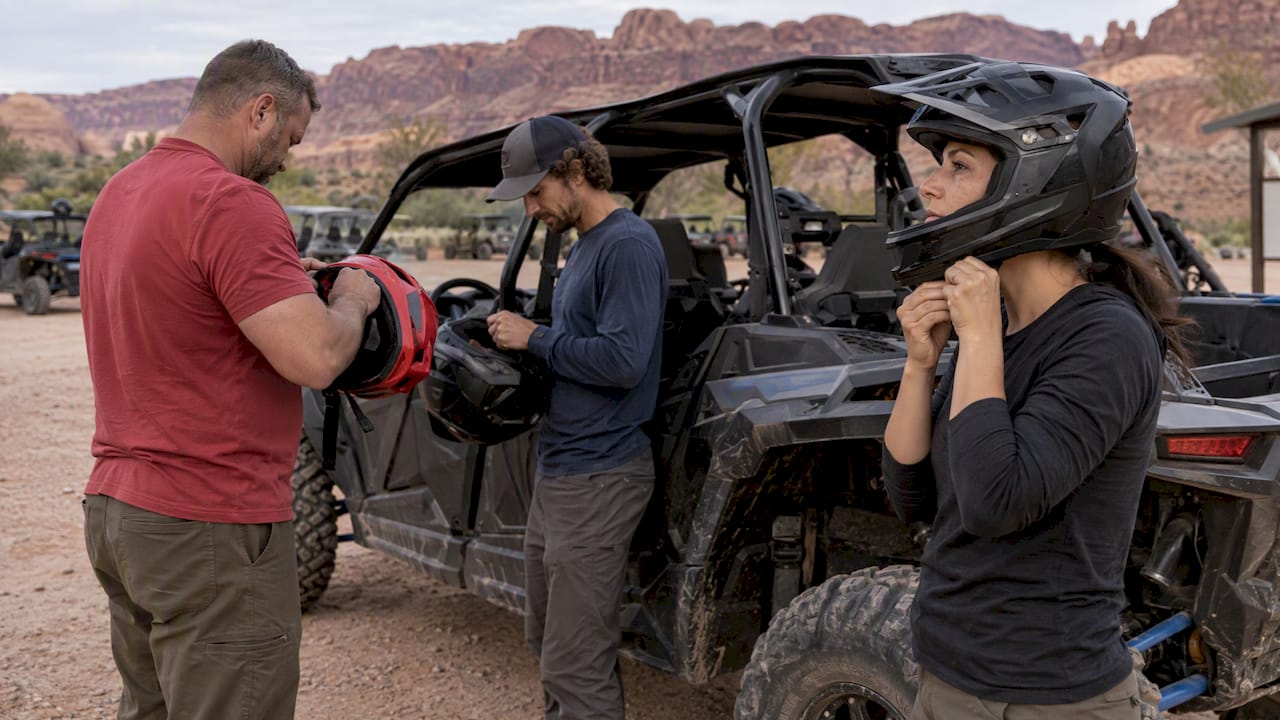
An early morning tour starts before the light does. Staging, orientation, and vehicle briefing happen in the dark or at first gray light. This sounds like a minor logistical detail but it matters: when you pull out onto the trail and the sun first crests the La Sals, you're already in position on the rock — not pulling into the parking lot. Timing is the whole point of a sunrise run.
The First Light Window
The thirty minutes after sunrise are the critical window — the period where the color temperature of the light and the angle of shadows combine in ways that don't repeat at any other hour. During this window, Slickrock Trail, Hell's Revenge, and the terrain above the Colorado River corridor all show you something different from what the afternoon photos show. This is the window a well-timed early tour is built around.
The Cool-Air Advantage
Beyond photography, there's a practical comfort argument for early morning that applies especially in summer. Moab in July can reach 100 degrees by mid-morning. A sunrise departure means you're driving the most exposed terrain during the coolest two hours of the day, returning before the heat becomes a management problem. Our Polaris Xpedition XP5 Northstar units feature climate-controlled enclosed cabs — but even without that, starting early keeps the experience in the range where it should be: enjoyable, not survival mode.
Best Trails for a Sunrise Run
Slickrock Trail
Slickrock at first light is a different place than it is at noon. The sandstone glows rather than bleaches. The contrast between shadow and surface is sharp enough to make the terrain read three-dimensionally in photographs in a way it doesn't once the sun is overhead. The Moab Slick Rock Discovery Tour covers this terrain in full.
The Colorado River Corridor
The river reflects early morning light from the canyon walls in a way that shifts color by the minute during the first hour after sunrise. If you're a photographer, the corridor at dawn is one of the most productive stretches of terrain in southern Utah. The combination of moving water, red sandstone, and morning sky in a single frame is something Arches and Canyonlands, for all their grandeur, don't easily offer from road level.
Hell's Revenge
The upper dome on Hell's Revenge at sunrise offers the widest unobstructed view in the immediate Moab trail network. When the La Sals are still casting long shadows across the valley and the slickrock is reading at its deepest red, this is one of the most visually complete panoramas available in Utah off a paved road. The Gateway to Hell's Revenge and Fins & Things tour accesses this terrain.
What to Bring for an Early Morning Run
Temperature in Moab drops significantly overnight. Even in summer, pre-dawn on slickrock can feel 20 to 30 degrees cooler than the afternoon before. Bring a layer you can remove once the sun is up. A camera or phone that handles low-light reasonably well will serve you better than trying to compensate with editing later. Wear closed-toe shoes regardless of weather. Water matters even in cool conditions — desert air is dry at every temperature.
Photography Tips for Sunrise on Slickrock
Position before the light, not after it. Chasing the best angle once the sun is already up means you missed the best frames. Know the shot you want and be there when the light arrives. Our guides know where the light lands on each trail and can position your group accordingly during natural stops.
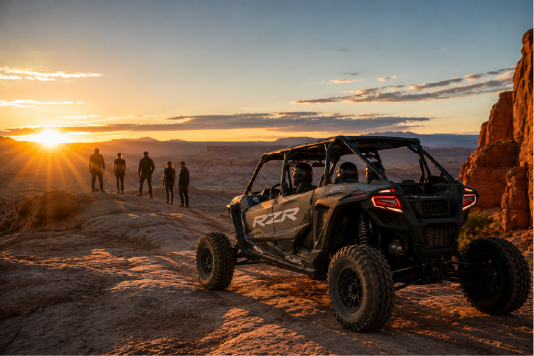
Shoot toward the La Sals, not away from them. The mountains to the east backlit by the rising sun create depth that pointing west into open sky doesn't give you. Some of the best early morning UTV photography in Moab is shot with the vehicle in the foreground and the mountains catching the first light behind it.
Shoot in the first fifteen minutes. The color temperature shifts fast once the sun clears the peaks. What looks like a soft, warm red at 6:10 AM reads differently by 6:30. The window is real and it's short.
Multi-Generational Groups and Early Morning Tours
One underrated advantage of sunrise tours is the temperature window they create for groups that include older adults or younger children — the demographics where midday desert heat is a real limiting factor. Three generations on the same trail is entirely achievable in the early morning hours when the Xpedition XP5's enclosed, climate-controlled cab keeps the ride comfortable regardless of outside conditions. Stadium seating means everyone has a clear view, and the six-point harnesses mean the drive is secure for every age in the vehicle.
Frequently Asked Questions
Does Epic 4x4 Adventures offer early morning or sunrise tours?
Early morning departures are available seasonally, with specific start times adjusted to align with actual sunrise by time of year. Contact us to ask about current availability for your travel dates.
Is it safe to drive UTV trails before full daylight?
Our tours are timed around first light, not full darkness. By the time you're on technical terrain, there is sufficient ambient light to drive safely. The guide leads the caravan and sets pace based on current visibility conditions throughout the run.
What is the temperature difference between dawn and afternoon in Moab?
In summer, the swing can be 25 to 35 degrees Fahrenheit between pre-dawn and peak afternoon. In spring and fall the differential is smaller but still meaningful. Dress in layers you can shed as the temperature rises through the morning.
Can I combine a sunrise UTV run with a visit to Arches National Park?
Yes — this is one of the better Moab day structures available. An early morning UTV run returns before the park crowds build, leaving you at Arches by mid-morning when the light is still good and the lot is not yet full. Browse our tour options to build an itinerary that works with your park timing.
If you've been planning a Moab trip around the sunset shot you've already seen a hundred times, consider building your first day around sunrise instead. The trail is quieter, the light is better, and the experience you come back with is one most Moab visitors never have. Reach out to book your morning run.