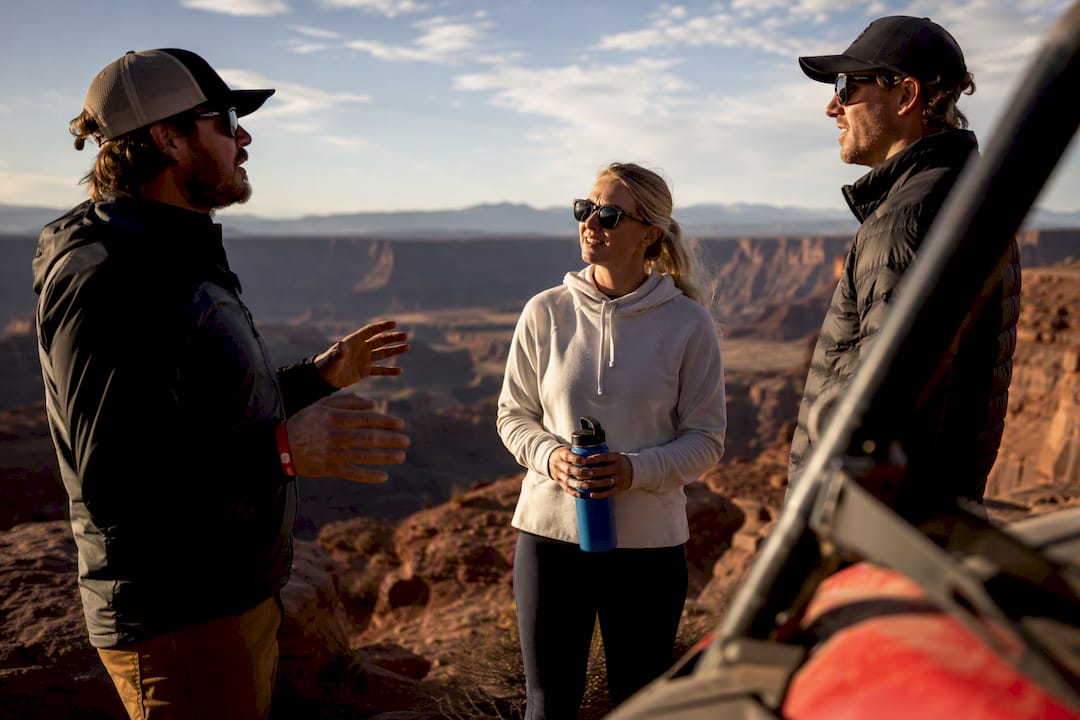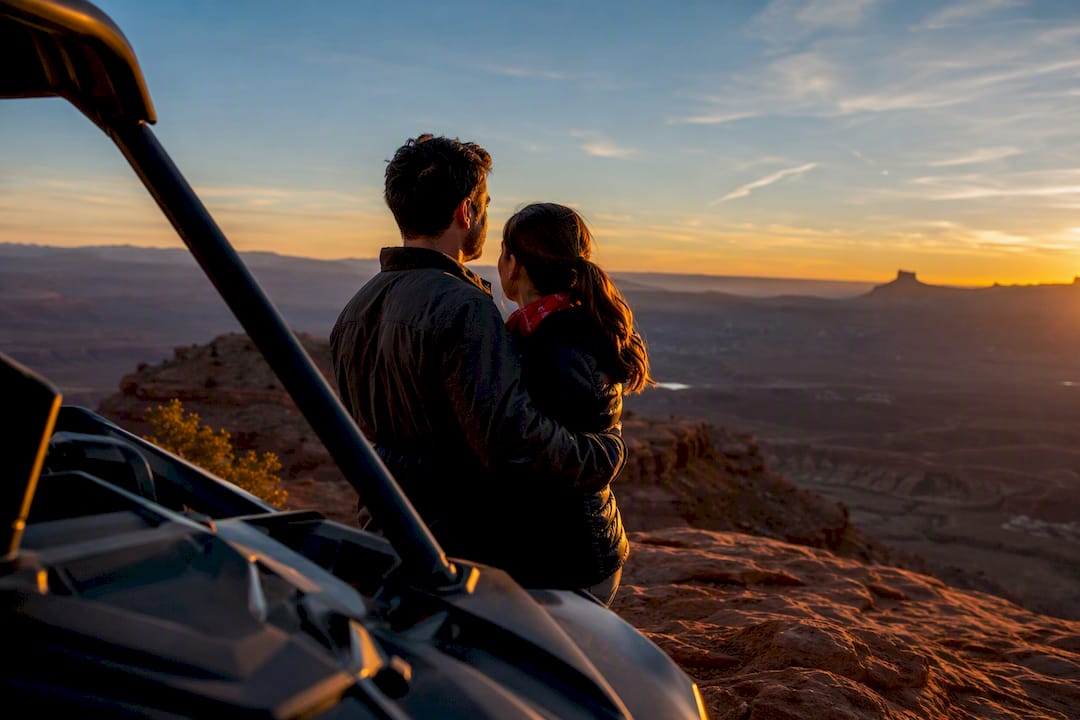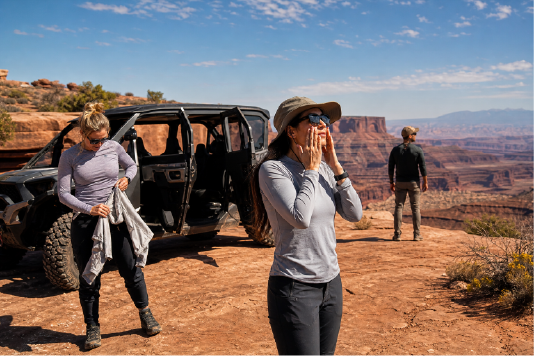
Most "what to pack for Moab" guides read like they were assembled by someone who visited once in October and called it research. Here's what actually matters when you're three hours into a canyon slickrock run and the temperature has swung 30 degrees since you left the trailhead: the right gear, worn correctly, makes the difference between an experience you want to repeat and one you spend the drive home recovering from.
The First Thing to Understand About Moab Weather
Moab sits at roughly 4,000 feet in high desert terrain with almost no cloud cover for most of the year. That combination creates a daily temperature range that surprises everyone who didn't grow up in the desert: it's common for a spring or fall morning to start at 45°F and climb past 80°F by early afternoon. Summer days routinely hit 100°F, but evenings cool fast. The UV index runs high year-round because of the altitude and reflected light off sandstone. What you wear at 7 a.m. is not what you want to be wearing at noon.
The good news: if you're booking with Epic 4x4 Adventures, you're riding in a climate-controlled Polaris Xpedition XP5 Northstar, which means cab temperature is managed regardless of what's happening outside. But you'll be stepping out of that cab at overlooks, rest stops, and trail highlights — and that's when your clothing choices start to matter.
Clothing: The Core Layering System
Base Layer
Moisture-wicking synthetic or merino wool — never cotton. Cotton holds sweat against your skin in summer and traps cold moisture in spring and fall. A lightweight long-sleeve base layer works across three of Moab's four seasons and doubles as sun protection at elevation. Even in summer, a UPF-rated long-sleeve shirt is smarter than bare arms: you'll be walking across reflective sandstone, and direct sun exposure accumulates faster than you expect at 4,000 feet.
Mid Layer
A packable fleece or insulated vest handles the morning chill in spring and fall and gives you something to strip off as temperatures climb. Look for something that compresses small enough to fit behind your seat in the XP5's cab. Bulky jacket layers don't play well with six-point harnesses — stick to fitted or packable options that don't bunch around the shoulder straps.
Outer Layer
Spring brings afternoon rain showers; summer monsoon cells can develop fast and move faster. A lightweight waterproof shell that packs into its own pocket is the right call any time between March and September. It doesn't need to be heavy mountaineering gear — just something that keeps you dry during a 20-minute storm while you wait it out from a canyon overlook.
Footwear
Closed-toe shoes are required on all our tours — sandals and flip-flops aren't allowed, and for good reason: slickrock surfaces are abrasive, and the footing around vehicle entry and exit points is uneven. Beyond that requirement, your best options break down simply:
Trail runners are the workhorse choice for most riders — light, grippy on sandstone, and comfortable for the walking you'll do at overlook stops. Hiking boots make sense if you plan any walking on more technical terrain or if you have ankle stability concerns. Athletic sneakers clear the minimum requirement but offer less grip on loose rock — functional, not ideal. Whatever you choose, wear socks that cover the ankle; sandstone dust works into low-cut sock lines and creates an unpleasant grinding situation by mile two.
Sun Protection
This is where most first-timers underpack, and where they pay for it the next morning. Moab's UV index regularly hits 9–11 in summer — the "very high" to "extreme" range. The combination of altitude, reflected sandstone light, and cloudless skies means sun exposure accumulates faster than you're used to at sea level, even through a cab's windshield during the hours you're inside.
Bring SPF 50+ broad-spectrum sunscreen and apply it before you leave the hotel, not at the trailhead. Reapply at the first overlook stop. A wide-brim hat for time outside the vehicle — baseball caps leave ears and neck exposed in ways that become obvious the next morning. Sunglasses rated UV400 or higher. If you run sun-sensitive, a UPF-rated buff or neck gaiter handles the sections where you're walking exposed terrain between stops.
What to Pack in Your Day Bag
The XP5's cab has storage space, but it's not a cargo vehicle. Think small and flat — a 10–20 liter daypack or a single soft-sided bag per rider covers everything you need without overcrowding the cab. Essentials: water (minimum two liters per person, three in summer — we provide hydration stops, but canyon heat burns through water faster than you expect); snacks if your group runs on fuel during multi-hour activities; any prescription medications you'd carry on a normal active day; a fully charged camera or phone; and lip balm with SPF, because cracked desert lips are preventable and unpleasant.
Seasonal Specifics
Spring (March–May)
Layering is everything in spring. Morning temperatures can sit in the low 40s; afternoon highs push into the mid-70s. Pack a waterproof shell for afternoon showers, which arrive without much warning in April and May. Wildflower season is the best window for photographers — bring your actual camera, not just your phone, because the color contrast against red rock is worth the extra gear weight.
Summer (June–August)
Heat management is the priority. Lightweight, light-colored, UPF-rated long sleeves over a moisture-wicking base. Two extra liters of water above your baseline estimate. Our summer tour schedules are structured to avoid peak afternoon heat on exposed terrain — an early start time is part of the plan, not just a suggestion.
Fall (September–November)
The best window for clothing versatility. A mid-layer fleece and packable shell handle everything from September through early November without drama. Foliage in the La Sal Mountains adds visual payoff to the canyon views — pack binoculars or a zoom lens if you have them.
Winter (December–February)
Cold mornings and potentially icy conditions on shaded trail sections. Base layer plus insulated mid-layer plus shell is the right stack. Waterproof footwear if conditions include any snow or ice at trail elevation. Call our team before booking a winter tour — access depends on conditions, and we'll give you an honest, up-to-date assessment rather than a generic calendar answer.
Frequently Asked Questions
Do I need special off-road gear or equipment?
No specialized off-road equipment is required. Our vehicles — the Polaris Xpedition XP5 and RZR Pro R — come equipped with everything you need on the trail, including six-point harnesses, preloaded GPS navigation, and enclosed climate-controlled cabs. What you bring is personal comfort gear: appropriate clothing, sun protection, and water. We cover the rest in the pre-tour briefing at your start point.
Can I wear a hat inside the UTV?
Baseball caps and beanies fit fine inside the cab. Wide-brim hats work better outside the vehicle — the six-point harness geometry can be awkward with a wide brim interfering at the shoulder strap. Most riders keep a wide-brim hat accessible for overlook stops and switch to a packable beanie or baseball cap once they're buckled in for the drive sections.
What about kids — is the clothing advice different for them?
Same principles, with extra emphasis on sun protection and hydration. Kids dehydrate faster than adults in dry desert heat, and their skin burns faster at elevation without adequate protection. Apply sunscreen before you leave the hotel — not at the trailhead when you're already running toward your start time. Bring more water than you think they'll need. Make sure their footwear has closed toes and reasonable grip. The XP5's stadium seating and six-point harness system secures them well regardless of what they're wearing.
What if I forget something?
Moab has solid gear options downtown — outdoor retailers and adventure-focused shops on and near Main Street can cover most essentials the morning of your tour. That said, arriving prepared beats scrambling. The list above covers everything your group will actually want; print it or screenshot it before you pack, and you won't be making a detour before the trailhead.
Have questions about specific tour conditions, seasonal timing, or what to expect for your group's mix of ages and experience? Reach out to our team — we've answered every version of these questions and we give straight answers. Or browse the full tour catalog and start building your Moab day.