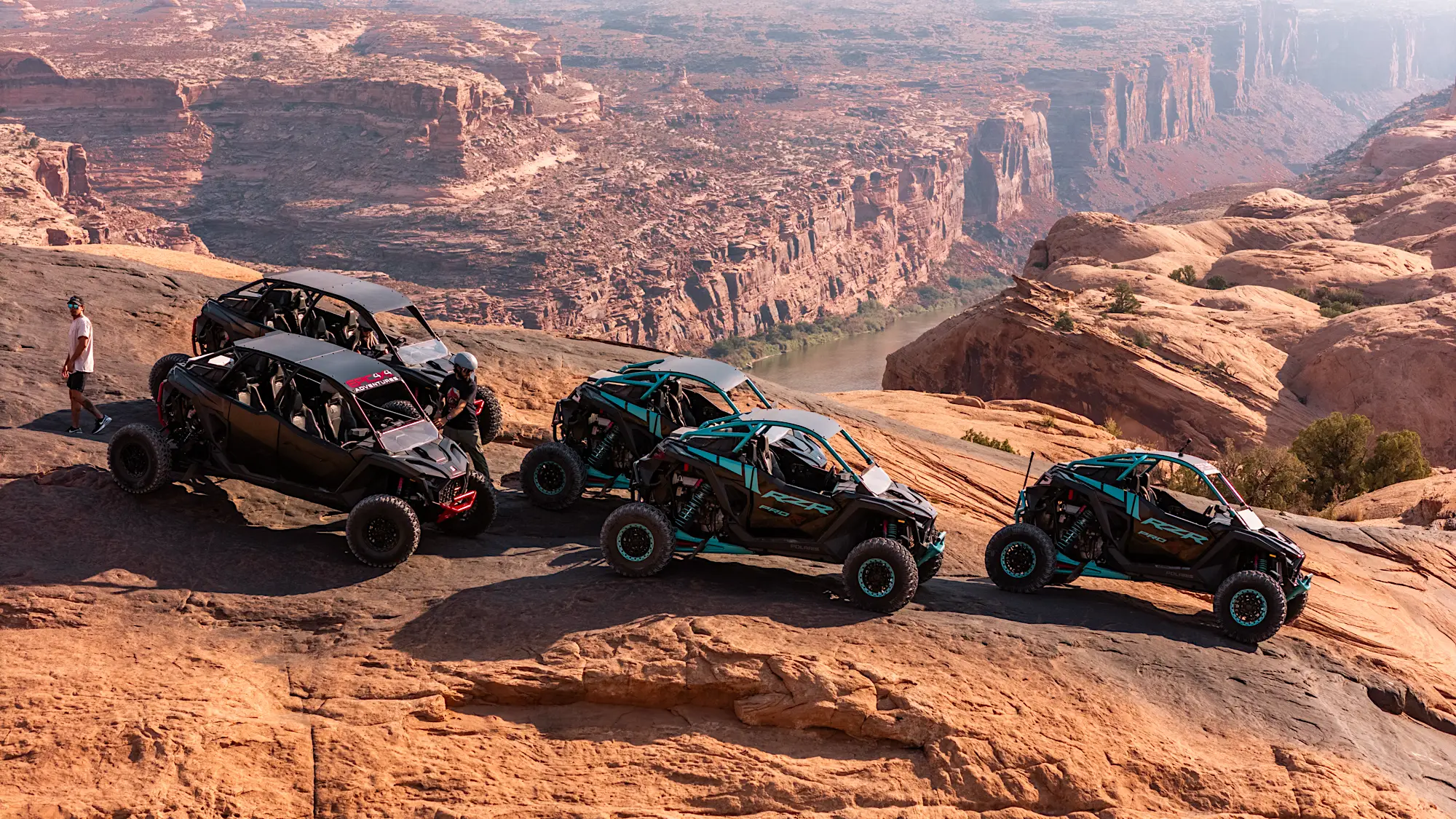
Most people who visit Moab never drive Fins & Things. They book Hell's Revenge, they've seen the Slickrock photos, and they assume a trail named after geology rather than danger is somehow secondary. Here's what actually happens on Fins & Things: you get a multi-hour drive through some of the most visually complex terrain in the Colorado Plateau — vertical sandstone fins reaching 100 feet above the trail surface, panoramic views of the La Sal Mountains and the Colorado River corridor, and a difficulty level that lets your whole group actually enjoy the ride instead of white-knuckling through it.
What the Trail Is
Fins & Things sits on the east side of Moab, accessed via Sand Flats Road — the same road that leads to Hell's Revenge. It runs roughly 7.5 miles one-way, gaining elevation as it moves through increasingly dramatic sandstone terrain. The BLM rates it a 4 out of 10: enough technical challenge to hold your attention, not so extreme that a first-time driver needs a pep talk before every obstacle. The name is literal. The trail winds alongside and between massive vertical slabs of Entrada sandstone — the same formation responsible for the arches a few miles north. These fins create narrow corridors, unexpected shadow play, and constant foreground interest for anyone with a camera.
The Terrain, Section by Section
Lower Approach
The first mile is graded dirt — a reasonable warm-up that lets your guide dial in the group's pace before the rock starts. Within a few minutes you're crossing sandy wash bottoms and climbing your first low-angle slickrock shelves. In the Polaris Xpedition XP5, with its enclosed climate-controlled cab and preloaded GPS navigation, your passengers can follow the trail route on-screen without craning out the window every time the terrain shifts. The six-point harnesses keep everyone properly secured from the very first mile.
The Fin Corridor
The middle section is the visual centerpiece. You're driving alongside sandstone fins that shoot straight up from the desert floor, their layered orange and red faces catching the light differently depending on the time of day. The surface alternates between loose rubble and firm slickrock — meaning you read the ground ahead rather than just following a worn groove. Mid-morning light hits the east faces of the fins before the sun climbs overhead, which is why photographers consistently prefer the early departures over afternoon rides.
Upper Lookout
The northern end opens onto a wide slickrock bench with unobstructed views of the La Sal Mountains and the Colorado River corridor below. On a clear Moab day — which happens roughly 300 times a year — visibility extends well into Colorado. Most groups spend 20 to 30 minutes here before the return. In the enclosed Xpedition, that stop doesn't come with the penalty of stepping out into 95-degree sun after sitting in a sweltering open cab for two hours.
How It Compares to the Other Big Moab Trails
Fins & Things is less physically intense than Hell's Revenge — there are no 33-percent ledge drops or water pocket rollovers that require a commitment before you see the bottom. It is significantly more scenic than most beginner routes and more technically interesting than a basic jeep road. If your group includes members who want real off-road experience without the extremity, this is the trail. It rewards observation and patience more than horsepower.
Our Gateway to Hell's Revenge + Fins & Things tour pairs both trails in a single day — Fins & Things for the scenic and technical variety, Hell's Revenge for the adrenaline spikes. It's the most efficient way to cover both trail types without adding a second booking day to your Moab trip.
Who Should Drive It
Families with kids older than eight handle this trail without issue. The enclosed cab means younger passengers aren't exposed to trail dust and heat, and the stadium seating gives everyone a clear view forward rather than a view of the headrest in front of them. Corporate groups consistently rate Fins & Things as the most photographable trail they've driven — dramatic enough to generate content, manageable enough that no one spent the whole time anxious. Photography-focused travelers rank this as their top Moab trail after the fact, consistently. The fin formations give you foreground interest at almost every stop, and the upper lookout delivers a wide-angle landscape that doesn't require specialized camera skill to capture well.
Practical Details
The trailhead is accessed via Sand Flats Road with a small BLM day-use fee. Best conditions run from March through May and September through November. Summer trips work well in the climate-controlled Xpedition — the closed cab turns a 95-degree Moab afternoon into a non-issue — but plan outdoor viewpoint stops for morning or late afternoon rather than midday. Flash flooding is a genuine seasonal consideration; our guides monitor conditions before every departure and will reroute if necessary. The Adventure Assure protection plan covers your booking against mechanical issues on the trail. Your guide walks through specifics during the pre-departure briefing.
Ready to ride? Start with the Gateway tour, or contact us to build a custom itinerary around your group's schedule and goals.
Frequently Asked Questions
Is Fins & Things appropriate for first-time UTV drivers?
Yes. In a guide-led caravan format, first-time drivers handle this trail without difficulty. Your guide sets the pace and walks you through vehicle controls before departure. The Xpedition XP5's enclosed cab and preloaded GPS navigation also reduce the cognitive load significantly compared to open-air vehicles on unfamiliar terrain.
How long does Fins & Things take?
Plan for 3 to 4 hours round-trip, including time at the upper lookout and stops along the fin corridor. The combined Gateway tour with Hell's Revenge runs 6 to 7 hours total — a full day with two distinct trail experiences and two distinct difficulty levels.
What's the best time of year to drive Fins & Things?
Spring (March through May) offers the most stable trail conditions and the best light for photography. Fall is equally good. Summer is manageable in a climate-controlled cab; winter access depends on recent weather and should be confirmed before booking.
Can you see the Colorado River from the trail?
Yes. The upper lookout section offers clear sightlines down into the Colorado River corridor on calm, clear days. It's one of the more underrated viewpoints in the Moab area — fewer visitors reach it compared to the overlooks accessible by paved road, which means you're typically sharing it with your group and not a parking lot's worth of strangers.