Yes, for most riders, fall is the best window for trail riding in Moab. Daytime temperatures settle into a comfortable range, the desert light turns gold in the afternoons, and the summer crowds thin out on the trails. September through November each offer a slightly different version of that formula, so your gear list and start times should shift with the calendar.
TL;DR:
- October offers the best balance of pleasant weather, lower crowds, and reliable trail conditions with under an inch of rain enhancing grip and surface firmness.
- Fall riding requires layering gear for temperature swings, carrying sufficient water, and checking forecasts to avoid early snow and flash floods, especially at higher elevations.
- Trails like Slickrock, Porcupine Rim, and the La Sal Loop are most enjoyable between September and October due to cooler temperatures and better tire grip.
- Planning shorter, lower-elevation routes in November prevents issues from early snow and the shrinking daylight window.
- Guided fall UTV tours with GPS-equipped vehicles provide optimal pacing and local knowledge to maximize shorter daylight hours and changing conditions.
Table of Contents
- Why fall works: climate, daylight, and trail conditions
- Month-by-month fall breakdown: September, October, or November?
- Best trails and UTV routes to ride in fall
- Packing, safety, and timing for fall rides
- Planning and booking your fall trail ride
- How fall changes the wildlife and scenery along Moab’s trails
- Fall-specific hazards: sudden weather and early snow
- Fall events in Moab worth building a ride around
- Photography tips for fall rides in Moab
- What a local guide notices about fall on Moab’s trails
- Ride Moab’s fall season with Epic4x4adventures
- Sources
Why fall works: climate, daylight, and trail conditions
Moab’s summer heat regularly pushes riders into predawn starts just to beat triple digits by noon. Fall changes that math entirely. Average daytime highs settle into a comfortable range through most of the season, which means you can roll out at 9:00 AM instead of 6:00 AM and still finish a full loop before the afternoon sun gets punishing, according to Timeanddate.
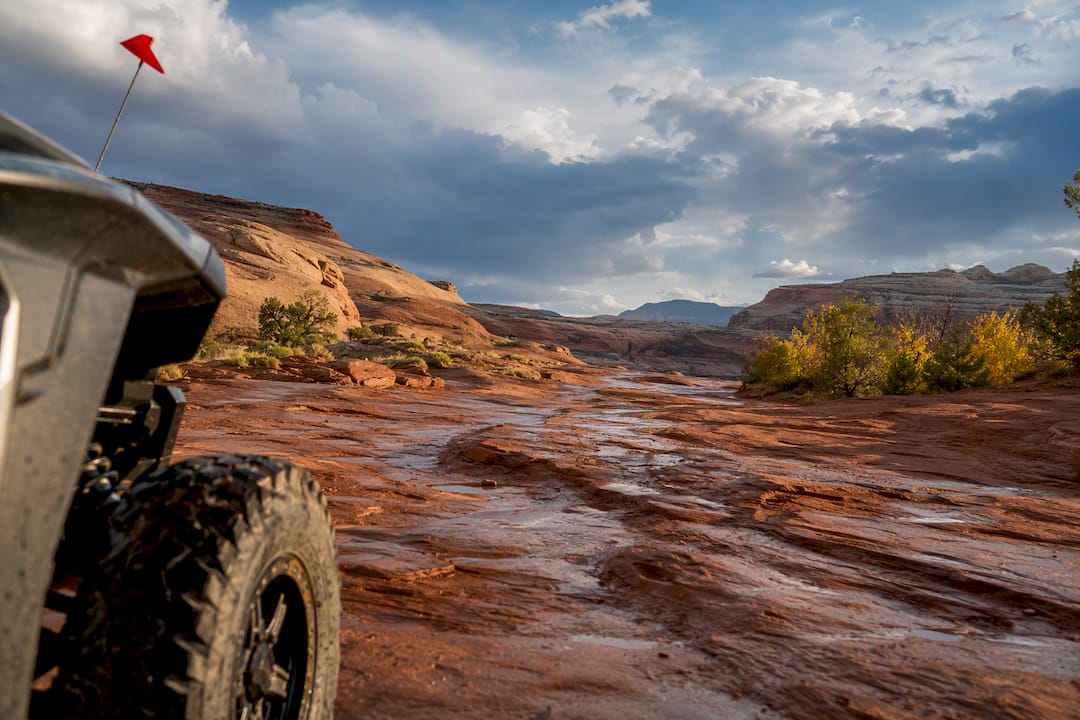
October is the standout month on paper. It carries pleasant daytime highs alongside the season’s highest average precipitation, just under an inch for the month, based on the same timeanddate.com climate tables. That rain rarely ruins a ride. Slickrock actually grips better once a light shower knocks the dust off, and hard-packed dirt trails firm up rather than turning to mud, since Moab’s desert soil drains fast.
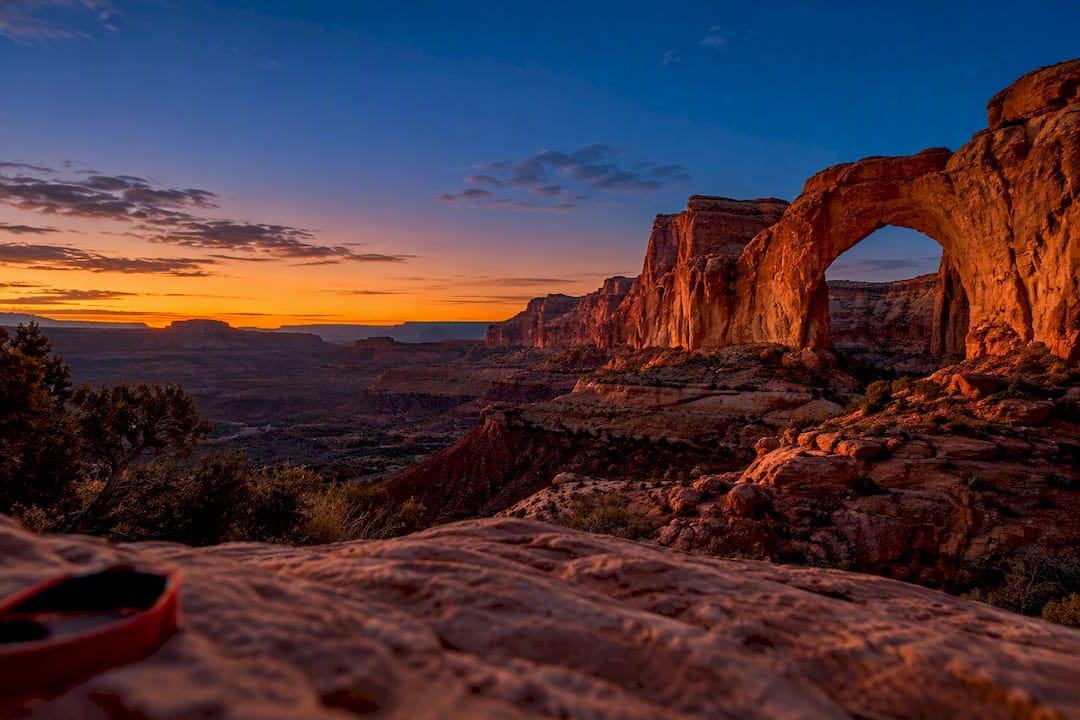
Daylight does shrink as the season progresses. You lose roughly two hours of usable riding time between September and late November. What you gain in exchange is better light for photos: low afternoon sun angles turn the sandstone deep red and orange for a longer stretch of the day than summer’s flat, overhead glare ever allows.
Fast facts on fall conditions:
- Typical daytime highs: generally comfortable depending on month and elevation
- Wettest fall month: October, at roughly 0.98 inches average
- Later comfortable start times: mornings become more relaxed compared to summer early starts
- Golden-hour window: longer and more usable for scenic stops and photos
Statistic to know: October combines pleasant highs with the season’s wettest month at under an inch of rain, a combination that firms up trail surfaces without shutting anything down.
Month-by-month fall breakdown: September, October, or November?
Each fall month rewards a different kind of rider. Here’s how they break down.
- September rides more like extended summer. Daylight is still long, afternoon temperatures can climb into the 80s, and it’s the best month for riders who want a full day on the trail without racing the sunset. Multiple trail guides flag September alongside May as a standout for comfortable, all-day riding conditions.
- October is the sweet spot most guides point to first. Cooler mornings, cottonwood color along the river corridors, and noticeably lighter crowds combine with that flattering afternoon light. Guides consistently name it the single best month for balancing temperature, light, and lower visitor numbers.
- November belongs to riders chasing solitude and better lodging rates. Mornings turn genuinely cold, and daylight windows shrink further, so plan for shorter routes. Check forecasts for early freezes at higher elevations before committing to a route that climbs.
Elevation matters here too. The La Sal Mountains cool and see early snow well before the desert floor around Arches and Canyonlands does, so a route that’s perfect in the valley in November might already be closed up high.
Best trails and UTV routes to ride in fall
Fall conditions favor a specific mix of trails, and the choice usually comes down to how much technical riding, elevation gain, and daylight you’re working with.
- Slickrock Trail rewards fall riders more than any other season. Cooler rock temperatures mean better tire grip on the technical humps and dips, and mid-September through October delivers the 50 to 70°F range that trail guides recommend for reliable surface conditions.
- Porcupine Rim and the Whole Enchilada involve real elevation transitions, from cool aspen forest up top to hot desert canyon at the bottom. Fall’s moderate temperatures make that whole range rideable in one day without cooking on the lower sections.
- La Sal Loop stays enjoyable into late fall thanks to its tree cover and higher elevation, though it’s the first route to feel an early snow warning.
- Hell’s Revenge and the Rim Trail, both UTV-friendly, become noticeably more comfortable once summer’s heat backs off. Sitting in an open cockpit at noon in July is brutal; in October it’s genuinely pleasant.
Pro Tip: If you’re riding in November and daylight is tight, pick a shorter, lower-elevation route like Hell’s Revenge over a full-day climb like Porcupine Rim. You can always add a second short ride the next morning instead of racing sunset on unfamiliar terrain.
Match your route to your daylight window, not just your fitness level. A rider capable of the Whole Enchilada in September may need to swap it for something shorter by mid-November simply because the sun sets two hours earlier.
Packing, safety, and timing for fall rides
Fall temperature swings are the biggest packing challenge. Mornings in the 40s can climb to the 70s by early afternoon, so your gear needs to handle both ends without extra trips back to the vehicle.
- Layer with a moisture-wicking base, an insulating mid-layer for the cold start, and a wind shell you can stuff away once the sun climbs.
- Carry an adequate amount of water per person for a day ride. Fall air in Moab is still dry desert air, and dehydration sneaks up fast even at cooler temperatures.
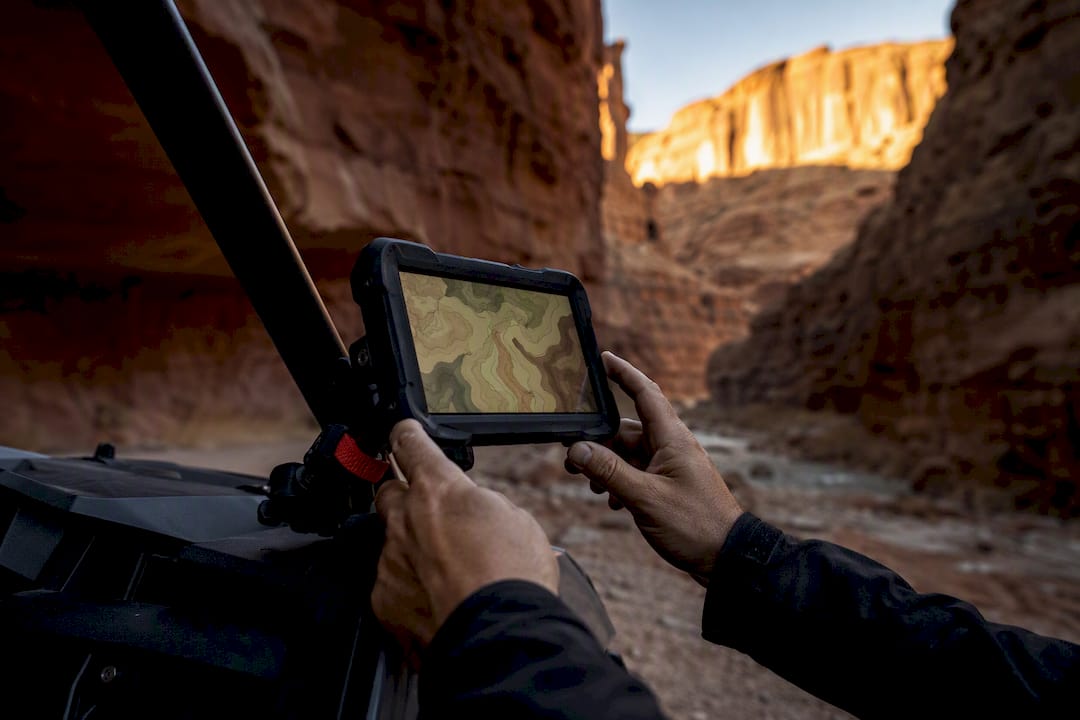
- Check tire pressure and carry a spare before heading out. UTV cockpits with built-in GPS navigation are especially valuable in fall, when early storms can wash out or reroute a trail you rode a week earlier.
- Check a same-day forecast before departure. Short-term services like AccuWeather’s Moab forecasts catch fast-moving fronts that broader seasonal averages miss.
Pro Tip: Set a hard turnaround time before you leave, not once you’re on the trail. Fall’s shorter days punish riders who push “just a little further” and then find themselves navigating slickrock in the dark.
Planning and booking your fall trail ride
Popular fall weekends, especially in October, book up fast. Reserve lodging and tours at least two to three weeks out if you want a specific date.
- National park access near Arches and Canyonlands doesn’t typically require timed entry for UTV routes outside park boundaries, but check current park alerts before a trip that crosses into managed land.
- Guided UTV tours add local knowledge that matters more in shoulder season, when a guide who rode the trail that morning knows about a wash-out before you find it yourself.
- Self-drive rentals work well if you already know the routes and want flexibility on timing.
- Build your itinerary around the shorter daylight window rather than a set list of trails, and keep a backup shorter route in mind.
How fall changes the wildlife and scenery along Moab’s trails
Wildlife activity picks up noticeably once summer’s heat breaks. Desert bighorn sheep move down from higher terrain, and it’s common to spot them along canyon rims near Hell’s Revenge and the Colorado River corridor in the cooler morning hours. Mule deer become more visible at dawn and dusk, grazing closer to trail edges than they will during peak summer heat.
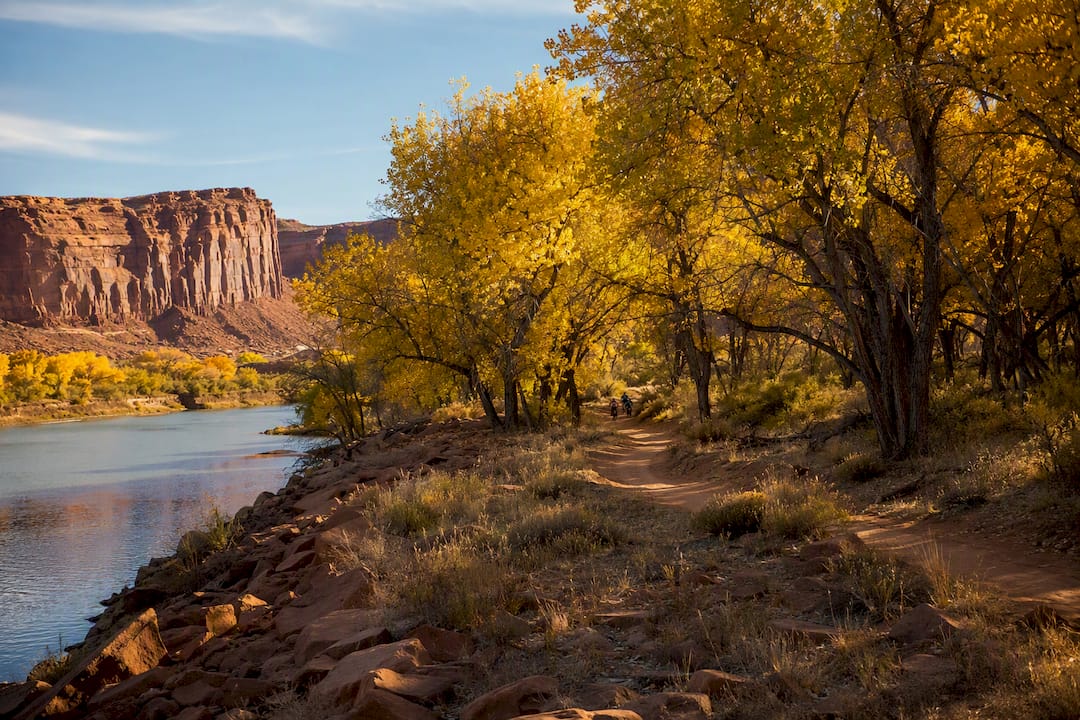
The bigger visual change is foliage. Cottonwood trees lining the Colorado River and Mill Creek turn a deep gold by mid to late October, creating a striking contrast against red sandstone that simply doesn’t exist in spring or summer. Local guides consistently point to this cottonwood color as one of fall’s defining features, and it’s concentrated enough along river-adjacent routes that riders often plan stops specifically to take it in.
Birdlife shifts too. Migratory species pass through the region in September and October, and the quieter trails, thanks to lower visitor traffic, make it easier to actually notice them. None of this requires detouring from a planned route. Most of Moab’s classic trails, from Hell’s Revenge to the Colorado River sections near Porcupine Rim, run close enough to these habitats that the seasonal changes show up naturally along the way. It’s one more argument for taking your time on a fall ride instead of treating it purely as a physical challenge.
Fall-specific hazards: sudden weather and early snow
Fall’s mild reputation can lull riders into skipping precautions they’d never skip in summer. That’s the actual risk. Temperature swings of 30 to 40 degrees between dawn and midafternoon are normal, and a clear morning can turn into a fast-moving storm by early afternoon, particularly in September and October.
Flash flooding remains a real concern on canyon routes even after summer’s monsoon season technically ends. A storm system passing over the La Sal Mountains can send runoff into low-lying washes miles away, on a trail where the sky overhead looks perfectly clear. If you see darkening skies uphill or notice water starting to run in a normally dry wash, turn around immediately rather than pushing through.
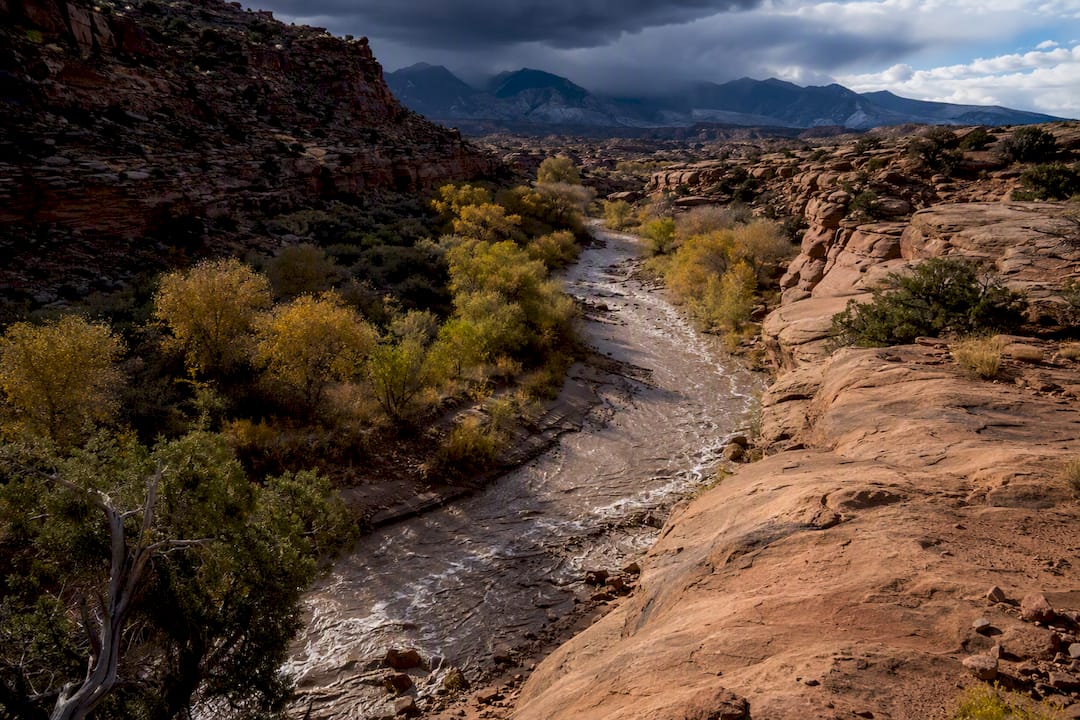
Early snow is the other fall-specific hazard, and it hits the La Sal Mountains well before it touches the desert floor. A route that includes any meaningful elevation gain, like the La Sal Loop or the upper sections of the Whole Enchilada, can pick up an unexpected dusting by mid-November that turns a manageable climb into a genuinely hazardous one. Built-in GPS navigation and a guide who checked conditions that morning both matter more here than they do in a stable summer forecast, since shoulder-season conditions change faster than seasonal averages suggest. When in doubt, choose the lower route.
Fall events in Moab worth building a ride around
Moab’s fall calendar adds a few reasons to time your trip around more than just the weather. The Moab Ho-Down mountain bike festival typically lands in late October, drawing riders from around the region for group rides and demo days, which means trailheads near town see a temporary uptick in traffic during festival weekends even though overall visitation is down from summer.
The area’s Halloween season also brings smaller community events into town, giving families a reason to combine an afternoon ride with an evening in Moab itself. None of these events require rerouting a serious trail day, but they’re worth checking before you book a specific October weekend, since lodging fills up faster around festival dates than on a typical fall weekend. If solitude on the trail is your priority, aim for a week before or after the Ho-Down rather than during it.
Photography tips for fall rides in Moab
The single biggest photography advantage in fall is timing, not gear. Afternoon light arrives lower in the sky for a longer stretch of the day than it does in summer, which means the deep red and orange tones photographers chase on Moab’s sandstone last well past what you’d get in July.
Dead Horse Point and the overlooks along the Rim Trail are worth a deliberate stop rather than a drive-by, since fall’s clearer air tends to sharpen long-distance views of the canyon country toward Canyonlands. Along river-adjacent trails, aim your shots to include the cottonwoods when they turn gold in mid to late October. That combination of red rock and gold foliage is unique to this window and gone within a few weeks.
Pro Tip: Shoot in the last 90 minutes before sunset rather than midday. Fall’s angle gives you that window without the harsh shadows summer light creates on slickrock’s uneven surface.
What a local guide notices about fall on Moab’s trails
The riders who spend every season out here notice the same thing every October: the light gets softer, the trails get quieter, and people relax instead of rushing to beat the heat. That shift changes how a guided ride feels, since a guide can slow down for an overlook or wildlife sighting without worrying about running out of daylight in the wrong spot. Epic4x4adventures has built its guided fall tours around exactly that pacing, and the more than 4,700 five-star reviews behind those trips reflect riders who noticed the difference too.
— PHENYX
Ride Moab’s fall season with Epic4x4adventures
Epic4x4adventures puts you on a brand-new 2026 Polaris RZR with built-in GPS navigation, so you spend fall’s shorter daylight hours actually riding instead of second-guessing a turn. Choose a guided tour for local trail knowledge during shoulder season, when conditions shift fastest, or go self-drive with the $0 damage deposit option if you’d rather set your own pace through the cottonwood-lined routes.
Every tour and rental includes trail entry fees and liability coverage, so there’s no separate paperwork to sort out once you’re standing in the parking lot with limited fall daylight ticking away. If you want the guided experience, the Moab Discovery Tour covers the season’s best scenery without requiring off-road experience going in. Ready to lock in a date before the good fall weekends fill up? Check current availability on the Moab UTV rental fleet and reserve your window while October dates are still open.
Sources
- Timeanddate
- Moabing
- Mountain biking Moab trails — HappierOutdoors
- Mastering the clock: timing your UTV adventure for peak thrills in Moab — advcollective
Recommended