Easter Jeep Safari runs March 28 through April 5, 2026, nine days marking the event’s 60th anniversary. Expect packed town streets, a vendor expo, and organized trail runs that temporarily close popular routes to anyone not registered. Book lodging now, plan arrival for early morning, and check the official trail schedule before you drive to any trailhead.
TL;DR:
- Nearly 40 trail rides are scheduled, and the official grid lists each run’s meeting point and departure time; registration happens at Old Spanish Trail Arena.
- Routes including Poison Spider Mesa and Moab Rim close to other motorized visitors during scheduled runs, so check that day’s schedule and choose a backup.
- If you miss preregistration, ask about openings at the arena desk from 7:00 AM to 10:00 AM; leaders cannot add riders after departure.
- Cell service drops beyond Moab, so download offline maps before leaving town and carry paper trail notes or a radio as backup.
Table of Contents
- Event overview: dates, structure, and special 2026 programming
- What happens in town during Safari week: expos, displays, shows and family programming
- Trail access and official closures: how organized runs change where you can drive
- Crowds, park impacts, and what to expect at Arches and nearby destinations
- How to plan your itinerary during Safari week: registration, lodging, timing and alternatives
- Safety, stewardship and a practical packing checklist for Safari week
- Connectivity and navigation: what to expect off the beaten path
- Impact of Easter Jeep Safari on local traffic and road conditions around Moab
- Tips for first-time visitors attending Easter Jeep Safari on how to best experience the event
- Advice on physical preparation and vehicle readiness for navigating popular Safari trails during the event week
- Author perspective: the case for booking a guided tour or rental during a busy week
- How Epic 4x4 Adventures can help: rentals and guided tours for Safari-week visitors
- FAQ
- Sources
Event overview: dates, structure, and special 2026 programming
Easter Jeep Safari is organized by Red Rock 4-Wheelers as a series of guided group trail rides spread across nine days, March 28 through April 5, 2026. Run departure times vary by trail length and difficulty; check the official trail grid for the schedule.
This year’s lineup includes nearly 40 separate trail rides, plus tribute runs tied to the 60th anniversary that revisit routes from the event’s early years. If you want the full picture before you go, a few resources matter more than the rest:
- The official trail grid lists every scheduled run, meeting point, and departure time.
- The event magazine, distributed locally, covers trail difficulty ratings and vehicle requirements.
- Registration packets and daily sign-in happen at the Old Spanish Trail Arena, the hub for most event logistics.
Knowing where these documents live saves you from guessing at trailheads.
What happens in town during Safari week: expos, displays, shows and family programming
Town activity runs parallel to the trails. A vendor expo sets up at Old Spanish Trail Arena for two days, while Jeep brand concept vehicles go on public display downtown at Walker Drug throughout the week.
Beyond the main attractions, expect:
- A vintage car show featuring restored off-road vehicles from past decades.
- Camp Moab, a youth program that keeps younger visitors engaged while adults hit the trails.
- Evening activations, including a drone show tied to this year’s anniversary celebration.
Downtown parking tightens considerably, restaurant wait times stretch longer than usual, and sidewalks see heavier foot traffic than a typical spring week. If you’re staying in town, plan meals outside peak dinner hours.
Trail access and official closures: how organized runs change where you can drive
Several of Moab’s most popular trails shift to exclusive use during Safari week. The Bureau of Land Management publishes annual notices confirming that trails including Behind the Rocks, Cliffhanger, Gold Bar Rim, Golden Spike, Moab Rim, Poison Spider Mesa, and Pritchett Canyon are temporarily reserved for scheduled event runs.
These restrictions aren’t informal courtesy requests. The BLM and Red Rock 4-Wheelers coordinate exclusive-use windows that apply to every motorized visitor, not just casual drivers who happen to show up uninvited. If a trail is actively running a Safari group, you can’t simply wait it out at the trailhead and expect to join or pass through.
Before you plan a day on any of these routes, a few things help:
- Check the official trail schedule for the specific date and trail you want to drive.
- Confirm whether a run is scheduled before leaving your lodging, not after arriving at the trailhead.
- Have a backup trail in mind in case your first choice is reserved that day.
Showing up without checking wastes a morning that could have gone toward a trail that’s actually open.
Crowds, park impacts, and what to expect at Arches and nearby destinations
Safari week pulls visitor numbers well above a typical spring week, and that pressure shows up at park entrances as much as it does downtown. The National Park Service notes that parking lots at high-visitation parks can reach capacity quickly during peak periods, which sometimes triggers short-term traffic management.
Arches won’t use timed entry in 2026, but that doesn’t guarantee an easy parking spot midday. A few habits help:
- Arrive at park entrances early, when lots may have more space.
- Have any park pass ready before you reach the gate to avoid holding up the line.
- Consider lesser-known viewpoints or trails if the main lot is full rather than waiting for a spot to open.
Flexibility matters more this week than any other time of year.
How to plan your itinerary during Safari week: registration, lodging, timing and alternatives
Moab lodging fills months ahead of Safari week, so booking early isn’t optional if you want a reasonable rate or a central location. Once lodging is set, the rest of your itinerary comes together in a fairly predictable sequence.
- Pre-register for a specific trail run online through Red Rock 4-Wheelers if you want a guaranteed spot on a popular route.
- Pick up your registration packet at Old Spanish Trail Arena, where daily check-in typically runs during set morning hours.
- If you didn’t pre-register, check for day-of availability at the arena’s registration desk between 7:00 a.m. and 10:00 a.m. There’s no trailhead registration, and run leaders can’t add people once a group departs.
- If your preferred run is full, pivot to a non-Safari trail that isn’t under exclusive-use restrictions that day.
- Alternatively, spend the day at town events or book a guided tour that handles routing and permits for you.
This sequence keeps your trip moving even when a specific run doesn’t pan out. For broader ideas on filling a day if trails are tied up, our guide to things to do in Moab covers options beyond the trailhead.
Safety, stewardship and a practical packing checklist for Safari week
Trail traffic multiplies during Safari week, which raises the stakes for staying on designated routes. Straying off-trail can damage fragile biological soil crusts, and with this many vehicles on the ground, the margin for error shrinks.
A solid packing list for the week includes:
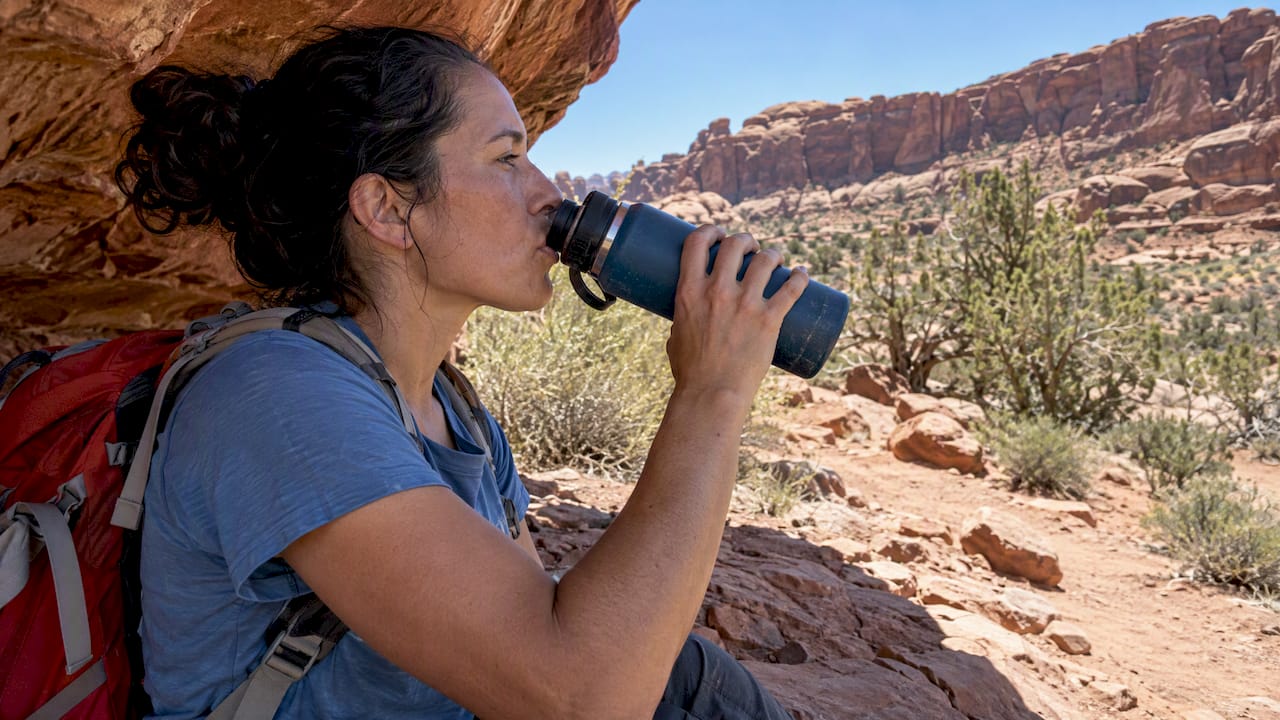
- Bring plenty of water, and more if you’ll be out for an extended period.
- Sun protection: hat, sunscreen, and sunglasses, since most trails offer little shade.
- Layered clothing, since desert mornings run cold and afternoons warm up fast.
- First-aid supplies and basic recovery gear if you’re driving your own vehicle.
- Spare parts and tools suited to your rig, along with a reliable way to communicate.
Volunteer crews also work during event week on trail maintenance, installing fencing and kiosks that protect fragile areas and manage staging zones, work that keeps these trails usable for future Safaris.
Pro Tip: Pack more water than you think you need. Desert heat and physical exertion drain hydration faster than most visitors expect.
Connectivity and navigation: what to expect off the beaten path
Cell service drops off fast once you leave Moab’s town center, and Safari week is the wrong time to find that out mid-trail. The Red Rock 4-Wheelers trail grid recommends downloading offline maps before you head out and carrying a physical backup in case your phone battery dies or GPS signal fails entirely.
Event organizers rely on GMRS or FRS-style radios to keep run leaders and tail-gunners connected across a group, a practice worth copying even if you’re driving independently. A few essentials:
- Download offline maps for your route the night before.
- Carry a paper map or printed trail notes as backup.
- Bring a radio if you’re traveling with a group on trails without cell coverage.
Impact of Easter Jeep Safari on local traffic and road conditions around Moab
Main Street and the highways feeding into Moab see noticeably heavier traffic throughout Safari week, driven by both trail-bound convoys and sightseers heading to town events. Mornings tend to be the busiest part of the day, as groups stage near trailheads and head out in caravans.
Road conditions themselves don’t change much on paved routes, but traffic volume does, which means travel times between your lodging and a trailhead or park entrance can run longer than usual. If you’re used to a quick drive from downtown to a trailhead, budget extra time during peak departure windows.
Parking along Main Street and near popular trailhead access roads fills early, and overflow parking sometimes means a longer walk than you’d expect. If you’re driving your own vehicle to a trail, arrive well before the scheduled departure time to secure a spot without rushing.
Evening traffic also picks up around town event hours, particularly near Old Spanish Trail Arena during expo days and downtown near Walker Drug during Jeep displays. Planning dinner reservations around these peak windows, either earlier or later than the typical rush, helps you avoid sitting in slow-moving traffic on a trip meant for open trails.
Tips for first-time visitors attending Easter Jeep Safari on how to best experience the event
If this is your first Safari week, a little structure goes a long way toward avoiding frustration. Start by deciding whether you want to watch, participate, or do a mix of both, since that choice shapes your entire schedule.
Spectators get plenty out of the week without ever touching a trail. Walking downtown during display hours, catching the vendor expo, and watching groups stage for morning runs all give a real sense of what draws visitors here year after year.
If you want to drive, decide early whether you’re bringing your own vehicle and registering for a specific run, or whether a guided experience fits your timeline better. Independent first-timers often underestimate how quickly popular trails fill their exclusive-use windows, leading to wasted mornings at closed trailheads.
A few habits that help:
- Pick one or two priority experiences, whether a specific trail or a town event, rather than trying to do everything.
- Check trail status the morning of, not the night before, since schedules can shift.
- Build in buffer time between activities, since parking and crowds slow everything down.
Pacing yourself matters more than packing your schedule tight. Safari week rewards flexibility over ambition.
Advice on physical preparation and vehicle readiness for navigating popular Safari trails during the event week
Many of the trails running during Safari week involve technical obstacles: rock ledges, steep grades, and tight turns that demand sustained focus. Red Rock 4-Wheelers notes that most rides run day-long, so physical stamina matters as much as driving skill, especially in spring heat that can climb faster than expected.
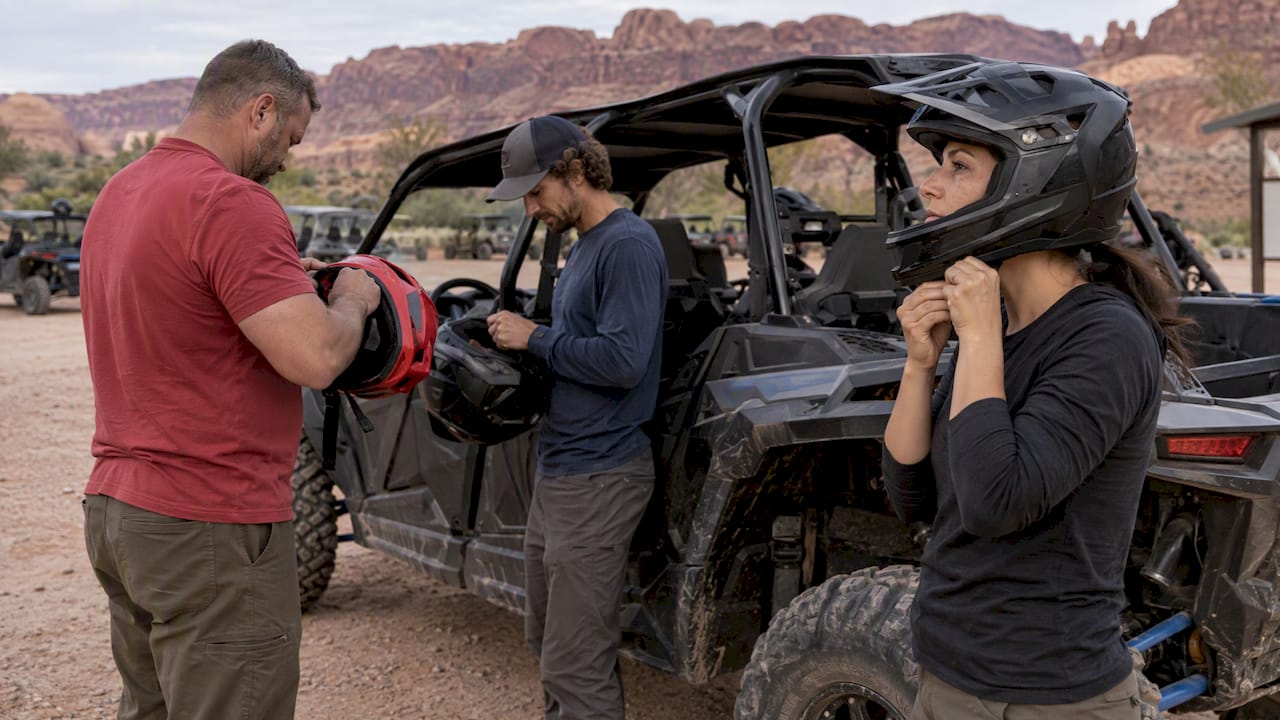
If you’re driving your own vehicle, a pre-trip inspection isn’t optional. Check tire pressure and tread, inspect your suspension and undercarriage for wear, and confirm your recovery gear, straps, a shovel, a jack rated for uneven terrain, is actually in the vehicle rather than at home.
Hydration and rest matter just as much as mechanical readiness. A day on a technical trail is physically demanding even when you’re not the one driving, so eat a real breakfast, pack snacks, and pace your water intake rather than drinking it all in the first hour.
If your own vehicle isn’t built for the terrain, or you’d rather skip the inspection checklist entirely, a rental with built-in navigation and a vehicle maintained specifically for these trails removes a layer of risk that first-time Safari drivers often underestimate.

Author perspective: the case for booking a guided tour or rental during a busy week
Safari week rewards preparation, but even well-prepared visitors can lose a morning to a closed trailhead or a misread schedule. A guided run handles the permits, timing, and local traffic patterns that trip up independent drivers, which matters more this week than any other.
Guides also know which closures are active on a given day, cutting the odds of arriving somewhere you can’t actually drive. If convenience and local knowledge matter more to you than figuring out registration logistics solo, a guided option is worth real consideration during the busiest week of the Moab calendar.
— PHENYX
How Epic 4x4 Adventures can help: rentals and guided tours for Safari-week visitors
Safari week schedules get complicated fast, and our guided tours and rentals offer another way to explore. Our fleet features brand-new 2026 Polaris vehicles with built-in navigation, so you’re not relying on guesswork or a phone signal that drops the moment you leave town.
A few reasons this week specifically rewards booking ahead with us:
- Our local guides are familiar with the terrain, helping you avoid guesswork at the trailhead.
- Ask about damage deposit options when booking.
- Self-drive rentals work well if you’d rather set your own pace once you’re off Main Street.
This year’s anniversary programming makes availability tighter than usual. Check our UTV rentals or browse our full tour lineup to lock in a spot before the week gets away from you.
FAQ
What is the Easter Jeep Safari in Moab?
Easter Jeep Safari is a nine-day off-road event in Moab organized by Red Rock 4-Wheelers, built around dozens of scheduled group trail rides on the region’s most well-known four-wheel-drive routes. In 2026, the event marks its 60th anniversary with nearly 40 trail rides alongside town events like a vendor expo and Jeep displays.
What is Jeep Week in Moab?
“Jeep Week” is a common nickname for Easter Jeep Safari, the same nine-day event rather than a separate occasion. It spans March 28 through April 5, 2026 and combines organized trail runs with downtown vendor and display activity.
Why is Moab’s Easter Jeep Safari so central to off-roading?
The event is celebrating its 60th anniversary, making it one of the longest-standing organized off-road gatherings in the country, built around Moab’s dense network of technical slickrock and canyon trails. Its scale, nearly 40 group rides in a single week, plus the accompanying town events, draws off-road enthusiasts who return year after year to drive routes rarely open to this volume of organized access at once.
What is the schedule for the 2026 Easter Jeep Safari in Moab?
The 2026 event runs March 28 through April 5, with daily trail rides departing at times that vary by route. The official trail grid lists exact departure times and meeting points for each scheduled run.
How do I avoid arriving at a closed trailhead during Safari week?
Check the official trail schedule before heading to any trailhead, since popular routes like Poison Spider Mesa and Moab Rim shift to exclusive use during scheduled event runs. If you’d rather skip the logistics entirely, a guided tour or rental builds trail access into the booking itself.
Sources
- Visitors: annual Easter Jeep Safari trail restrictions | Bureau of Land Management
- Moab’s 60th Annual Easter Jeep Safari will take place March 28 - April 5
- Rr4w
- National Park Service Expands Access for Summer 2026 While Maintaining Safety at High-Visitation Parks - Office of Communications (U.S. National Park Service)
Recommended