If you've spent any time in the off-road community, you've heard the Glamis position stated with total confidence: Imperial Sand Dunes, Thanksgiving weekend, the biggest gathering of side-by-sides in the country. The argument for Glamis is real and it earns its reputation. But if you're comparing Moab and Glamis for your group's next off-road trip, you're not choosing between good and better. You're choosing between two completely different experiences—and the one that wins depends entirely on what your group actually wants out of the trip.
The Terrain: Sand vs. Slickrock
Glamis is about dunes. The Imperial Sand Dunes stretch for miles along the California-Arizona border, offering open riding across rolling sand faces, bowls, and ridges. At their best, the dunes reward instinct—momentum, throttle feel, and reading the sand's surface. There's very little navigation involved. The challenge is physical and immediate.
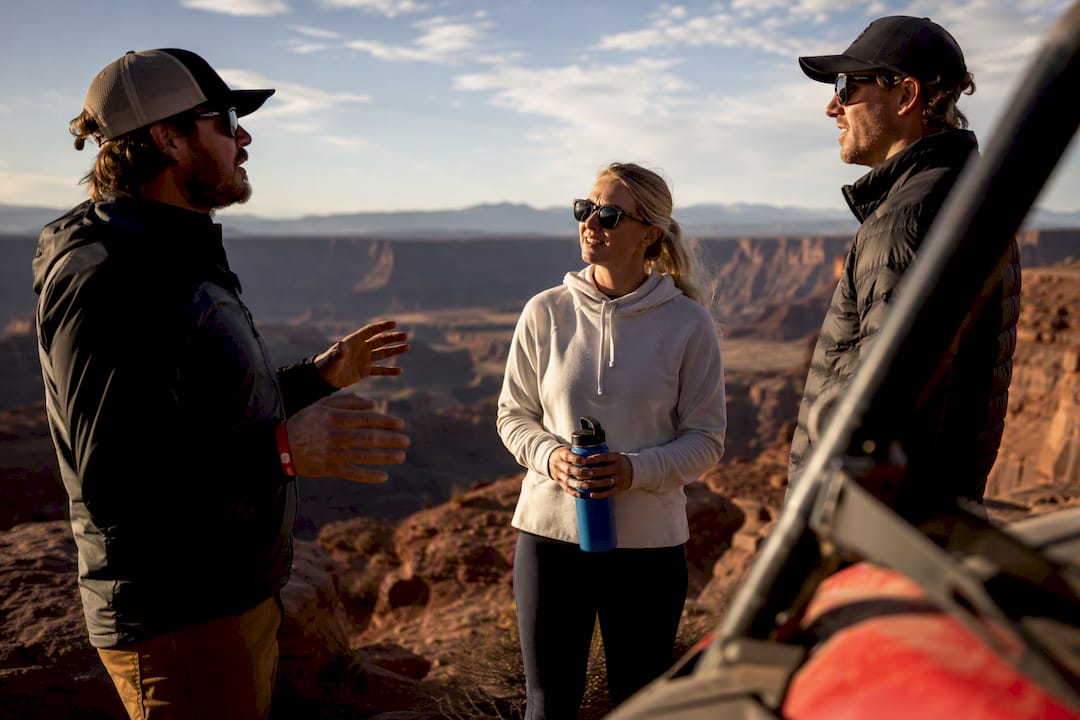
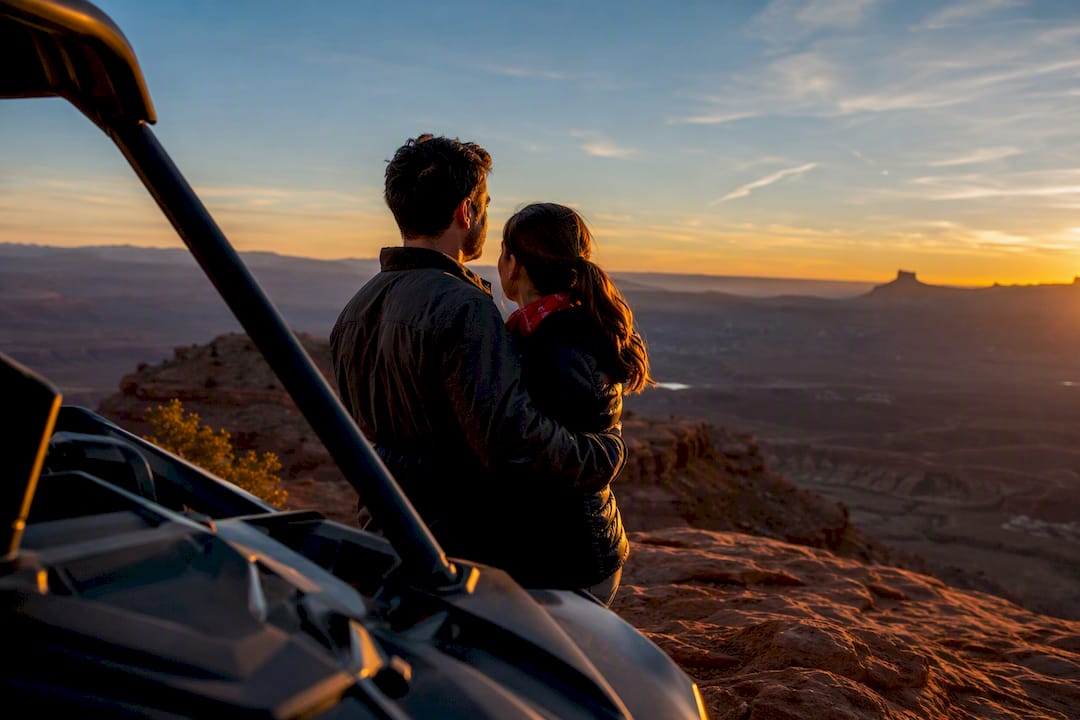
Moab is about geology. The slickrock, canyon systems, sandstone shelves, and technical passages that define Moab's trail network demand a different kind of attention. You're reading terrain, choosing lines, managing ground clearance, and working through obstacles that have names and established approaches. The landscape changes constantly—canyon walls, river corridors, mesa rims, and desert floor, all in the same day. There is no comparison in terms of visual variety. Moab wins that question decisively.
Vehicle Requirements: What You Actually Need
Glamis requires a dune-capable machine. Open desert racing vehicles and lightly modified UTVs can perform well, but stock side-by-sides struggle in deep sand, especially on steep face climbs. Paddle tires are standard, and most experienced Glamis riders arrive with highly modified setups. Ownership or towing a capable machine across the desert is simply part of the deal.
Moab can be done without owning anything. Epic 4x4 Adventures provides the vehicles—either the Polaris RZR Pro R for performance-focused riders or the Polaris Xpedition XP5 Northstar with climate-controlled enclosed cab and stadium seating for groups that want comfort alongside real challenge. You fly in, meet your guide, and get into a purpose-built machine that's already set up correctly for every trail on the roster. No trailer, no maintenance bills, no five-hour drive through the California desert.
Logistics: Getting There, Setting Up, Getting Out
Getting to Glamis
The Imperial Sand Dunes are not close to anything convenient. The nearest significant city is Palm Springs, roughly two hours away. Most Glamis visitors drive from Southern California or Arizona, towing UTVs and ATVs and setting up camp directly on the open desert floor. There are no lodges. Amenities are minimal. The experience is self-contained and self-supported. That's part of the appeal for experienced dune riders who enjoy the full camp setup. For everyone else, it's a significant logistical undertaking that requires planning well beyond the riding itself.
Getting to Moab
Moab is a functioning town with hotels, restaurants, gear shops, and services. It's accessible via Canyonlands Regional Airport for direct flights, or a four-hour drive from Salt Lake City. You can fly in, stay in a comfortable hotel, and be on the trail the next morning without having packed a vehicle, reserved a campsite, or sourced your own fuel. The logistics of a Moab trip are hotel-and-guide simple, which is not a knock on the experience—it's a genuine advantage for groups that include people with varying tolerance for roughing it.
The Experience Itself: What Your Day Looks Like
A Glamis day is riding. Long sections of open dune, group runs along established bowls, and the kind of unstructured desert freedom that appeals strongly to people who want to point a machine and go. The scenery is one-dimensional—sand is sand, and while there's beauty in the scale of the dunes, the visual vocabulary is limited to one chapter.
A Moab day is a progression. You launch from town, enter a trail system, and spend four to six hours in terrain that changes every mile. Canyon walls, slickrock faces, river overlooks, technical obstacles, and panoramic rim views are all possible in a single morning. The guided caravan format means you're not navigating alone—your guide leads, you drive, and the route is curated for the specific combination of challenge and scenery that makes Moab tours memorable rather than just loud. The Hell's Revenge Pro R Ultimate experience delivers exactly this for riders who want the performance edge without sacrificing the full Moab landscape.
Group Dynamics: Who Each Destination Actually Suits
Glamis is best for experienced riders who own capable machines, enjoy the camp culture, and are looking for pure riding volume in an unstructured setting. It's excellent for groups that already know each other's riding pace and have the logistics handled end-to-end. It is a poor fit for mixed-ability groups, visitors who don't own off-road vehicles, and anyone who considers scenery a meaningful part of the experience.
Moab works for nearly everyone. Multi-generational groups—three generations on the same trail in the same vehicle—are genuinely common on Epic 4x4 Adventures tours. First-timers, experienced riders, photography-focused visitors, families with teenagers, and corporate groups have all made Moab work in ways Glamis simply doesn't accommodate. The guided caravan format, provided vehicles, and Adventure Assure protection plan eliminate most of the barriers that make other off-road destinations inaccessible for mixed groups.
The Cost Comparison
Glamis looks cheaper on paper if you already own the right vehicle and trailer. If you don't, the cost of acquiring or renting a dune-capable machine, transporting it, and setting up a multi-day camp closes the gap quickly—and often reverses it. Moab tours include the vehicle, guide, GPS navigation, safety equipment, and the Adventure Assure protection plan in the tour price. There are no surprise costs at the trailhead. What you book is what you pay, and the Moab Discovery Tour is a strong entry point for groups comparing options side by side.
Frequently Asked Questions
Is Moab or Glamis better for beginners?
Moab is significantly more accessible for beginners. The guided caravan format, provided vehicles with full safety equipment, and trail variety at different difficulty levels make it easy to start at the right level and build from there. Glamis requires more vehicle knowledge, self-sufficiency, and tolerance for logistical complexity that most beginners haven't yet developed.
Do I need to bring my own vehicle to Moab?
No. Epic 4x4 Adventures provides fully equipped Polaris vehicles for all tours. You book the tour and show up—the vehicle, safety gear, GPS navigation, and guide are all included. This is one of the primary reasons Moab works well for visitors who don't own or can't easily transport off-road equipment.
Can I do Moab without owning an off-road vehicle?
Yes, entirely. The full tour catalog is built around provided Polaris UTVs, which means the quality of your experience isn't limited by what you own or what you could fit on a trailer. First-timers and experienced riders are in the same fleet, on the same trails, with the same safety systems underneath them.
Which destination has better scenery?
Moab, and it isn't close. The combination of slickrock formations, canyon corridors, river overlooks, and the backdrop of Arches and Canyonlands National Parks creates a visual landscape with no equivalent at Glamis. If scenery matters to your group—and for most people who aren't hardcore dune culture veterans, it does—Moab is the answer every time.
If your group is weighing destinations and you want to understand exactly what a Moab tour looks like from start to finish, explore our full tour lineup or get in touch. We'll help you match the right trail and vehicle to your group's size, experience level, and goals. Glamis will still be there. But Moab tends to be the trip people actually talk about.