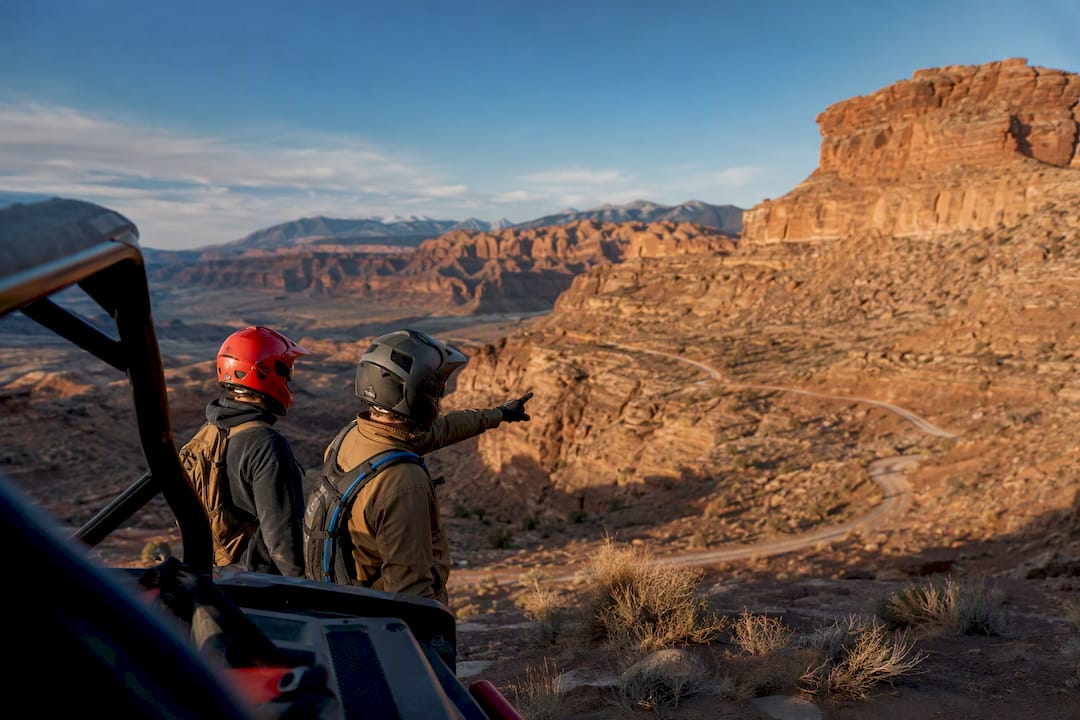
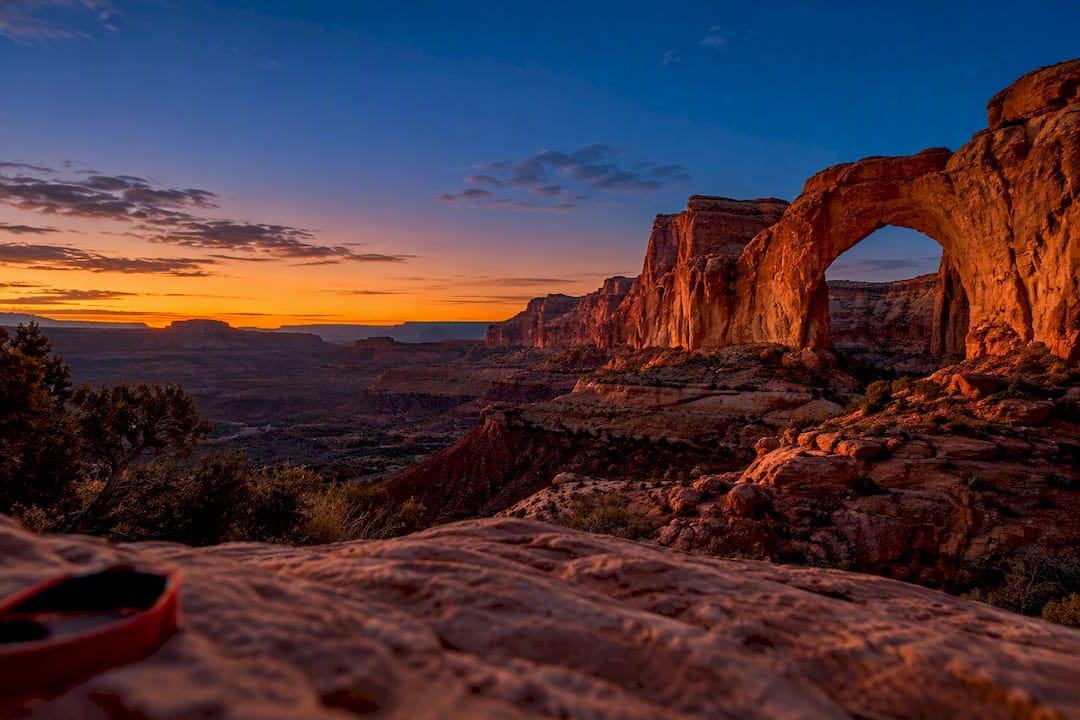
Moab is a world-class off-roading destination, and the terrain backs up the reputation. Before you turn a wheel, though, plan on two non-negotiables: a Utah OHV education certificate and a Sand Flats vehicle pass. Once those are handled, Hell’s Revenge, Fins & Things, and Shafer Trail make an excellent starting lineup for 4x4s, UTVs, and ATVs alike, no matter your skill level.
TL;DR:
- A Utah OHV education certificate and a Sand Flats vehicle pass are mandatory before off-roading in Moab, with passes costing $10 for a week or $35 annually.
- Trails like Hell’s Revenge and Poison Spider Mesa are rated moderate to difficult, requiring built vehicles and experience, while Gemini Bridges is suitable for most stock UTVs and families.
- Guides are recommended for beginners or those unfamiliar with obstacle navigation, especially on challenging routes like Poison Spider Mesa’s Waterfall.
- Off-trail riding and repetitive obstacle looping are prohibited to protect fragile desert soil and natural features.
- Spring and fall provide optimal trail conditions, with temperatures ideal for traction and safety, while summer demands early starts and extra hydration.
Table of Contents
- Best Off-Roading Trails to Explore in Moab
- Do You Need a Permit to Off-Road in Moab?
- Rentals vs Guided Tours: How to Pick the Right Option
- What to Pack for a Safe Off-Road Trip
- When Is the Best Time to Off-Road in Moab?
- Why the Rules Exist, Not Just What They Say
- Book Your Moab Off-Road Adventure with Epic4x4adventures
- Sources
- FAQ
Best Off-Roading Trails to Explore in Moab
Moab’s slickrock and canyon country stack up into one of the densest trail networks in the American West, and each route has its own personality. Here’s what you need to know before you commit a full day to any of them.
- Hell’s Revenge is the trail most riders picture when they think of Moab: exposed slickrock, steep drop-offs, and views of the Colorado River corridor. It runs moderate to difficult, favors a UTV or built jeep over a stock rental, and takes roughly three hours round trip. A Sand Flats pass is required, and stock street tires struggle here.
- Fins & Things delivers a rollercoaster of sandstone fins and dips that reward a UTV with good ground clearance. Plan on two to three hours, expect moderate difficulty, and bring the same Sand Flats pass since the trailhead sits inside the recreation area.
- Shafer Trail drops through switchbacks carved into the canyon wall en route to Canyonlands overlooks, and the National Park Service’s Shafer Trail overview is worth reading before you go. It’s moderate but exposed, best suited to a capable 4x4 or UTV, and takes three to four hours depending on stops.
- Gemini Bridges is a gentler, family-friendly route past twin natural rock spans, manageable in most stock UTVs in about two hours. Check the BLM’s Gemini Bridges trailhead page for current route status.
- Poison Spider Mesa climbs slickrock ledges that intimidate first-timers, with the infamous “Waterfall” obstacle best left to experienced drivers in modified rigs. Budget three to four hours for a difficult, technical run.
- Chicken Corners follows an old mining road along the Colorado River with a narrow shelf section near the end; it’s easier overall but demands full attention where the trail narrows. Plan four to five hours out and back.
- Porcupine Rim is better known among mountain bikers, but its upper sections see UTV traffic and connect into the broader Sand Flats network of jeep trails.
Pro Tip: If a trail description mentions “obstacles” or “ledges,” assume a stock rental UTV isn’t the right tool. Ask your outfitter directly whether the vehicle class matches the route before you book.
Do You Need a Permit to Off-Road in Moab?
Yes, and skipping the paperwork can end your trip before it starts. Utah requires every OHV operator to complete the Utah Off-Highway Vehicle Education Course, with a separate youth certificate for riders under 18. Carry proof of completion, since rangers do check.
Most Sand Flats trails also require a paid vehicle pass. The Sand Flats Recreation Area charges $10 for a 7-day vehicle pass and $35 for an annual pass, and that money funds toilets, signage, and search and rescue support across the area.
Local and federal rules layer on top of that:
- Moab city streets impose a 15 mph speed limit for OHVs and a 92 dBA stationary noise limit, and your vehicle needs street-legal equipment to drive through town at all, per the city’s official OHV rules.
- BLM and Grand County guidance requires staying on designated routes, with off-trail motorized travel treated as a serious violation under the Sand Flats visitor guide.
- There are no designated “play areas” anywhere in Sand Flats, and looping repeatedly at an obstacle can damage cryptobiotic soil crusts that take decades to recover.
If your rental doesn’t meet street-legal specs, plan to trailer it to the trailhead rather than risk a citation downtown.
Rentals vs Guided Tours: How to Pick the Right Option
Choosing between a self-drive rental and a guided tour comes down to four questions worth answering honestly before you book.
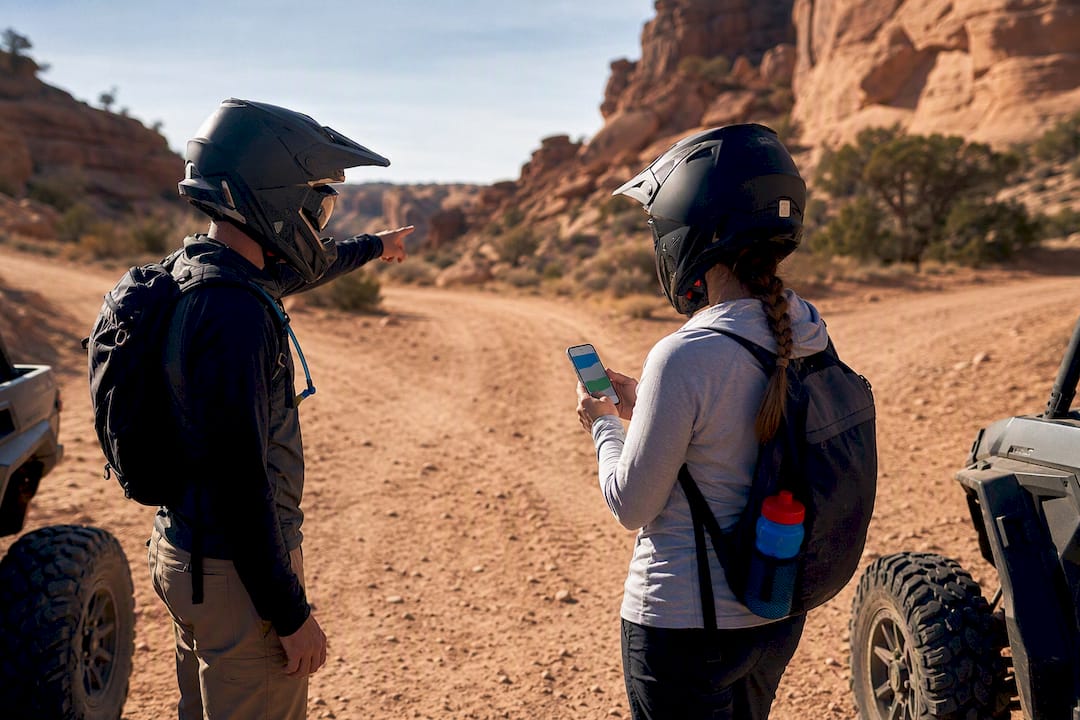
- How much off-road experience do you actually have? First-timers and mixed-skill groups almost always do better with a guide who knows the line through obstacles like Hell’s Revenge’s “Hell’s Gate.”
- How big is your group, and do you need one vehicle or several? Larger families often split between a couple of UTVs, which changes how you budget for passes and fuel.
- What’s included in the deposit and insurance terms? Ask specifically about damage deposits, cancellation windows, and whether liability coverage is bundled in.
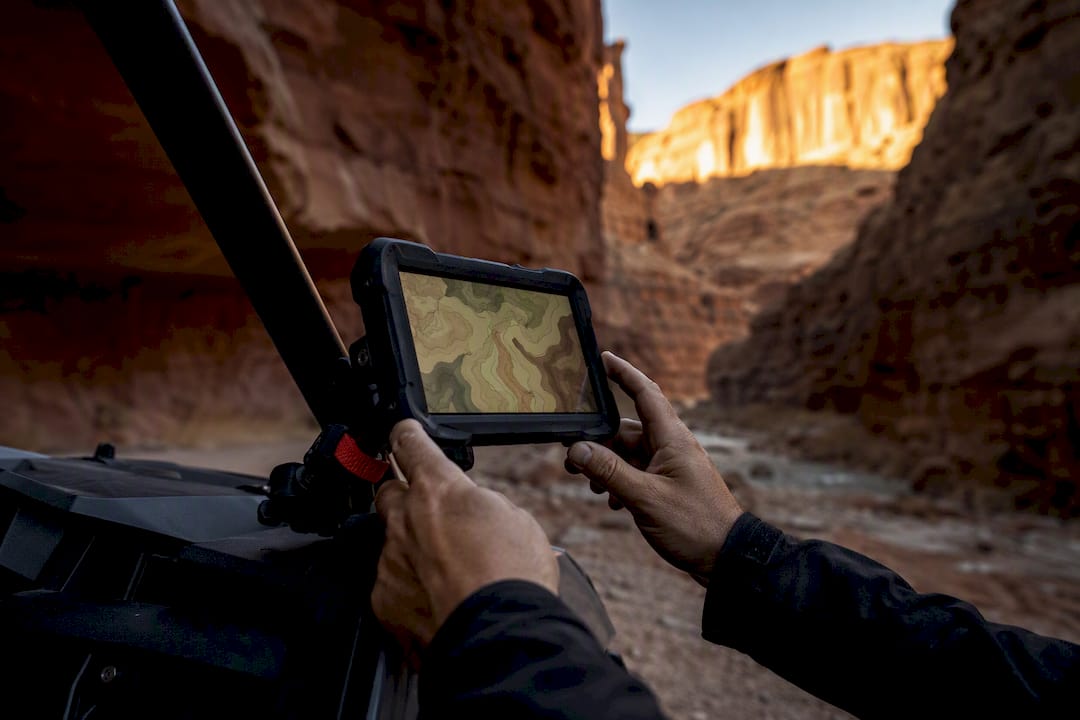
- Does the vehicle come with built-in navigation and trail fees included, or are those extras? A rig with onboard GPS removes a real source of wrong turns on unmarked forks.
Whatever outfitter you choose, confirm they cover a safety briefing, disclose whether the vehicle is street-legal, and spell out refund terms in writing.
Pro Tip: Reserve at least two to three weeks ahead for spring and fall weekends. Those windows book fastest because the weather and trail traction are both close to ideal.
Epic4x4adventures runs both models out of Moab: guided experiences with a local expert at the wheel or riding alongside, and self-drive rentals for groups who want the wheel to themselves. Every vehicle in the current fleet is a brand-new 2026 Polaris with built-in GPS, and rentals and tours can be booked directly through the rental booking page or the full tour lineup.
What to Pack for a Safe Off-Road Trip
A short checklist separates a great day on the trail from a long wait for a tow truck. Carry these basics no matter which trail you pick:
- Extra water, well beyond what you think you’ll drink, plus sun protection and a basic first-aid kit.
- A spare tire, a portable air compressor, and a tire deflator for better traction on slickrock.
- A recovery strap and offline GPS or a paper map, since cell service disappears fast once you’re past the pavement.
Before you leave the lot, check that your muffler and spark arrestor are intact, tires and suspension are in good shape, and recovery points are accessible. If your vehicle isn’t street-legal, confirm your trailer setup in advance.
Pro Tip: Always run with a second vehicle, even on an “easy” trail. Tell someone your route and expected return time, and save the Grand County Sheriff’s non-emergency line in your phone alongside 911.
When Is the Best Time to Off-Road in Moab?
Spring and fall are the sweet spot for most drivers. Temperatures sit in a comfortable range, and slickrock offers its best traction when it isn’t baking or icy.
- Spring (March through May) and fall (September through November) bring mild days and firm grip on the rock, making them the preferred windows for most visitors.
- Summer afternoons regularly climb toward the 95–105°F range, so plan sunrise starts and pack more water than you think you need.
- Winter mornings can carry ice on shaded rock, so a midday start once temperatures climb is usually the safer call.
Trail conditions and closures shift with weather and maintenance, so check current BLM updates before you commit to a route, especially after storms.
Why the Rules Exist, Not Just What They Say
Every pass fee and posted speed limit exists because thousands of vehicles hit this same terrain every season, and the desert doesn’t recover quickly from shortcuts. Staying on designated routes and paying the Sand Flats fee keeps signage current and search and rescue funded for the day something actually goes wrong. If you’re unsure about your skill level on a route like Poison Spider Mesa, a guided tour puts someone experienced in the lead vehicle instead of you learning the hard way.
— PHENYX
Book Your Moab Off-Road Adventure with Epic4x4adventures
This company offers both guided and self-drive off-road experiences with vehicles equipped with GPS navigation to help avoid wrong turns. Damage deposits vary, and the vehicles aim to accommodate a wide range of riders.
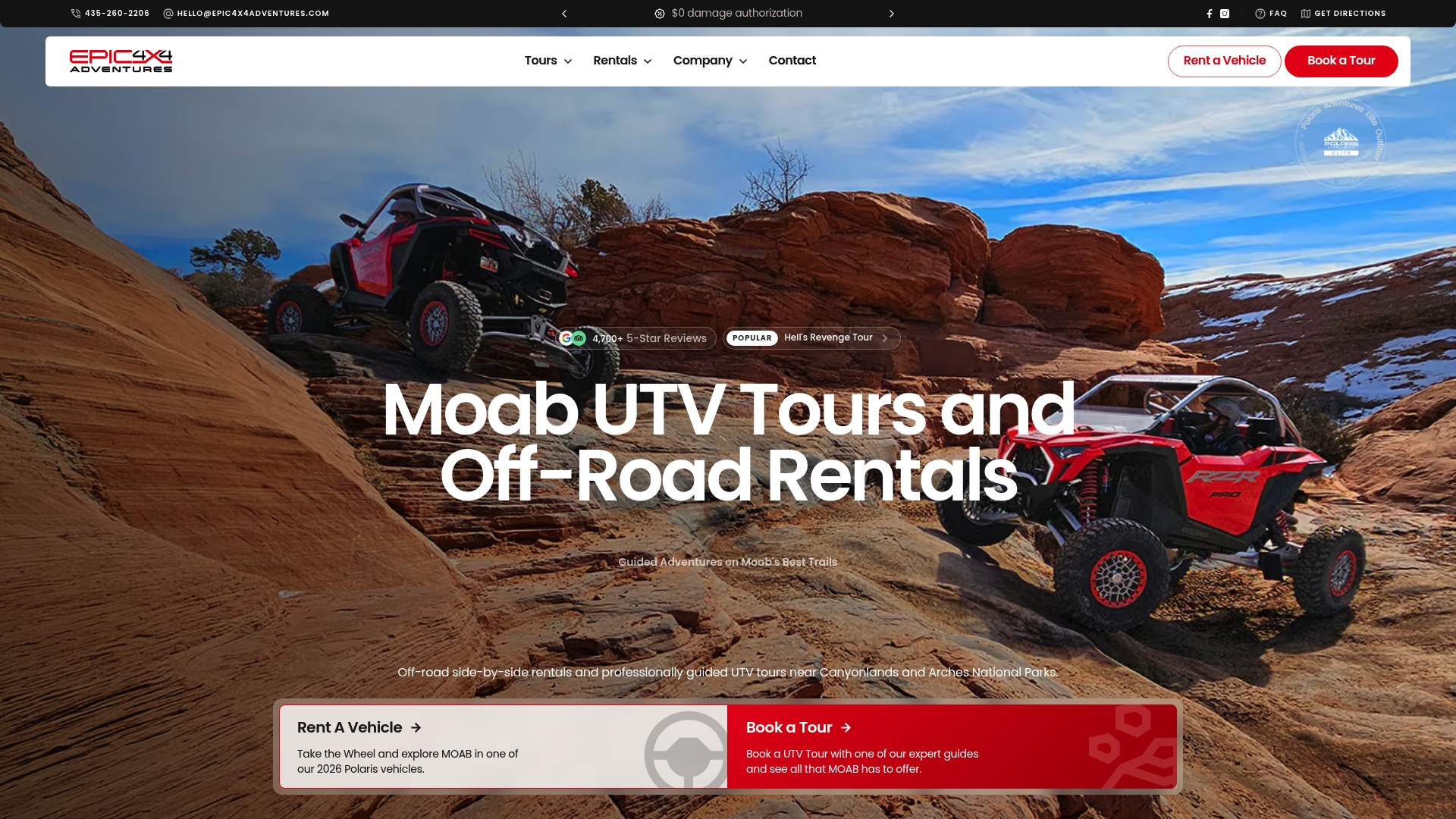
For a wheel-in-your-hands experience, the UTV rental page covers everything from single-day bookings to multi-vehicle groups. If you’d rather have a local expert lead the way, the Poison Spider Mesa Tour and the rest of the guided lineup are built around Moab’s signature trails. Reserve peak spring and fall dates a few weeks out, and bring your Utah OHV education certificate and Sand Flats pass even when a guide is driving. Book your date now and get on the trail with a fleet and route already sorted.
Sources
Trail conditions, fees, and rules change, so confirm details directly before you drive:
- OHVs In Moab | Moab, UT - Official Website
- Moab ATV trails and UTV Riding — Discover Moab, Utah
- Sand Flats Recreation Area — BLM
- Sand Flats visitor guide 2023 — Grand County
FAQ
Where should I go off-roading in Moab?
Hell’s Revenge, Fins & Things, and Shafer Trail are the three most popular starting points, each offering slickrock scenery within a half day. Gemini Bridges suits beginners, while Poison Spider Mesa and Chicken Corners reward more experienced drivers.
Do I need a permit to off-road in Moab?
Most Sand Flats trails require a paid vehicle pass, either a 7-day pass or an annual pass, and every operator must also complete the Utah OHV education course. Carry your certificate and pass with you on the trail, since enforcement is active.
What is Hell’s Revenge in Moab?
Hell’s Revenge is a signature slickrock trail known for steep exposed sections and canyon views, running moderate to difficult depending on the obstacle. It’s best suited to a UTV or built jeep rather than a stock rental, and a Sand Flats pass is required to drive it.
Can I take a UTV or off-road vehicle into Arches National Park?
Arches National Park restricts motorized travel to paved and designated park roads, so it isn’t a destination for off-trail UTV or jeep exploration. Most off-roading happens on the BLM land surrounding Moab, including Sand Flats and trails like Gemini Bridges, rather than inside the park boundary itself.
Recommended