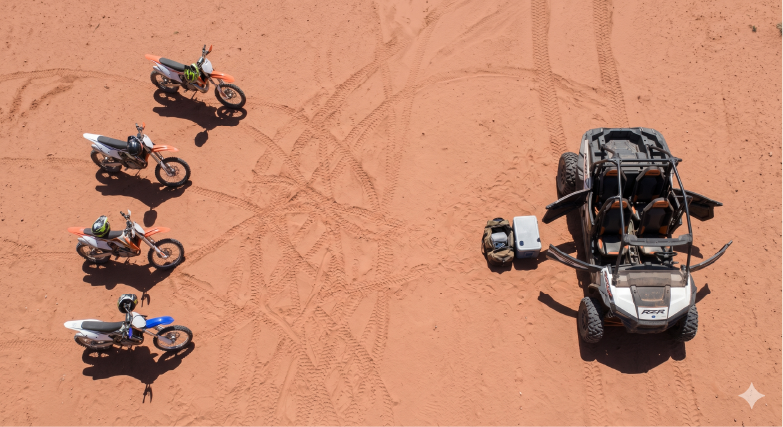
The dirt bike crowd will tell you that side-by-sides are for people who aren't serious riders — that strapping into a cage with a roll bar is somehow less authentic than pinning it between canyon walls on two wheels. Here's what actually happens when a group of four friends tries to plan a Moab trip around that philosophy: two people can't ride, one person's bike isn't registered in Utah, and everyone ends up experiencing the same trail in isolation. Side-by-sides don't just compete with dirt bikes in Moab. For groups, they replace them entirely.
The Group Experience Problem
Dirt biking in Moab is genuinely great — if you're a solo rider or a tight crew of experienced two-wheel riders with your own gear, your own bikes, and your own trailer. That describes a small percentage of the people who come to Moab every year wanting an off-road experience. For everyone else — couples, families, friend groups with mixed skill levels, corporate teams, multi-generational parties — dirt bikes create more logistical problems than they solve.
A side-by-side seats two to five people in the same vehicle. Your group rides together, talks on the trail, reacts to the terrain at the same moment. A passenger in a side-by-side has the full experience: the g-forces on the ledge climbs, the view from the slickrock ridgelines, the feeling of the vehicle working through the technical sections. A passenger on a dirt bike does not exist. Your group of four becomes four separate riders divided by skill gap, and the experience fragments.
Performance: What the Numbers Actually Show
Power and Capability
The Polaris RZR Pro R runs a 225-horsepower naturally aspirated engine with top-end speed well above 80 mph on open terrain. The suspension travel — 25 inches in the rear — absorbs repeated ledge impacts without the rider taking that force directly through their spine. On the technical terrain Moab is famous for, the Pro R is not a compromised vehicle. It is a purpose-built performance machine that happens to seat two people and deliver a shared experience.
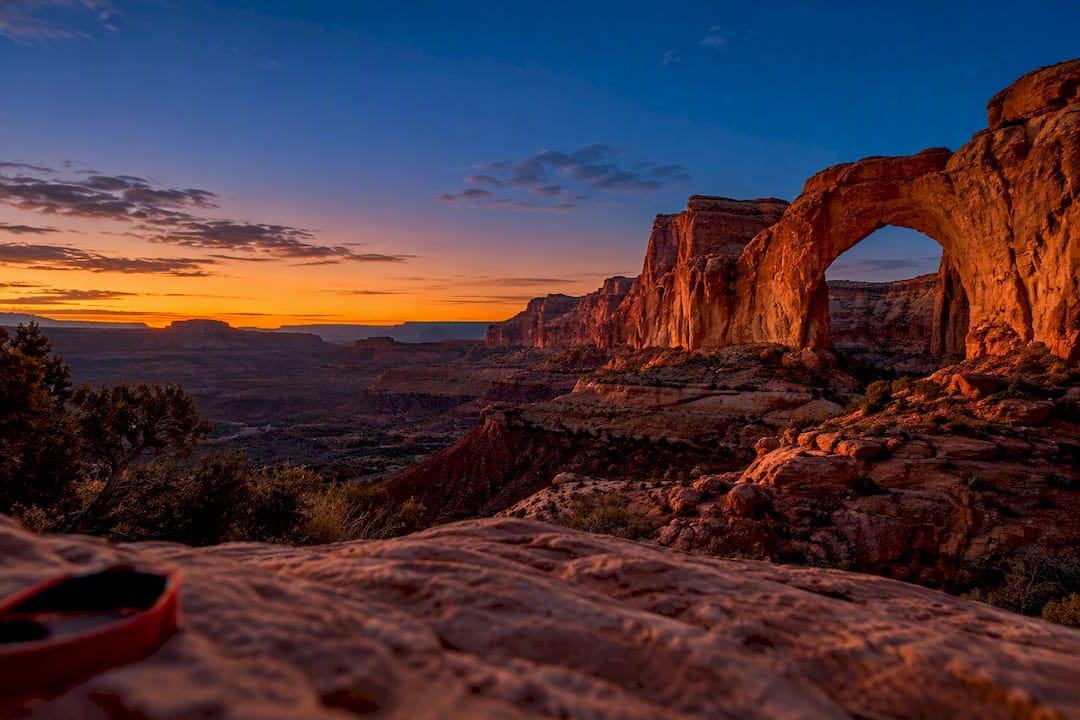
Modern high-performance dirt bikes produce 60 to 70 horsepower in the 450cc class and are lighter, with a different kind of agility that is unmatched on tight singletrack. But Moab's iconic trails — Hell's Revenge, Poison Spider Mesa, Steel Bender, Pritchett Canyon — are not singletrack. They are wide-open ledge rock, sand washes, and exposed ridge routes that play directly to the side-by-side's strengths.
Safety and Stability
This comparison is not close. A six-point harness and a full roll cage fundamentally change the risk profile of an off-road incident. On Moab terrain — where a missed line can mean a significant drop — that containment system is not optional equipment, it's the difference between an exciting moment and a medical evacuation. Dirt bikes offer no comparable protection. Riders accept that risk knowingly; it doesn't make side-by-sides the lesser vehicle, it makes them the appropriate one for the terrain and the audience.
Logistics: Where the Dirt Bike Argument Breaks Down
Bringing a dirt bike to Moab requires a truck, a trailer, a bike that meets Utah's OHV registration requirements, and enough personal protective gear for every rider in your group. If you're renting, the inventory of quality rental dirt bikes in Moab is significantly more limited than side-by-side availability, and ride-along passengers remain impossible regardless of what you're renting.
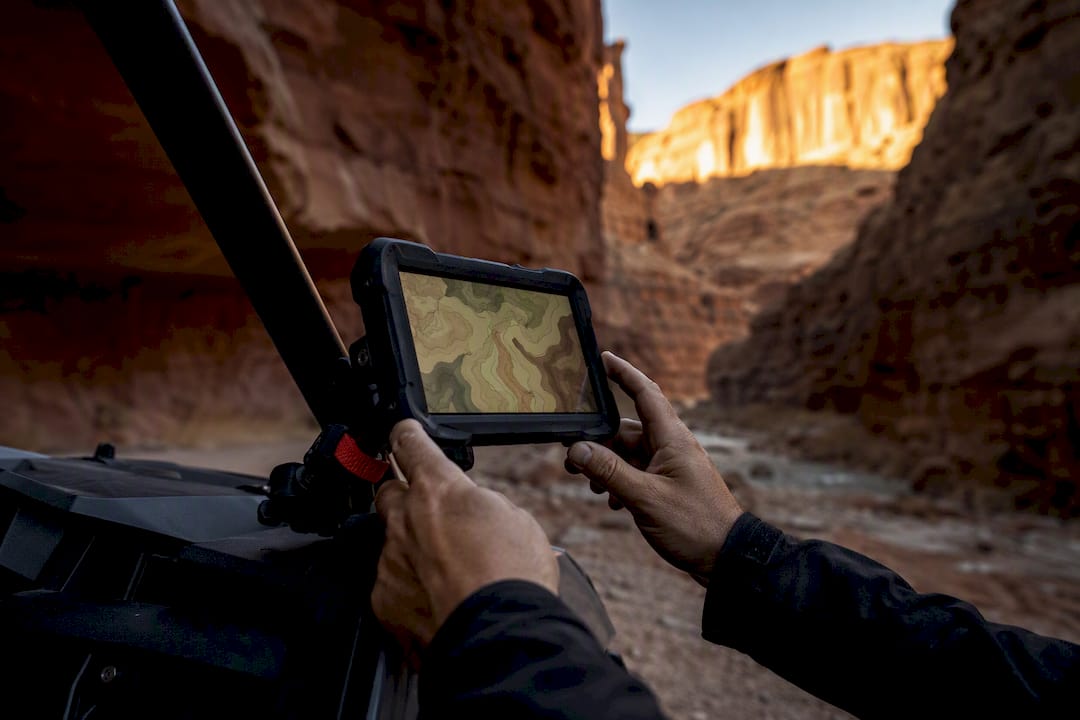
Our tours include the vehicle, the fuel, a lead guide for every group, preloaded GPS trail navigation, and the Adventure Assure protection plan. You show up, receive a brief orientation, and drive. The logistics that consume a significant part of a self-directed dirt bike day — gear staging, trailer parking, route planning, recovery equipment — are handled before you arrive. You spend the day on the trail, not in the parking area.
The Right Tool for Different Riders
Dirt bikes make sense for experienced solo or small-group riders with their own equipment who specifically want the physical skill expression that two-wheel riding demands. That is a legitimate preference, and Moab has terrain that rewards it.
Side-by-sides make sense for groups of two or more — particularly mixed-experience groups — who want the full terrain experience without separating the party or requiring prior off-road skill from every participant. The stadium seating in our vehicles means every passenger has a real sightline and a real experience. The climate-controlled enclosed cab on the Polaris Xpedition XP5 Northstar adds a comfort layer that no dirt bike can touch — relevant in Moab's summer heat or during a spring afternoon when canyon temperatures drop unexpectedly after a storm front moves through.
The question isn't which vehicle is more hardcore. The question is which vehicle actually delivers a great day in Moab for the group you're traveling with. For most groups, that answer is a side-by-side, and the gap is wider than most people expect before they book.
Choosing Your Side-by-Side in Moab
We run two primary platforms: the Polaris RZR Pro R for performance-focused riders who want the most technical experience available, and the Polaris Xpedition XP5 Northstar for groups that prioritize comfort, seating capacity, and enclosed climate control. The Hell's Revenge Pro R Ultimate Experience is built around the Pro R for adults 21 and over who want the full performance envelope. The Pro Xperience delivers a similar Pro R-focused day with broader scheduling options.
Not sure which fits your group? Talk to us before you book. We ask a few questions about experience level and priorities and match you to the right vehicle and route combination. Browse all available tours here.
Frequently Asked Questions
Are dirt bikes allowed on Moab's off-road trails?
Many of Moab's trails are open to licensed OHVs including dirt bikes, but regulations vary by specific trail and land management area. Some popular routes require street-legal registration. Check current BLM and Utah OHV regulations before planning a dirt bike trip — requirements have been updated in recent years and self-guided routes require current compliance documentation for every vehicle in your group.
Are side-by-sides faster than dirt bikes on Moab trails?
On open terrain, high-performance side-by-sides like the Polaris RZR Pro R are competitive in straight-line speed with most trail dirt bikes. On tight technical sections, dirt bikes have a maneuverability advantage. The speed comparison matters less than which vehicle suits the specific terrain and the group — and on Moab's open ledge rock and canyon routes, side-by-sides are genuinely fast.
Can passengers ride along on a Moab UTV tour?
Yes — and this is one of the core advantages of a side-by-side over a dirt bike for group trips. Every seat in a side-by-side is a full passenger position with a six-point harness and stadium seating. Passengers experience the terrain the same way the driver does. There is no equivalent option on a dirt bike, which means every member of your group must be capable of operating their own vehicle independently.
Which side-by-side should a beginner choose for a first Moab tour?
First-time riders do well on the Polaris Xpedition XP5 — its suspension and enclosed cab design give you a confidence-building platform that handles Moab terrain without demanding the aggressive driving posture of the Pro R. The Moab Discovery Tour is designed with the first-timer experience in mind. Our guide caravan format means you're never navigating technical terrain without a lead ahead of you setting the pace and identifying the best lines.