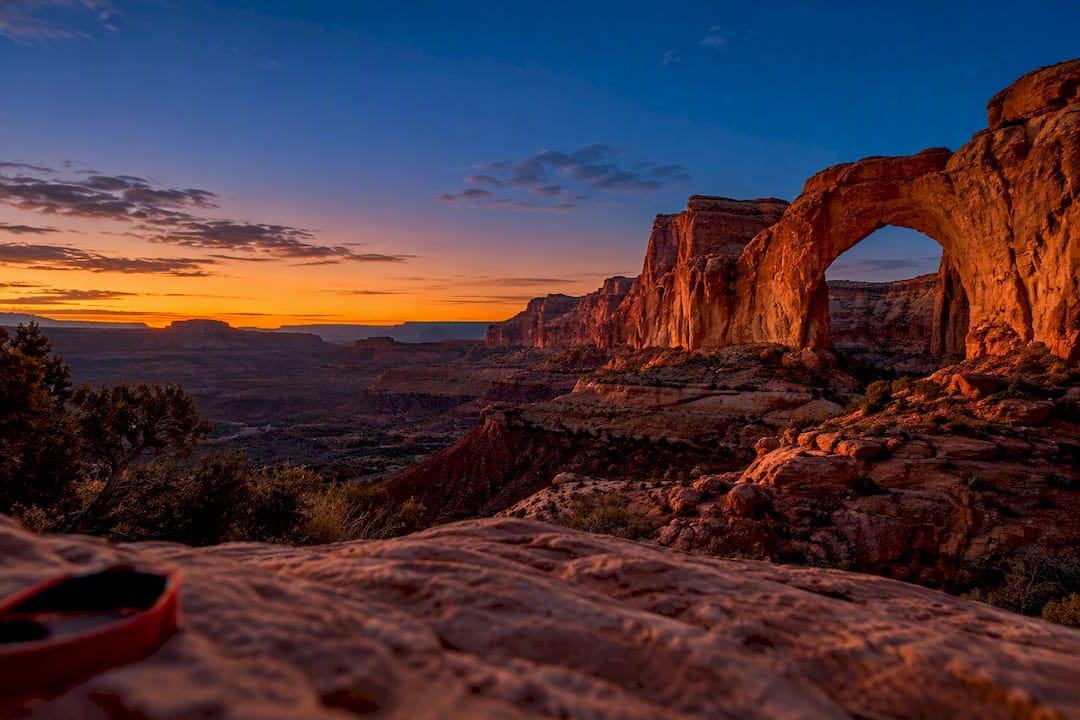
Sunset in Moab falls in the early evening window and shifts seasonally between late summer and early winter; check a live source before you head out. Your single best quick pick tonight: Dead Horse Point for sweeping canyon and river views, or Delicate Arch if you want that iconic silhouette. Whichever you choose, stay 10 to 20 minutes past sunset. That’s when the sandstone really lights up.
TL;DR:
- Sunset times shift weekly and vary seasonally, with civil twilight lasting 20 to 30 minutes after sunset, making the afterglow the most photogenic period.
- Prime sunset viewing spots include Dead Horse Point for panoramic canyon views and Delicate Arch for iconic silhouettes, both requiring early arrival or hiking.
- Photos taken during civil twilight and the 10 to 20 minutes afterward capture the best warm, glowing sandstone effects, with equipment recommendations for optimal shots.
- Parking at popular sites fills quickly, so arrive early, use offline maps, and consider guided tours for easier access and better timing around sunset.
- Extending your visit into the afterglow, when canyon walls glow deep orange, offers the most dramatic lighting, often visible for 15 to 20 minutes after the sun drops below the horizon.
Table of Contents
- How to Find the Exact Sunset Time in Moab
- Where Are the Best Places to Watch the Sunset in Moab?
- How Do You Photograph a Moab Sunset?
- What Should You Know About Parking, Fees, and Safety?
- Why the Afterglow Is the Real Show
- Reach Moab’s Best Sunset Spots Without the Parking Lot Scramble
- Sources
- FAQ
How to Find the Exact Sunset Time in Moab
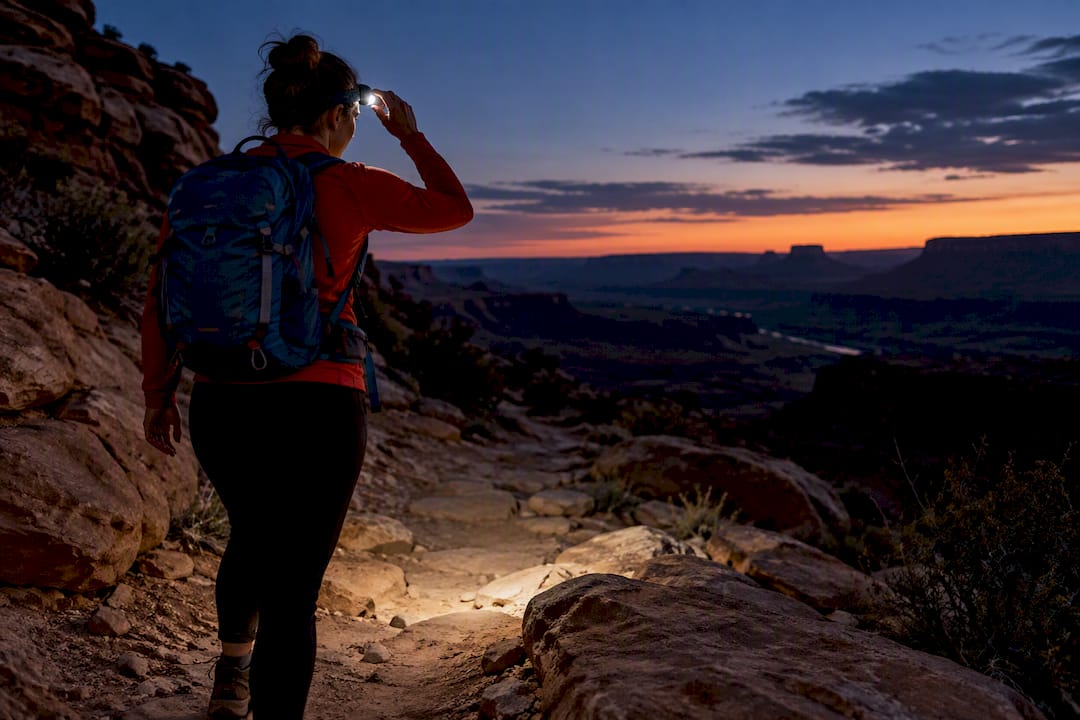
Sunset itself is just the moment the sun’s edge drops below the horizon, but three more phases follow it, and they matter more than most visitors realize. Civil twilight lasts roughly 20 to 30 minutes after sunset and is when the sky still glows with color. Nautical twilight comes next, dim enough that you’ll want a light source on rocky trails. Astronomical twilight follows, and by the end of it, you’re in full dark.
For photography, civil twilight is the prize. For safety, knowing when nautical twilight hits tells you exactly when to have your headlamp out.
Don’t guess at the minute. Timeanddate publishes day-by-day sunset and twilight tables for Moab, and a printable monthly sunrise/sunset calendar works well if you’d rather print your plan than check your phone at a viewpoint with no signal. If you’re entering coordinates instead of a city name, Moab sits at 38.57332, -109.54984.
A few things worth knowing before you plan:
- Sunset shifts by several minutes every week, so a time you read last month is already off.
- Golden hour (the last hour of warm, low light before sunset) runs longer in winter because the sun’s angle is lower for longer.
- Afterglow color tends to be most dramatic in fall and winter, when the atmosphere carries more particulate haze that scatters warm light.
- Cell service is patchy at most overlooks, so download your sunset time and a offline map before you drive out.
Where Are the Best Places to Watch the Sunset in Moab?
Moab’s terrain gives you a genuine choice between drive-up convenience and a short scramble for a better angle. Here’s how the top spots stack up.
-
Dead Horse Point Overlook. This is the state park pick, and for good reason: a short walk from the parking area puts you at a rim with a 2,000-foot drop to a hairpin bend in the Colorado River. Entry requires a Utah state park fee, and the main overlook draws a crowd, but the park has several less-trafficked viewpoints along the rim road that offer nearly the same view with far fewer tripods in your frame.
-
Delicate Arch. The most photographed arch in Utah earns its reputation, but the classic shot means a 1.5 mile hike with real elevation gain, timed to arrive before the light fades. Expect company. Dozens of photographers make this same trek most clear evenings, so get there early to claim a spot.
-
Grand View Point. Inside Canyonlands’ Island in the Sky district, this one rewards you without the effort. A short paved walk from the lot delivers a layered, canyon-within-canyon vista that’s genuinely suited to a telephoto lens if you want to compress those distant mesas.
-
Mesa Arch. Famous as a sunrise spot, and that’s still its main draw, but it’s worth checking access hours if you want to try it for sunset instead. The arch frames the canyon differently as the light rakes across it late in the day, with a fraction of the sunrise crowd.
-
Green River Overlook. A short walk from a Canyonlands parking area puts you facing west over the Green River corridor, and the afterglow here tends to run long and rich because you’re looking straight down the river’s path.
-
Potash Road and Colorado River pullouts. These roadside stops along the river are your flexible backup. When Dead Horse Point’s lot is full, a quick pullout here gets you river reflections and red cliffs with zero hiking involved.
-
Corona Arch. A moderate but shorter hike than Delicate Arch, this makes a good middle option if you want an arch photo without the longer trek or the biggest crowd.
-
Fisher Towers. These spires make for genuinely dramatic silhouettes against a setting sun, but the trail back is longer and rougher, so bring a headlamp for the return in the dark.
-
Windows and Turret Arch area, plus Balanced Rock. Both sit close to their parking areas in Arches National Park, which makes them the easiest wins on this list. Minimal walking, quick payoff, ideal if you’re short on time or energy.
How Do You Photograph a Moab Sunset?
The instant the sun disappears is not the best moment to put your camera down. Local photographers consistently point to the hour before sunset and the 10 to 20 minutes after as the window with the richest color, because that’s when the sandstone itself seems to glow from within.
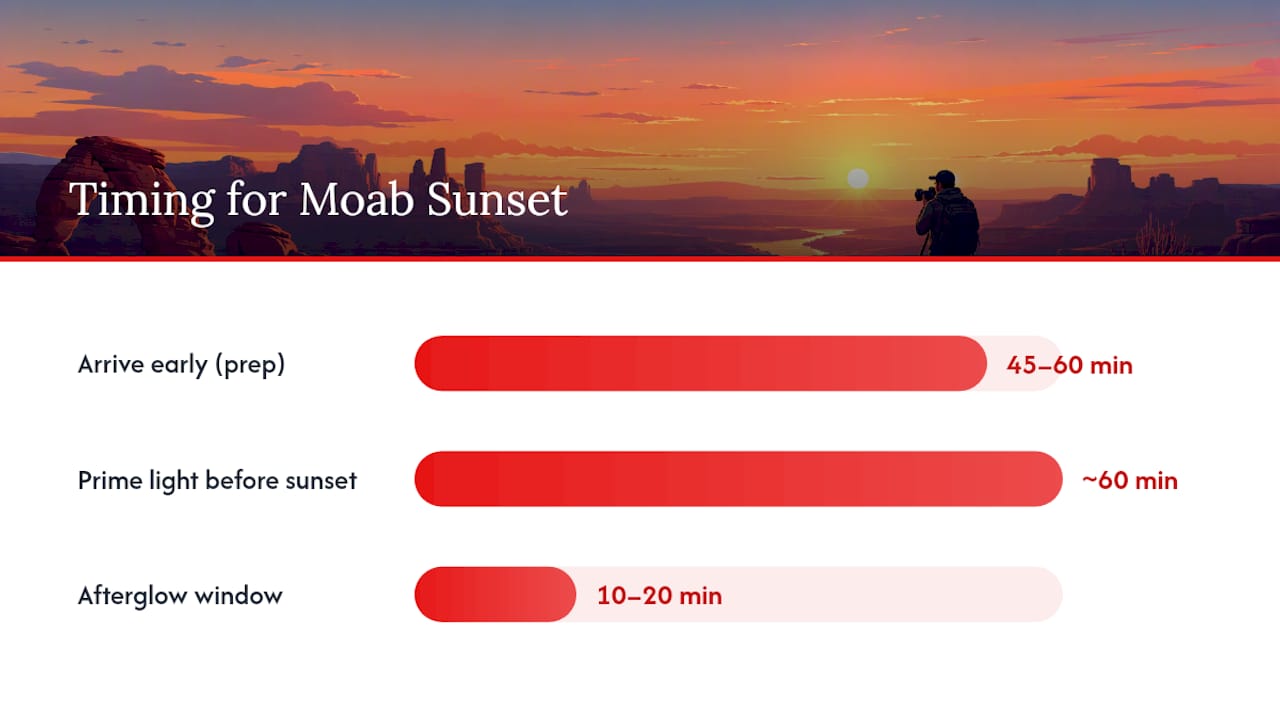
Plan your arrival around that window, not the sunset time itself. Get to a popular spot 45 to 60 minutes early. That gives you time to walk the rim, test a few foregrounds, and claim your position before the crowd thickens.
A few practical notes for your gear:
- Bring a tripod if you can. Bracket your exposures rather than relying on one shot, since the dynamic range between a bright sky and dark canyon walls is extreme.
- Phone shooters should use exposure lock and HDR mode, and avoid digital zoom, which loses detail fast.
- A wide lens suits arches and close foreground rock; a telephoto compresses distant canyon layers at spots like Grand View Point.
- Turn away from the sun occasionally. Reflected light on canyon walls or the La Sal Mountains often produces a richer, warmer composition than staring straight into the glare.
- Use the river bend, a rim edge, or a trail as a leading line, and put a person in frame for scale against that scenery.
Pro Tip: When clouds show up, don’t pack up early; extending your evening plans with an evening cruise can be a perfect way to enjoy the afterglow and nightfall. Bracket a wider range of exposures than usual. Clouds often catch fire with color for several minutes after the sun has already dropped, well past when a clear sky would have gone flat.
What Should You Know About Parking, Fees, and Safety?
Dead Horse Point charges a Utah state park entry fee, while Arches and Canyonlands operate under National Park Service rules that can include seasonal timed entry or closures, so check the current park page before you drive out. Parking lots at Delicate Arch and Mesa Arch fill fast on clear evenings, and Potash Road has only limited pull-offs, so arrive with a backup spot in mind.
If you’re staying past sunset, plan for the drive back in the dark:
- Bring a headlamp rather than relying on your phone. It’s brighter, hands-free, and won’t die mid trail when you need it most.
- Pack a warm layer even in summer. Desert temperatures drop fast once the sun is gone.
- Download an offline map before you lose signal, since most overlooks have none.
- Pick a quieter alternative like a lesser-used Dead Horse Point overlook or a nearby pullout if the main lots are packed.
- Leave no trace: pack out everything you bring in, especially at popular rim spots.
Why the Afterglow Is the Real Show
Most visitors treat sunset as a single moment to capture and then head for the car. That’s the mistake. The genuinely dramatic light in Moab arrives after the sun is already gone, when the canyon walls hold that deep orange glow for another 15 or 20 minutes. Skip that window and you’ve seen the warm up act, not the show.
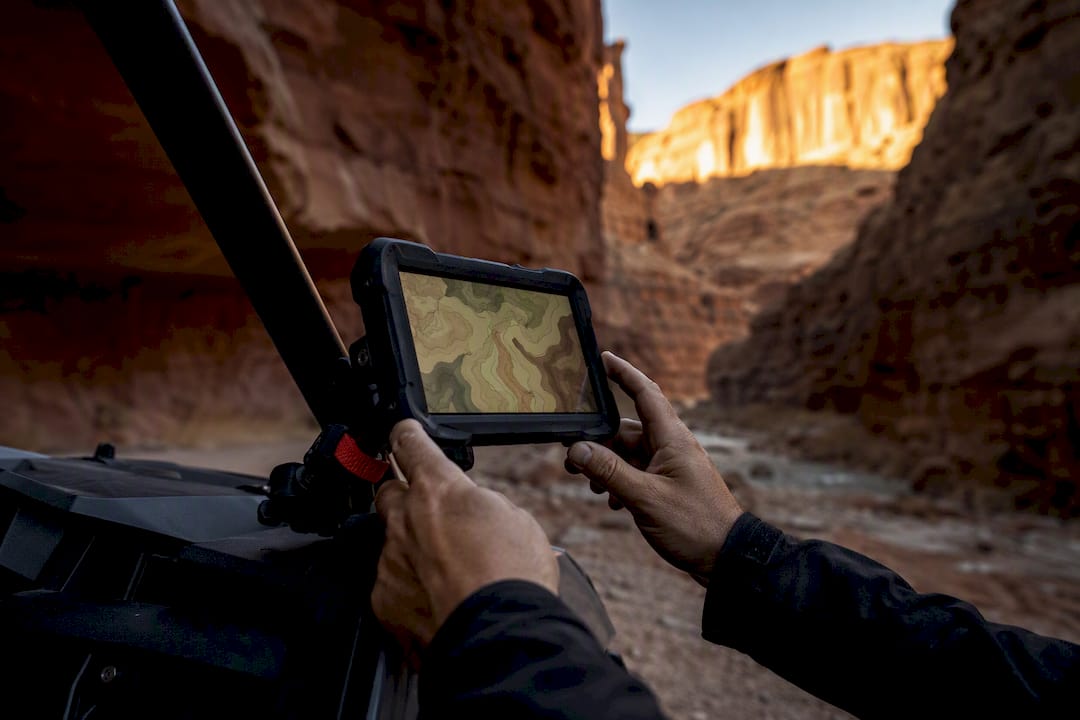
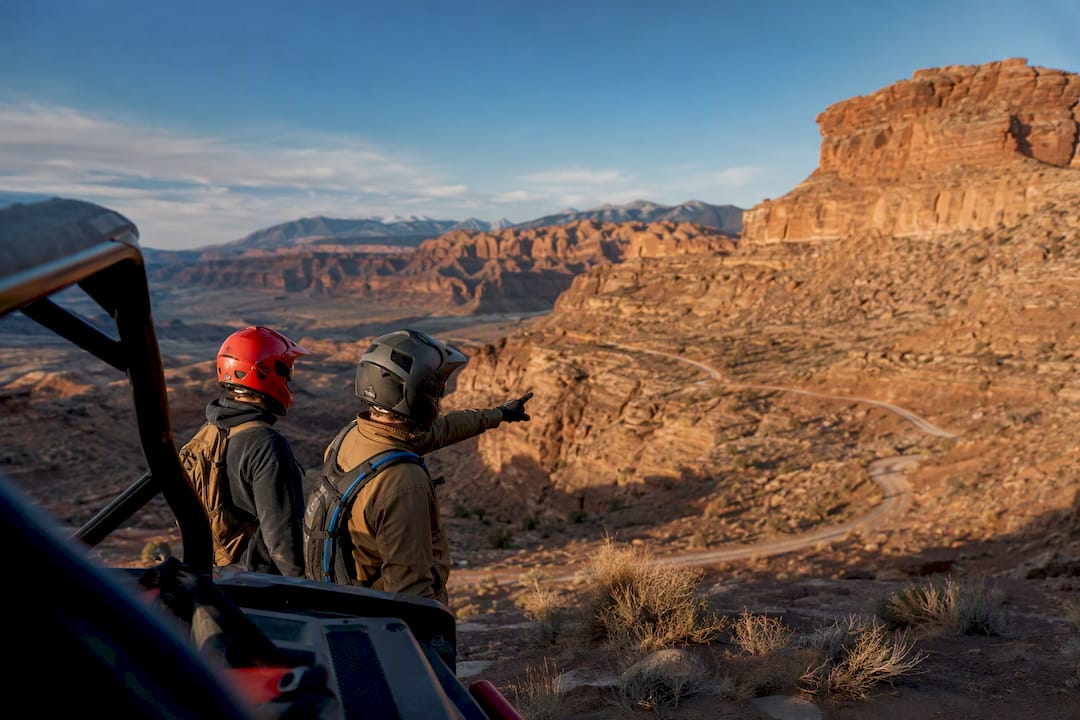
Guided access changes what’s realistic here, too. Reaching a quieter overlook or timing a remote spot without fighting for the last parking space takes local knowledge most visitors don’t have on a first trip. A local outfit operates vehicles with built-in navigation and knowledgeable guides who know which overlooks thin out by 6 PM and which fill up an hour before sunset. That’s not a small advantage when you’ve got one shot at the light. Positive reviews support the strong reputation for providing a quality experience.
— PHENYX
Reach Moab’s Best Sunset Spots Without the Parking Lot Scramble
Specialized tours and self-drive rentals with built-in GPS navigation can provide easier access to Moab’s sunset overlooks, reducing hiking and parking challenges.
Families get a climate-controlled ride between viewpoints instead of a long desert walk. Photographers get a local guide who already knows which rim spot is thinning out while everyone else crowds the main lot. Groups get a fixed departure window built around the actual sunset time, not a rough guess. The Moab Discovery Tour covers red rock terrain with time built in for that golden hour stop, and every rental and tour includes trail entry fees so there’s no separate line at a park gate.
If you’d rather set your own pace, browse UTV rentals and pick a departure time that lines up with tonight’s sunset window. Sunset slots book up fast in shoulder season, so reserve a few days ahead if you want a specific evening.
Sources
- Timeanddate
- How to plan Arches sunset - MoabInADay
- Ultimate Guide to Sunset at Dead Horse Point State Park - Organized Adventurer
- Canyonlands National Park - National Park Service
FAQ
Where Is the Best Place to Watch the Sunset in Moab?
Dead Horse Point is often the top pick for its sweeping canyon and Colorado River views, while Delicate Arch delivers the more iconic silhouette shot. Grand View Point and Green River Overlook are strong, less crowded alternatives inside Canyonlands if you want a shorter walk from the car.
What Time Does It Get Dark in Moab Tonight?
Full darkness follows sunset after civil, nautical, and astronomical twilight phases which together last well over 30 minutes, though the exact window shifts through the year. Check Timeanddate’s Moab sunset tables for tonight’s precise sunset and twilight times before you head out.
How Do I Avoid Crowds at Moab Sunset Spots?
Pick a lesser-used overlook along the Dead Horse Point rim road, or try a quick Potash Road pullout instead of a main park lot. Visiting on a weekday or during shoulder season also thins out the crowds at popular arches noticeably.
What Should I Bring for a Moab Sunset Outing After Dark?
Bring a headlamp instead of relying on a phone flashlight, since desert trails get genuinely dark and rocky underfoot. Pack a warm layer too, since temperatures drop fast once the sun is down, and download an offline map before you lose cell signal.
Does Epic4x4adventures Offer Sunset-Timed Tours in Moab?
Yes, tours like the Moab Discovery Tour can be timed around the evening golden hour, and self-drive UTV rentals let you set your own sunset schedule. Current pricing and available time slots are listed on the Epic4x4adventures site.
Recommended
- Moab Sunset UTV Tours: Why Golden Hour on Slickrock Beats Every Photo You’ve Already Seen
- Moab Photography UTV Tours: How to Actually Capture Red Rock at Golden Hour
- Sunrise UTV Tours in Moab: Why Dawn on Slickrock Beats Everything You’ll See at Noon
- Moab Fall UTV Tours: Why October Is the Secret Season Everyone Misses