Most UTV rental companies in Moab hold a damage deposit between $1,800 and $5,000, though guided tours often waive it entirely. The deposit is almost always a card authorization hold, not a charge, and it gets released if the vehicle comes back clean. Your best move is simple: photograph the UTV at pickup and confirm your coverage in writing before you drive off.
TL;DR:
- Damage deposits in Moab typically range from $1,800 to $5,000, with higher holds for high-performance models or younger drivers, especially if under 25.
- The deposit is a pre-authorization hold on your card and only becomes a charge if damages, late return, or additional fees are confirmed during inspection.
- Younger, foreign, or unverified drivers generally face higher deposits, but adding an older co-renter or purchasing a damage waiver can lower or offset the hold.
- Guided tours often waive deposits entirely or require minimal amounts because of shared responsibility, reducing dispute risks.
- Proper documentation, including photos and a signed condition report at pickup and drop-off, is crucial to ensure a full deposit refund within two weeks.
Table of Contents
- How Much Is a UTV Damage Deposit in Moab?
- How Does the Deposit Hold Actually Work?
- Why Do Some Renters Pay Double the Deposit?
- Do Damage Waivers Actually Cover You?
- What Utah and Moab Rules Should Renters Know?
- How Do You Avoid Paying Damage Charges?
- What Should You Ask Before You Book?
- Why We Built Our Deposit Policy Around Guided Tours
- Want a Lower-Deposit Option in Moab?
- Sources
- FAQ
How Much Is a UTV Damage Deposit in Moab?
The exact figure depends on the vehicle, the rental style, and your age at checkout. Vendor listings across Moab show deposits commonly ranging from $1,800 to $5,000, with some companies pushing holds as high as $10,000 for high-performance machines or younger renters. If you’re comparing quotes, the deposit tells you almost as much about the company’s risk model as the rental rate itself.
Here’s roughly what to expect by category:
- 2-seat UTVs (entry-level trail machines): deposits typically start around $1,800 to $2,500.
- 4-seat UTVs (family or group rentals): deposits often run $2,500 to $3,500, reflecting the higher repair cost and larger frame.
- Premium and performance UTVs (turbocharged Polaris RZR models, for example): deposits can reach $4,000 to $5,000 or more, since parts and labor for these machines cost significantly more than standard trail models.
- Guided tours: many outfitters drop the deposit requirement altogether or charge a token amount, since a guide shares responsibility for how the vehicle gets driven.
Duration matters too. Shorter rentals often carry lighter deposit holds compared to longer or overnight bookings, reflecting increased vendor exposure over time. If you’re renting for three or four days over a family trip, ask upfront whether the deposit scales with the rental length or stays flat. Some companies keep it fixed regardless of duration; others add a buffer for every extra day. Either way, the unguided, self-drive model is where you’ll see the highest numbers, since the company has no eyes on how the UTV gets handled once it leaves the yard.
How Does the Deposit Hold Actually Work?
A damage deposit is a pre-authorization, not a charge. Your bank sets aside the deposit amount on your card, but the money doesn’t leave your account unless the company converts it into a real charge. That distinction trips up a lot of first-time renters who see the hold on their statement and assume they’ve already been billed.
Three things typically turn a hold into an actual charge:
- Documented damage found during the return inspection, whether it’s a cracked windshield, torn upholstery, or undercarriage damage from hitting a rock too hard.
- Late return, which most companies bill by the hour or day past your scheduled drop-off time.
- Fuel or cleaning fees, usually a flat charge if the UTV comes back with an empty tank or caked in mud beyond normal trail dust.
Release timelines vary by bank more than by rental company. Expect the hold to clear anywhere from 3 to 14 business days, depending on your card issuer. Debit card holds tend to take longer to drop than credit card holds, which is one reason most Moab rental companies either require a credit card or charge extra to accept debit.
Pro Tip: Ask for a written or emailed confirmation that your vehicle passed the return inspection. If your hold hasn’t released after two weeks, that confirmation is the fastest way to get your bank to intervene on a dispute.
Why Do Some Renters Pay Double the Deposit?
Age often influences deposit amounts in Moab, with drivers under certain ages commonly subject to higher deposit requirements due to risk factors. It’s not arbitrary. Younger drivers statistically account for a larger share of insurance claims industry-wide, so vendors price that risk directly into the deposit rather than the rental rate.
A few other triggers push deposits higher:
- Presenting a foreign driver’s license instead of a US-issued one, since verifying a foreign license’s validity is harder for a company to do quickly.
- Having no credit card available, which forces some vendors to require cash deposits well above their standard hold.
- Lacking proof of OHV education, especially for drivers who plan to leave designated trails, since some companies treat this as a red flag for risk.
If your deposit quote comes back higher than you expected, ask about adding an older, qualified co-renter to the reservation. Some companies will lower the hold once a renter over 25 is listed as an authorized driver. Buying a damage waiver can also offset a higher deposit, since it shifts some of the company’s risk exposure away from the cash hold itself.
Do Damage Waivers Actually Cover You?
A damage waiver is not the same thing as insurance, and confusing the two is where most renters get burned. A company’s Loss Damage Waiver (LDW) typically reduces or eliminates your financial responsibility for accidental damage, in exchange for a flat daily fee. Third-party rental insurance works differently: you buy it separately, and it may cover a broader range of incidents, but it usually pays out as a reimbursement rather than an upfront waiver. Personal auto insurance and credit card rental coverage rarely apply to off-road vehicles at all, so don’t assume either one has your back.
What typically stays covered under a standard waiver:
- Minor scrapes, dents, and trail-related wear from normal riding.
- Mechanical failure unrelated to driver misuse.
- Flat tires from typical trail hazards.
What usually falls outside the waiver, no matter which company you book with:
- Rollovers, which many waivers exclude entirely or cap at a reduced payout.
- Intentional misuse, including driving off marked trails or attempting stunts.
- Off-trail damage, since this often voids coverage outright.
- Policy caps, meaning your liability might still hit several hundred or a few thousand dollars even with a waiver in place.
Guided tours change this equation. Because an outfitter shares operational responsibility for the drive, many guided options carry lower deposit exposure than a self-drive rental, and some list $0 deposit as a standard feature rather than an upsell. Before accepting any waiver, get the exclusions in writing. A verbal “you’re covered” from a counter employee means nothing if the fine print says otherwise.
What Utah and Moab Rules Should Renters Know?
Utah requires every adult UTV operator to complete the Utah Adult OHV Education Course before operating an off-highway vehicle on public land, and riders under 18 need a separate youth certificate. It’s free, it’s a one-time requirement for adults, and some rental companies will ask to see your completion card before handing over the keys, particularly for renters planning to explore beyond groomed trails.
Moab’s own municipal rules add another layer. The city’s OHV guidance explains which vehicles qualify as street-legal and reinforces posted speed limits and noise restrictions within city limits. In 2026, the Moab City Council adopted updated ordinance language clarifying how those speed limits apply to street-legal vehicles, with a default 20 mph limit where no sign is posted and posted limits taking priority where signage exists.
A few practical rules that affect your rental and your liability:
- Only street-legal UTVs, equipped with required lighting, mirrors, and plates, can legally operate on public roads connecting trailheads.
- Registration, titling, and insurance requirements apply to any street-legal ATV or UTV operating on Utah roads.
- Speeding or noise violations within city limits can trigger fines that some rental agreements pass directly to the renter, separate from the damage deposit itself.
If you’re only renting to explore designated trails outside city streets, most of this stays in the background. But if your plan includes any road driving between trailheads, it’s worth understanding Moab’s street-legal rules before you book.
How Do You Avoid Paying Damage Charges?
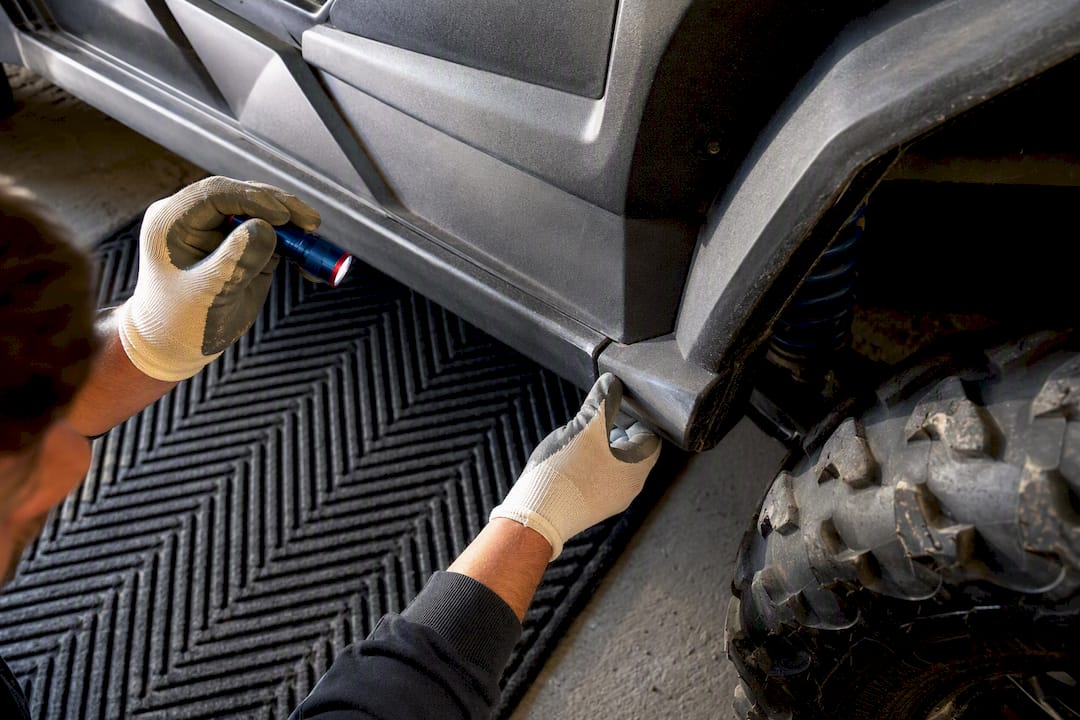
Most damage disputes come down to one thing: nobody documented the vehicle’s condition before it left the lot. Rental-insurance best practices point to time-stamped photos and a signed walkaround checklist as the most effective way to avoid getting billed for scratches or dents that existed before you ever touched the wheel.
Here’s a practical sequence to follow at pickup and during your ride:
- Walk the vehicle with a staff member and photograph every panel, tire, and the underbody before you drive off. Get their signature or verbal confirmation on the condition report.
- Stay off unfamiliar rock features unless you’ve confirmed your waiver actually covers technical terrain. Rollovers on obstacles like Hell’s Revenge slickrock are exactly where exclusions tend to apply.
- Watch trail conditions, especially after rain. Utah’s OHV guidance specifically warns against riding muddy trails, both because it damages the land and because it’s a common cause of stuck-vehicle recovery fees.
- Return on time and fueled per the rental agreement. Late returns and empty tanks are the two most common non-damage charges renters get hit with.
- Request a final walkaround with staff at drop-off, the same way you did at pickup, so any dispute has a clear before-and-after reference.
Pro Tip: Take your pickup photos in daylight, not under the shop’s overhead lighting. Small scratches and dents are far easier to document and dispute later if the photos are clear.
What Should You Ask Before You Book?
A few direct questions at booking can save you a frustrating call later. Ask exactly what the deposit amount is and whether it’s structured as a hold or an upfront charge, since the two affect your available credit differently during the trip. Confirm accepted payment methods too. Some companies require a credit card specifically and won’t accept debit for the deposit at all.
Before you sign anything, get clarity on:
- The exact deposit figure for your specific vehicle and age bracket.
- Whether it’s a card hold or an actual charge, and how many days the release typically takes.
- What the damage waiver covers, its listed exclusions, and its daily cost.
- Whether an age surcharge applies, and whether adding an older co-renter changes it.
- The company’s damage-reporting phone number and roadside assistance process, in case something happens mid-trail.
Getting these answers in writing, even in a booking confirmation email, gives you a paper trail if a dispute comes up after your trip. Reviewing pricing and requirements ahead of time also helps you compare offers apples to apples instead of chasing the lowest advertised rate.
Why We Built Our Deposit Policy Around Guided Tours
Some guided tour operators structure their deposit policies around the idea that when a local guide shares responsibility for how a vehicle gets driven, the risk that justifies a large deposit mostly disappears. This reasoning leads to offering $0 deposit options on guided experiences rather than treating every renter the same regardless of experience level.
Guided tours also tend to reduce the kind of damage that triggers disputes in the first place. A guide who knows the terrain steers the group away from obstacles that cause rollovers or undercarriage damage, which is exactly where most waiver exclusions live. Pairing that local knowledge with documented, safety-first practices at pickup and drop-off gives renters a clearer, lower-stress path to getting their full deposit back, or skipping the deposit conversation entirely.
— PHENYX
Want a Lower-Deposit Option in Moab?
If everything above has you weighing a bigger deposit against a guided alternative, some companies offer guided tours with $0 deposit options, brand-new 2026 Polaris vehicles, and a local guide who knows exactly which lines to avoid on terrain like Hell’s Revenge. Instead of gambling a few thousand dollars on a self-drive rental and hoping your photos hold up in a dispute, you can book a fixed experience with liability and medical coverage built in and a guide handling the risk alongside you.
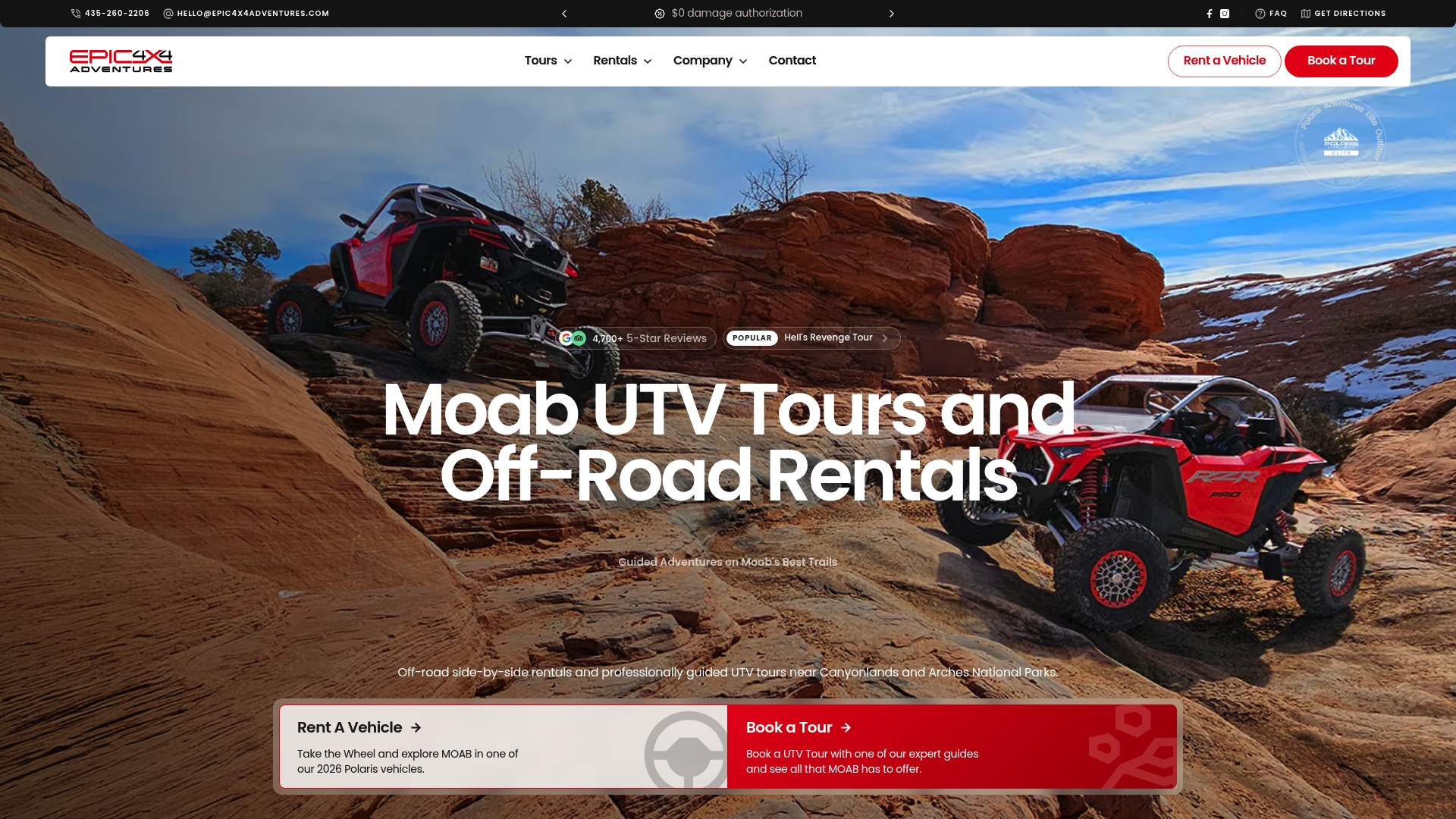
Many guided tours use climate-controlled, GPS-equipped machines, often with trail entry fees included in the price, so there’s no separate permit or fee to track down before you go. Families, first-time off-roaders, and anyone who’d rather not stress over a damage hold tend to gravitate toward this option because the deposit conversation is already settled before arrival.
Check available dates and tour options on the Moab UTV rentals page, or browse the full lineup of guided UTV tours to find the experience that fits your group.
Sources
- OHVs in Moab — City of Moab
- Utah Adult OHV Education Course — Utah Outdoor Recreation
- Moab UTV rentals — SideBySideShare
FAQ
Are Side-by-Sides Street Legal in Moab, Utah?
Only UTVs equipped with required lighting, mirrors, and plates qualify as street-legal, and they must follow posted speed limits and noise restrictions within city limits. Non-street-legal machines are generally restricted to trails and off-road areas rather than city streets.
Can You Ride a UTV in Moab, Utah?
Yes, both self-drive rentals and guided tours operate throughout Moab, though adult riders need to complete the free Utah OHV Education Course before operating on public land.
How Much Is It to Rent a Side-by-Side in Moab, Utah?
Rental rates vary by vehicle and duration, but damage deposits typically fall between $1,800 and $5,000, with guided tours often offering reduced or $0 deposit options through providers like Epic4x4adventures.
Can I Drive My UTV on the Road in Utah?
Only if it meets Utah’s street-legal ATV/UTV requirements, including proper registration, lighting, and insurance. Non-street-legal UTVs stay restricted to designated trails and off-road areas.
What’s the Fastest Way to Get My Deposit Back?
Photograph the vehicle at pickup and drop-off, get a signed or written condition confirmation from staff, and expect the hold to release within 3 to 14 business days depending on your bank.
Recommended