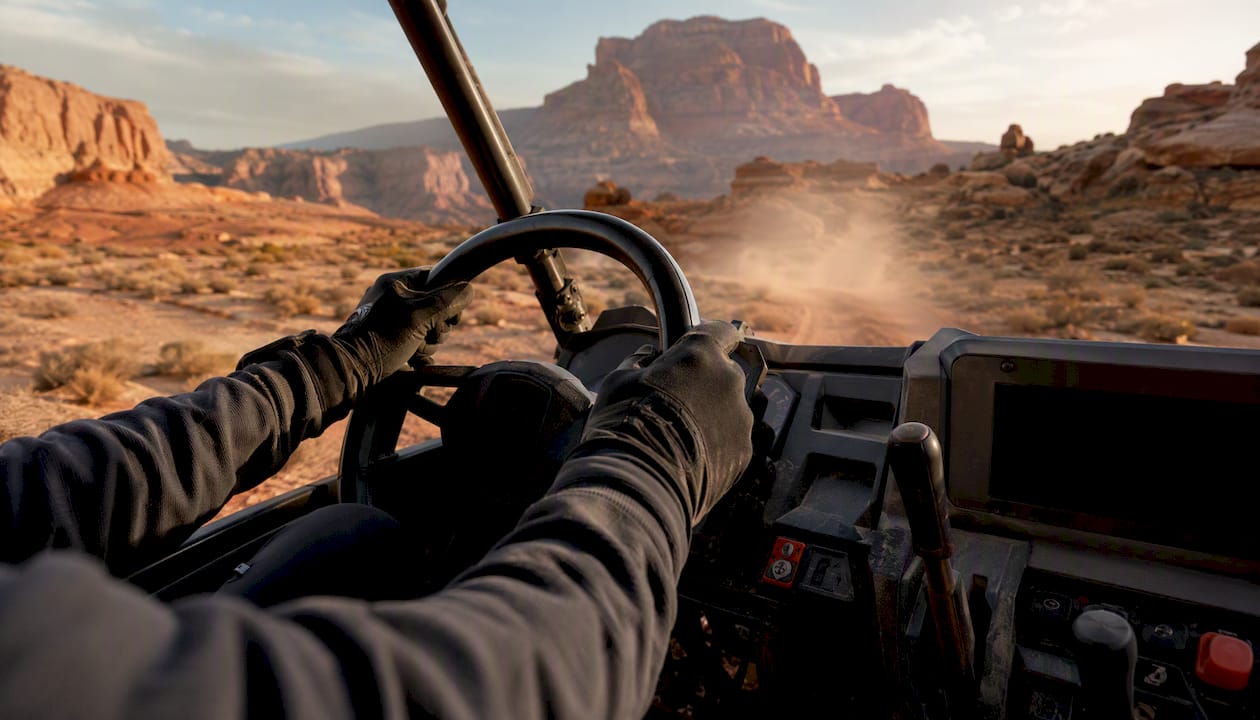
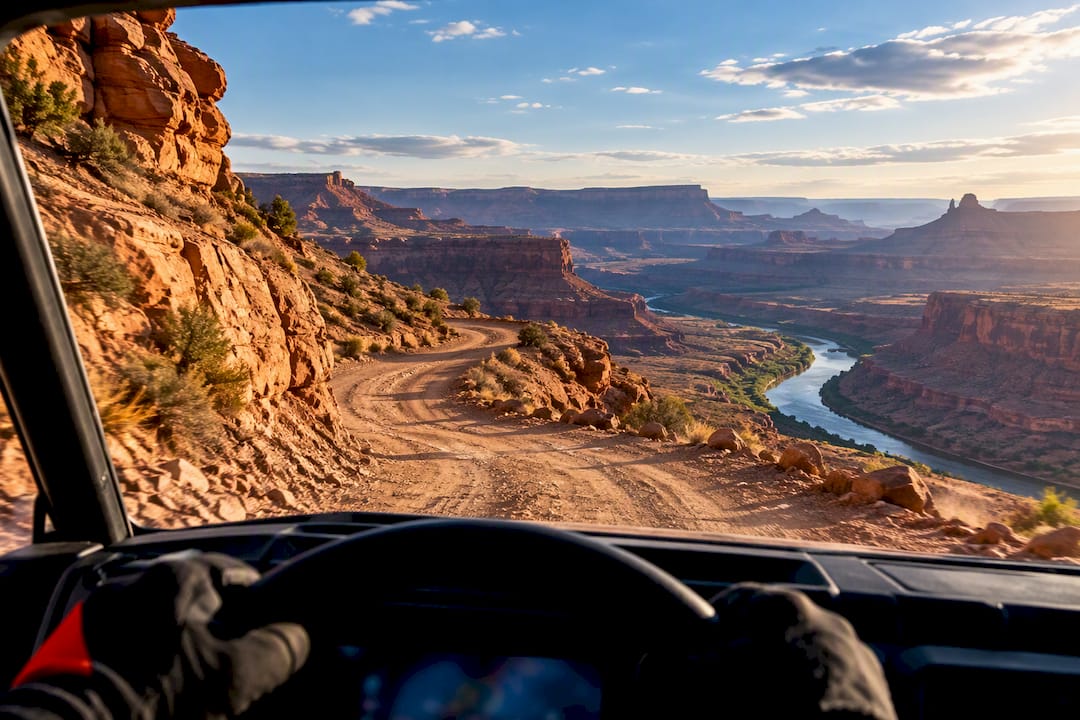
Buckle your seat belt, wear a helmet and eye protection, and run a full pre-ride check before you touch the throttle. Those four moves matter more than horsepower or trail difficulty ever will. A ROHVA analysis found that 98% of ROV crashes involved at least one behavior already warned against in the owner’s manual, things like speeding, riding on pavement, or skipping safety gear. That single number tells you almost everything about how to stay upright and unhurt: it’s not the machine, it’s the driver. At Epic4x4adventures, we build every guided outing in Moab around that same principle.
Here’s your starting checklist:
- Fasten your seat belt or harness before the engine even starts.
- Wear a helmet, goggles, and closed-toe shoes.
- Check tire pressure, fluid levels, brakes, and lights.
- Confirm passenger count matches the vehicle’s rated capacity.
- Keep hands and feet inside the cab at all times.
- Pick a flat, approved practice area, not a paved road or parking lot.
- Locate the parking brake and kill switch before you move.
Pro Tip: Always drive completely up or down a slope before you turn. Turning mid-slope shifts your center of gravity sideways and dramatically raises rollover risk.
Key Takeaways
Beginners who follow a pre-ride checklist, wear proper restraints, and drive fully up or down slopes before turning avoid the vast majority of preventable UTV crashes.
| Point | Details |
|---|---|
| Behavior beats horsepower | 98% of crashes involve a behavior already warned against in the owner’s manual, so driving habits matter more than the vehicle. |
| Never turn mid-slope | Always drive completely up or down a hill first; turning partway raises rollover risk sharply. |
| Run the same checklist every time | Check tires, fluids, brakes, and cargo before every ride, not just the first one. |
| Load weight low and centered | Secure cargo low in the bed and seat passengers only where the manufacturer designed seating. |
| Learn with guided support | Epic4x4adventures offers guided you-drive tours in Moab with a safety briefing and demo before you take the wheel. |
Table of Contents
- How Do UTV Controls Differ From a Car?
- What Should Be on Your Pre-Ride Inspection Checklist?
- What Safety Gear and Occupant Rules Actually Matter?
- How Do You Handle Hills, Sand, Mud, and Rocks?
- Which Driving Techniques Should Beginners Practice First?
- Where Can Beginners Legally Ride, and What’s the Etiquette?
- What Everyday Maintenance Keeps a UTV Trail-Ready?
- Why Does Formal Training Actually Prevent Crashes?
- Getting Weight Distribution and Passenger Loading Right
- How Should Weather Change the Way You Drive?
- What Do You Do If Something Goes Wrong on the Trail?
- A Guide’s Take on Learning to Drive Safely
- Ready to Practice These Skills on Real Terrain?
- Where to Learn More Before Your Next Ride
- Sources
How Do UTV Controls Differ From a Car?
A UTV’s controls look familiar but behave differently, and that gap catches new drivers off guard more than any trail obstacle does. Steering is quick and direct, so small inputs produce bigger reactions than you’d expect from a sedan. Throttle response is immediate, which means smooth, gradual pressure works far better than stabbing the pedal. Brakes need firm, steady pressure rather than the light tap you’re used to, and the parking brake should be engaged any time you stop on a grade.
Gear selection usually runs park, reverse, neutral, and drive, plus a high and low range for climbing or crawling. Low range gives you more control at slow speeds on steep or technical terrain. Many UTVs also offer 2WD and 4WD modes, with a differential lock for extra traction on loose surfaces. Skip the diff lock on hard-packed or paved surfaces, since it can strain the drivetrain and make steering unpredictable.
Before your first real drive, spend ten minutes in an open lot:
- Practice easing on and off the throttle until it feels predictable.
- Brake gradually from low speed to learn how much pressure the pedal needs.
- Locate the kill switch and parking brake without looking down.
What Should Be on Your Pre-Ride Inspection Checklist?
Run this same seven-point check every single time, no exceptions, even if you rode the same vehicle yesterday.
- Tires and pressure: Underinflated tires reduce control on uneven terrain.
- Fluid levels: Low oil or coolant can cause a breakdown miles from help.
- Brake function: Test pedal feel before you’re descending a grade.
- Steering and throttle free play: Excess slack signals a mechanical issue.
- Lights and indicators: Critical for visibility on shared trails.
- Seat belts and harnesses: Confirm they latch and hold tension.
- Cargo securement: Loose gear shifts weight and can fly loose on rough ground.
Minor fixes, like topping off tire pressure or tightening a loose strap, are fine to handle on site. Anything involving brakes, steering play, or fluid leaks means the ride waits. A simple routine works well: check tires and fluids daily, inspect belts and hoses monthly, and have a technician look at brakes and suspension each season, a pattern Polaris recommends for its own fleet.
What Safety Gear and Occupant Rules Actually Matter?
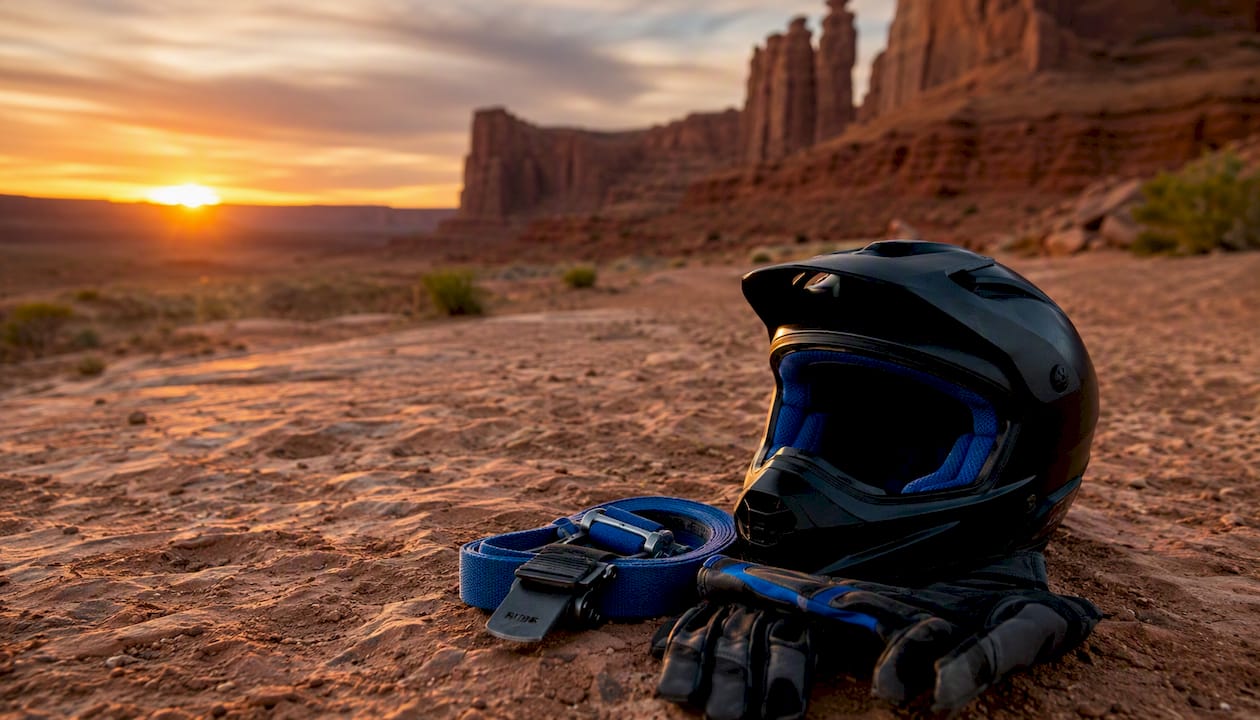
Restraints, helmets, and eye protection aren’t optional extras. They’re the baseline every reputable safety organization, including ROHVA and the CPSC, points to as the difference between a scare and a serious injury. Keep arms and legs inside the vehicle at all times, even on slow, easy terrain, since a rock or branch can catch a limb in an instant.
Passenger rules matter just as much as your own gear. Never exceed the seating capacity your UTV was designed for, and make sure every rider, including kids, meets the manufacturer’s height and age guidance before they board. Loose cargo or an overloaded cab shifts your center of gravity and raises overturn risk on turns or slopes, echoing guidance from Ohio State University’s fact sheet on UTV operation.
Never drive impaired, not even a little. Before you roll out, run a quick fit check: seat belt snug across the hips, harness latched with no slack, and every passenger seated the way the manual shows.
How Do You Handle Hills, Sand, Mud, and Rocks?
The single rule that prevents more rollovers than any other: drive completely up or completely down a slope before you attempt to turn. Turning mid-slope shifts your weight sideways and raises your center of gravity right when stability matters most, according to USDA guidance on hill and slope safety.
Each terrain type calls for its own approach.
- Sand: Keep steady momentum. Slowing too much causes you to bog down.
- Mud: Avoid sudden throttle inputs, which can cause the tires to spin and dig a hole.
- Rocks: Pick a low-gear line and approach obstacles slowly rather than powering over them.
- Water crossings: Check depth before you commit, and never assume it’s shallow just because it looks calm.
Manufacturer guidance from Polaris also warns to scan ahead for submerged rocks or debris that can damage the undercarriage.
Pro Tip: Keep cargo low and centered, not stacked high in the bed. Heavy gear sitting above the frame raises your center of gravity and makes tip-overs far more likely on side slopes.
Which Driving Techniques Should Beginners Practice First?
Four skills separate a confident UTV driver from someone white-knuckling the wheel:
- Smooth throttle control. Ease into acceleration instead of stabbing the pedal, especially on loose surfaces.
- Cadence braking. Apply firm, steady pressure rather than slamming the brakes, which can lock tires on gravel or sand.
- Controlled steering for backing up. Use slow, deliberate hand movements and check mirrors and blind spots before reversing.
- Judging safe speed by surface. Slow down on sand, mud, and rocky sections; you can carry more speed on hard-packed dirt.
Practice these in an open field before you ever hit a trail. Set up a simple cone course and alternate between acceleration and braking to get a feel for stopping distance. Add a tight-turn drill, weaving through a slalom pattern at low speed, to build steering confidence. Finish with a backing exercise: reverse into a marked lane using your mirrors, not just a glance over your shoulder.
Where Can Beginners Legally Ride, and What’s the Etiquette?
Only ride on designated off-highway vehicle trails or areas your state has approved for UTV use. Avoid paved roads entirely except where local rules allow a brief, permitted crossing. Organizations like NOHVCC and your state’s Department of Natural Resources maintain maps of legal routes, and checking them before you head out saves you a ticket or worse.
Trail etiquette keeps everyone safe on shared routes:
- Yield to vehicles traveling uphill.
- Keep a safe following distance on dusty or narrow trails.
- Pass only where the trail is wide enough and visibility is clear.
- Ride single file where signage requires it.
What Everyday Maintenance Keeps a UTV Trail-Ready?
Small maintenance habits prevent most roadside breakdowns. Check tire pressure and oil level before every ride, and inspect the air filter and drive belt weekly if you ride often. Wipe down battery terminals monthly to catch corrosion early.
A simple schedule works: daily checks cover tires, fluids, and brakes; monthly checks cover belts, filters, and battery connections; seasonal checks should go to a technician for suspension, steering components, and anything showing wear. Any warning light, grinding noise, or soft brake pedal means the vehicle stays parked until a professional looks at it.
Why Does Formal Training Actually Prevent Crashes?
The 98% figure from ROHVA’s crash analysis is the clearest argument for training you’ll find: almost every crash traced back to a behavior the manual already warned against. That means the fix isn’t a bigger engine or better suspension. It’s driver behavior.
ROHVA’s Basic DriverCourse gives licensed drivers 16 and older about three hours of hands-on, closed-range practice before they hit real trails. Manufacturer e-courses offer a similar foundation online. Worth checking out:
- ROHVA’s DriverCourse for hands-on skill building
- Polaris owner resources for vehicle-specific guidance
- Your state’s OHV program for local certification requirements
Getting Weight Distribution and Passenger Loading Right
Weight distribution changes how a UTV handles more than almost any other factor, and it’s the one beginners overlook most. A UTV loaded with three passengers and a cooler in the back rides completely differently than the same vehicle with one driver, especially on side slopes and sharp turns. Heavier weight toward the rear or piled high in the cargo bed raises the center of gravity and makes the vehicle more prone to tipping, particularly during quick direction changes.
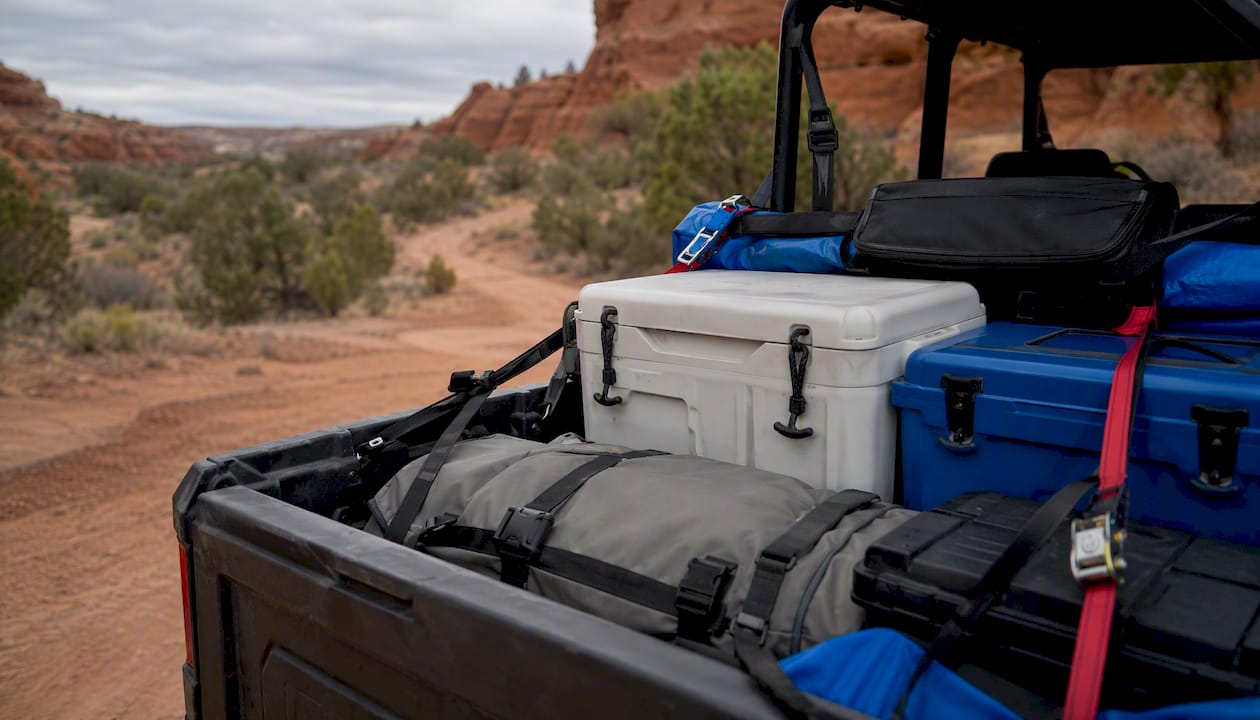
Each occupant should have their own restraint properly fastened, and kids need to meet the height and weight guidance in the owner’s manual before they’re allowed to ride at all. This isn’t about being overly cautious. It’s about physics: a UTV that weighs well over a thousand pounds behaves in ways a passenger car doesn’t, and uneven weight can turn a routine turn into a rollover.
Cargo matters just as much as passengers. Secure coolers, tools, or camping gear low in the bed and centered side to side. Loose items shift under braking or on rough terrain, and that sudden weight transfer is exactly what catches new drivers off guard on a trail they thought they knew. If you’re riding with a group, plan your loading before you start the engine, not halfway down the trail when you realize the cooler is sliding every time you brake.
How Should Weather Change the Way You Drive?
Weather changes trail conditions faster than most beginners expect, and a route that felt easy in dry conditions can turn genuinely hazardous after rain. Wet dirt and clay-based soils get slick fast, cutting traction on turns and inclines significantly. Slow down well before you reach a section that looks muddy or recently rained on, since braking distances stretch out on slick surfaces.
Heat brings its own risks. Dust visibility drops in dry, windy conditions, so increase following distance and use lights if the trail allows it. Cold mornings can leave shaded sections icy even when the rest of the trail is clear, especially at higher elevation, so watch for shifts in surface color and texture as you ride.
Wind matters more than most beginners realize, particularly on exposed ridgelines or open desert terrain, where gusts can push a lightweight UTV off its intended line. If a storm rolls in with lightning, get off high, exposed terrain and head back to your starting point. Checking a forecast before you head out, and building in a turnaround time, prevents you from getting caught on unfamiliar terrain as conditions shift.
What Do You Do If Something Goes Wrong on the Trail?
Most UTV emergencies come down to two scenarios: a stuck vehicle or a rollover, and how you respond in the first few seconds matters enormously.
If you get stuck in sand or mud, resist the urge to gun the throttle. Spinning tires dig deeper. Instead, ease off, straighten the wheels, and try gentle forward and reverse rocking to find traction. If that doesn’t work, engage 4WD or the differential lock if you haven’t already, and consider whether a passenger should get out to reduce weight before you try again.
If the vehicle starts to tip or roll, the most important rule is one that runs against every instinct: never stick a hand, arm, or leg outside the vehicle to try to stop it, and never grab the roll cage in a panic. A UTV can weigh well over a thousand pounds, and bracing against it from outside the frame risks severe injury or amputation. Stay inside, keep your restraint fastened, brace your body, and let the vehicle complete its motion.
Afterward, check on every passenger before you check the vehicle. Move to a safe, flat area away from traffic or trail congestion if anyone needs assistance, and don’t attempt to right or restart a rolled vehicle until you’ve confirmed no one is hurt.
A Guide’s Take on Learning to Drive Safely
Every confident UTV driver started the same way: slow laps in an open area, a manual close at hand, and a trail chosen to match their actual skill level, not their ambition. Supervised practice beats trial and error every time. That’s the same philosophy behind Epic4x4adventures’ guided and self-drive learning options in Moab, where new drivers build skill on terrain that matches where they actually are.
Ready to Practice These Skills on Real Terrain?
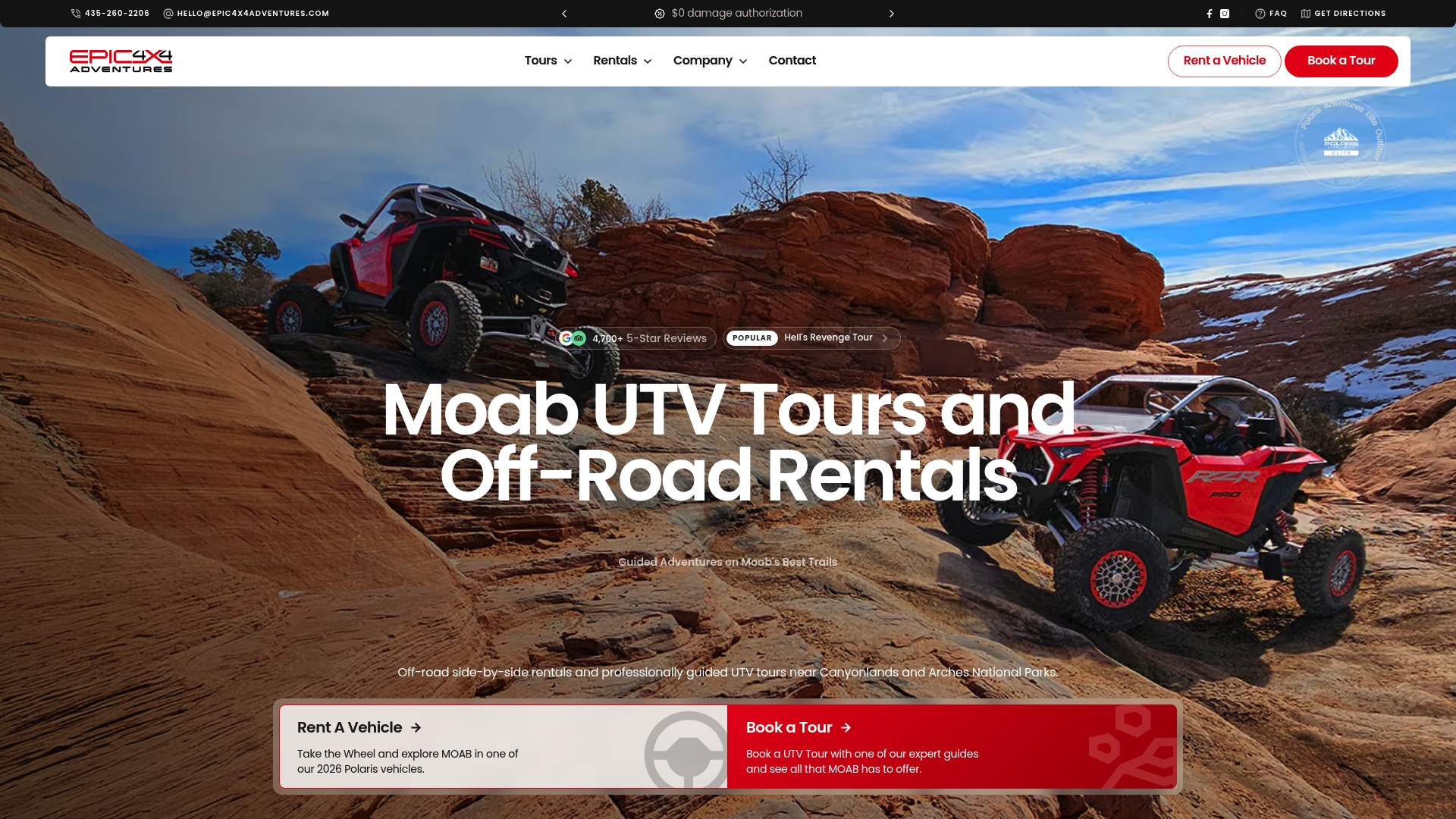
Reading a checklist only gets you so far. If you want to put these UTV driving tips into practice with someone experienced sitting next to you, Epic4x4adventures runs guided you-drive tours through a brand-new 2026 Polaris fleet across Moab’s trail network, and every outing starts with a full safety briefing and a hands-on walkthrough of the controls before anyone leaves the lot.
Here’s what to expect when you book:
- A safety briefing covering seat belts, gear, and terrain expectations.
- A guided demo of throttle, braking, and differential lock before you drive.
- Route options at multiple difficulty levels, so first-timers aren’t thrown onto expert terrain.
- An optional $0 damage deposit, so you’re not sweating minor trail scuffs.
- Built-in navigation on every vehicle, so getting lost isn’t a variable to manage on top of learning to drive.
If you’re planning a trip and want to lock in dates, check available you-drive tours or browse the full 2026 Polaris rental fleet to see what fits your group’s experience level.
Where to Learn More Before Your Next Ride
- ROHVA’s DriverCourse for hands-on training and official safety rules.
- Polaris rider safety resources for vehicle-specific maintenance and pre-ride guidance.
- ROHVA’s tips guide for a quick-reference safety summary.
- Your state DNR for trail maps and local riding regulations.
Consult training resources for skill building, manufacturer guides for maintenance, and state agencies for where you’re legally allowed to ride.
Sources
- Recreational Off-Highway Vehicle Association promotes safe driving tips for Memorial Day weekend
- USDA guidance on hill and slope safety
- ROHVA Learn to drive (ROV DriverCourse)
- Safe operation of utility type vehicles (UTVs) | Ohioline
- Off‑road safety | Polaris Off‑Road
Recommended
- Your First Moab UTV Tour: What Nobody Tells You Before You Book | Epic 4x4
- What to Expect on Your First UTV Tour in Moab | Epic 4x4
- UTV vs. ATV in Moab: Why Side-by-Sides Win When Your Group Is More Than One | Epic 4x4
- Beginner vs. Expert Moab UTV Trails: How to Stop Guessing and Pick the Right One for Your Group | Epic 4x4