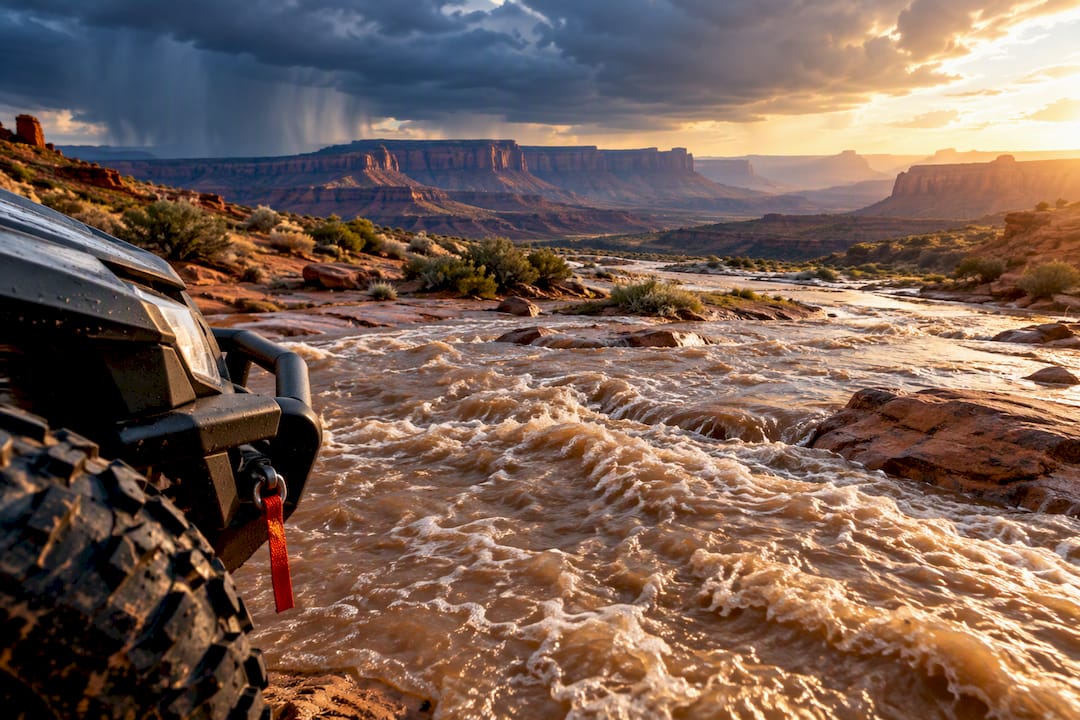
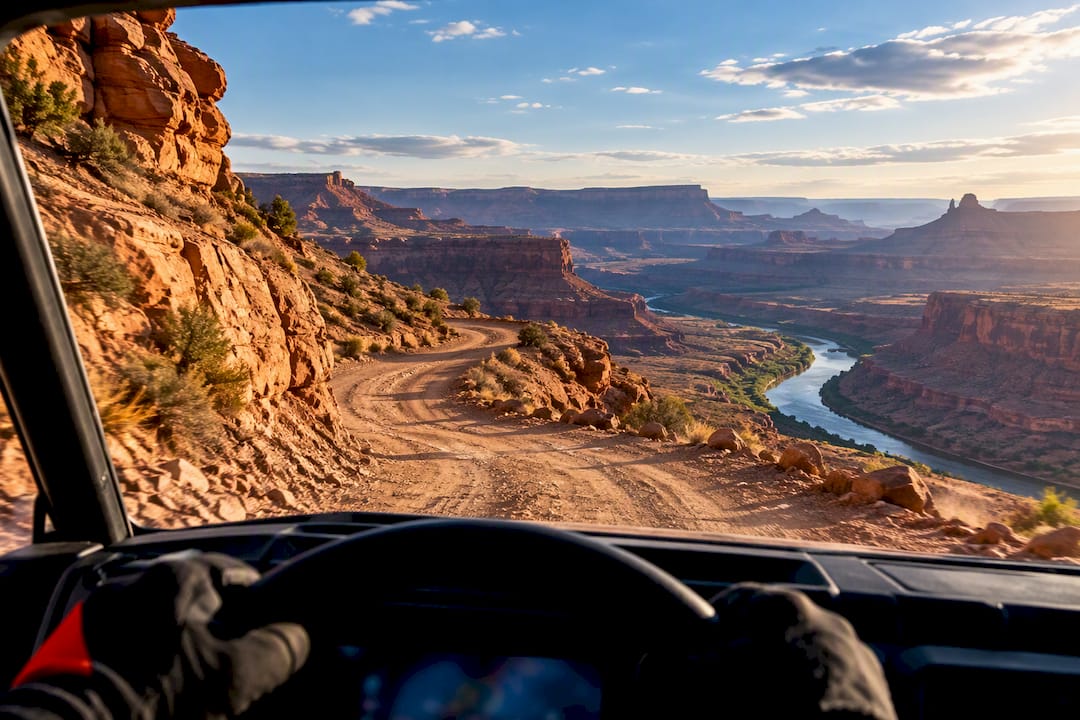
Yes, you can ride a UTV in Moab during light or scattered rain, but you should not ride into or through moving water, washes, or slot canyons under any circumstances. Set a hard turnaround time before the typical afternoon storm window (often 2 PM to 5 PM), and check the National Weather Service and park alerts before you head out. If a flash-flood watch or warning is posted, the ride is off.
Epic4x4adventures
Explore Moab With Local Guidance
Epic 4x4 Adventures combines guided Moab tours, local terrain knowledge, and built-in navigation for a more comfortable off-road experience.
Table of Contents
When Does UTV Rain in Moab Turn Dangerous?
Moab’s monsoon season runs roughly mid-July through September, and the danger window inside each storm day is narrow. Storms tend to build over the surrounding highlands and canyon rims in early afternoon, then dump their heaviest rainfall between 2 PM and 5 PM. That timing matters more than the rain gauge in front of you, because the water that floods a wash in Moab often fell miles away, over terrain you never saw get wet.
That’s the core mechanic behind a flash flood: a storm cell dumps rain on a drainage basin upstream, and the runoff funnels into canyons and washes far faster than most riders expect. The National Park Service recommends exiting canyons and washes before typical afternoon storm windows and steering clear of slot canyons entirely during monsoon season, and that guidance holds for motorized recreation just as much as hiking.
Reading radar helps you plan the day, not just react to it. Set your radar app’s range to tens of miles so you can spot storm clusters building upstream of your route, and treat yellow and red reflectivity readings as heavier rain with real flash-flood potential, according to local monsoon safety guidance. A watch means conditions are possible and you should recheck radar every 15 to 20 minutes. A warning means flooding is happening or imminent, and you should leave the drainage now.
Pro Tip: Build your ride around a firm “wheels up by noon, off the trail by 2” schedule during monsoon months. It costs you nothing on a clear day and saves your trip on a stormy one.
Which Moab Trails Handle Rain Best?
Terrain type decides whether a rainy-day ride stays fun or turns into a recovery job. Slickrock generally drains well and offers solid traction even when damp, which makes rock-dominant sections your best bet on a gray-sky day. Washes and low drainages are the opposite: they’re built to carry water, and even a modest upstream storm can send a surge through a channel that looked bone dry ten minutes earlier.
Bentonite clay is the wildcard most visitors underestimate. When it gets wet, it turns into a slick, sucking surface some longtime Moab drivers call “wet snot,” and it can bog down a UTV in a spot that was firm an hour before, according to accounts from off-road forums familiar with local terrain. Slot canyons are a hard no in any rain scenario, full stop.
Popular routes react differently to moisture:
On unsettled days, shorter rim and overlook routes closer to town give you scenery without the drainage exposure. On the trail, treat rising water, distant thunder, or a sky darkening upstream as your signal to turn back immediately, regardless of how far you’ve come.
Pre-Ride Checklist for Wet Weather
A few minutes of prep before a rainy-day ride prevents most of the trouble you’d otherwise run into on the trail.
Pro Tip: A waterproof gear checklist built for any outdoor adventure translates well to UTV prep. The core logic, dry layers, backup power, and a plan someone else knows, holds regardless of terrain.
What to Do If Water Rises Fast
If you find yourself facing rising water, the sequence matters. Stop attempting the crossing immediately, reverse away from the flow, and move to the highest solid ground you can reach.
“Turn Around, Don’t Drown” is not a slogan. It reflects the reality that skill and gear are rarely enough against a flash flood; avoidance is the only strategy that consistently works, according to the National Weather Service.
Local search-and-rescue accounts back that up. A recent storm near Moab produced runoff fast enough to sweep vehicles and trigger an extended recovery operation, with downed infrastructure delaying communications during the response, according to reporting on the missing persons search. Rescue crews cannot always reach a flooded drainage quickly, so the decision to avoid the water in the first place carries more weight than any recovery plan made after the fact.
The Guidance and Local Evidence Behind These Rules
These recommendations rest on agency guidance and documented incidents rather than guesswork. The table below summarizes the core sources.
SourceWhat It EstablishesNational Park ServiceExit washes and canyons before the 2 PM to 5 PM storm surge; avoid slot canyons in monsoon seasonNational Weather ServiceNever drive through floodwater; move to higher ground immediatelyUtah State ParksOHV registration, permits, and education requirements for state landsMoab Sun News, KUTVLocal flash-flood incidents near Moab confirm vehicles have been swept in fast-moving storms
What Permits Do You Need to Ride a UTV Near Moab?
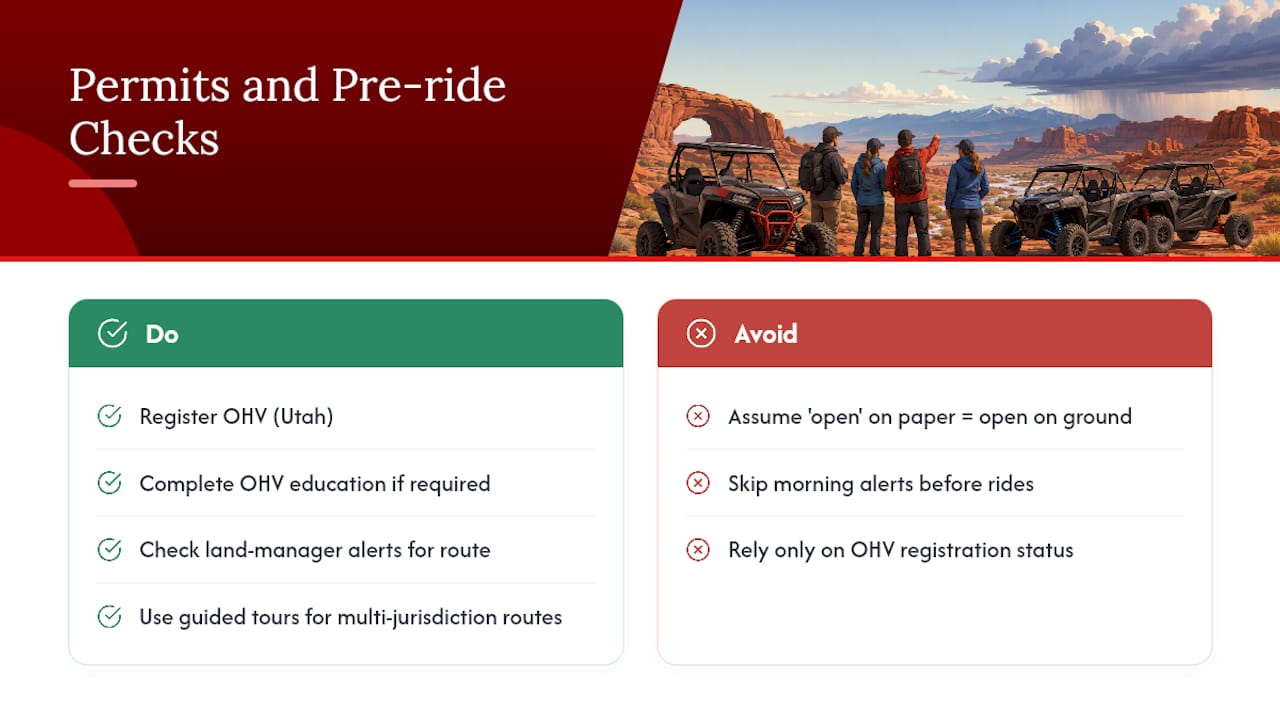
Riding legally in and around Moab starts with paperwork, not just weather awareness. Utah requires OHV registration for most off-highway vehicles operating on public land, and riders born after a certain year must complete an approved OHV education course before operating without direct supervision. Full requirements, including nonresident permit details, are laid out on the Utah State Parks OHV page, and the accompanying OHV education course covers both legal obligations and practical trail safety.
Rain doesn’t change your permit obligations, but it changes which routes those permits actually let you ride safely. Many popular trails around Moab sit on a patchwork of Bureau of Land Management, state, and National Park land, and each jurisdiction can issue its own closures after heavy rain. A trail that’s legally open on paper can still be closed on the ground if BLM or the park service flags it for flood damage or washout risk. Before a rainy-season trip, check current alerts for the specific land manager covering your planned route, not just the general OHV registration status.
Guided tours simplify this considerably, since the operator already holds the necessary land-use agreements and tracks real-time closures across multiple jurisdictions. If you’re renting and self-guiding, build a five-minute habit of checking alerts the morning of your ride, especially during monsoon months when closures can appear with little notice after an overnight storm.
How Fast Should You Ride a UTV in the Rain?
Wet slickrock and damp sand both cut into your available traction, and the instinct to compensate by driving faster is exactly backward. Slower speeds give your tires more time to find grip on each surface transition, and they give you more reaction time when a corner or drop-off looks different wet than it did dry.
A good baseline is to cut your dry-weather speed by roughly a third on wet slickrock, and by more on any muddy or clay-heavy section. Braking distances increase on wet rock, and sudden stops on a downhill grade can cause a slide rather than a controlled halt, so smooth, early braking beats last-second reactions every time.
Spacing between vehicles in your group needs to increase too. Rain reduces visibility, throws up more spray and mud from the vehicle ahead, and lengthens everyone’s stopping distance at once. Doubling your normal following distance gives the driver behind you room to react if you hit a slick patch or stop unexpectedly. On narrow shelf roads or ledge sections, that spacing also keeps a following vehicle from being caught in the same slide if the lead UTV loses traction.
Watch your line into standing water on the trail, too. Even a shallow puddle can hide a rut or a soft bentonite pocket that grabs a tire and pulls the vehicle sideways. Slow down before you reach it, not while you’re in it.
When Should You Start, Continue, or Stop a Rainy-Day Ride?
Deciding whether to ride at all starts before you leave the parking area. Check the forecast for storm probability and timing, not just a rain icon, and compare it against your planned route’s exposure to washes and drainages. Light, steady rain with no storm cells nearby is a very different risk profile than a 40 percent chance of afternoon thunderstorms over canyon country.
Once you’re moving, keep reassessing rather than committing to the original plan no matter what. A few concrete triggers should end the ride immediately:
That last point trips up more riders than the weather itself. It’s tempting to push another 20 minutes toward a viewpoint when the sky still looks clear, but the storm that floods your exit wash may already be building 15 miles upstream, out of sight. Treat your turnaround time as a hard rule, not a suggestion, and you remove the guesswork from the decision entirely.
How Do Groups Communicate Safely on a Rainy Ride?
Every UTV group needs one person with clear authority to call the ride, and that call needs to override individual enthusiasm once conditions shift. Assign that role before you leave, not mid-ride when someone’s frustrated about turning back early.
Handheld radios matter more in rain than in clear weather, since spray, engine noise, and distance between vehicles make hand signals unreliable. Agree on a small set of radio calls before you start, things like “water ahead, stopping” or “turning back now,” so everyone reacts the same way without a long explanation over a crackling channel.
Lead and tail positions should rotate responsibility, too. The lead rider watches the trail and terrain ahead; the tail rider watches for anyone falling behind or struggling with traction. If your group splits or someone’s radio goes quiet for more than a minute or two in marginal weather, that’s a stop-and-regroup moment, not a “catch up later” moment.
Guided tours remove a layer of this coordination, since the guide holds both the terrain knowledge and the authority to redirect the group instantly if a storm builds. Self-guided groups need to build that same discipline deliberately, because nobody in the vehicle behind you can read your mind about when the ride stops being fun and starts being risky.
Cleaning and Checking Your UTV After a Wet Ride
Mud and standing water do more damage after the ride than during it if you skip the cleanup. Rinse the undercarriage first, focusing on the suspension components and any spot where bentonite clay has packed into crevices, since that clay hardens like cement once it dries.
Check the air filter and intake for moisture or debris picked up during wet sections, and inspect brake components for mud packed around the calipers or drums. Wet electrical connectors deserve a look too. A quick check for corrosion or loose connections after a rainy ride catches small problems before they become trailside failures on your next trip.
Let the vehicle dry fully before storing it, and wipe down seats, floor mats, and any fabric surfaces to prevent mildew, especially if you’re renting and returning the UTV the same day. A five-minute inspection now saves a much longer conversation about wear and tear later.
A Local-Guides View on Rainy-Day Decisions
Guided operations approach rain differently than solo riders often do, mostly because the decision to stop isn’t emotional. Epic4x4adventures tracks radar throughout the day, enforces turnaround times before storm windows build, and reroutes groups toward higher-rim terrain when drainage crossings look questionable. Built-in navigation and radio contact mean a guide can redirect a route in real time rather than discovering a problem at the wash itself. That structure removes the guesswork that gets solo riders into trouble on marginal days.
Why Book a Guided Rain-Day UTV Tour Instead of Riding Solo?
Epic4x4adventures exists for exactly the kind of day this article just walked you through. When storms are possible, a guide who already knows which sections of Hell’s Revenge or Poison Spider hold up in wet weather is worth more than any checklist, because that decision gets made for you in real time instead of after you’re already committed to a wash crossing.
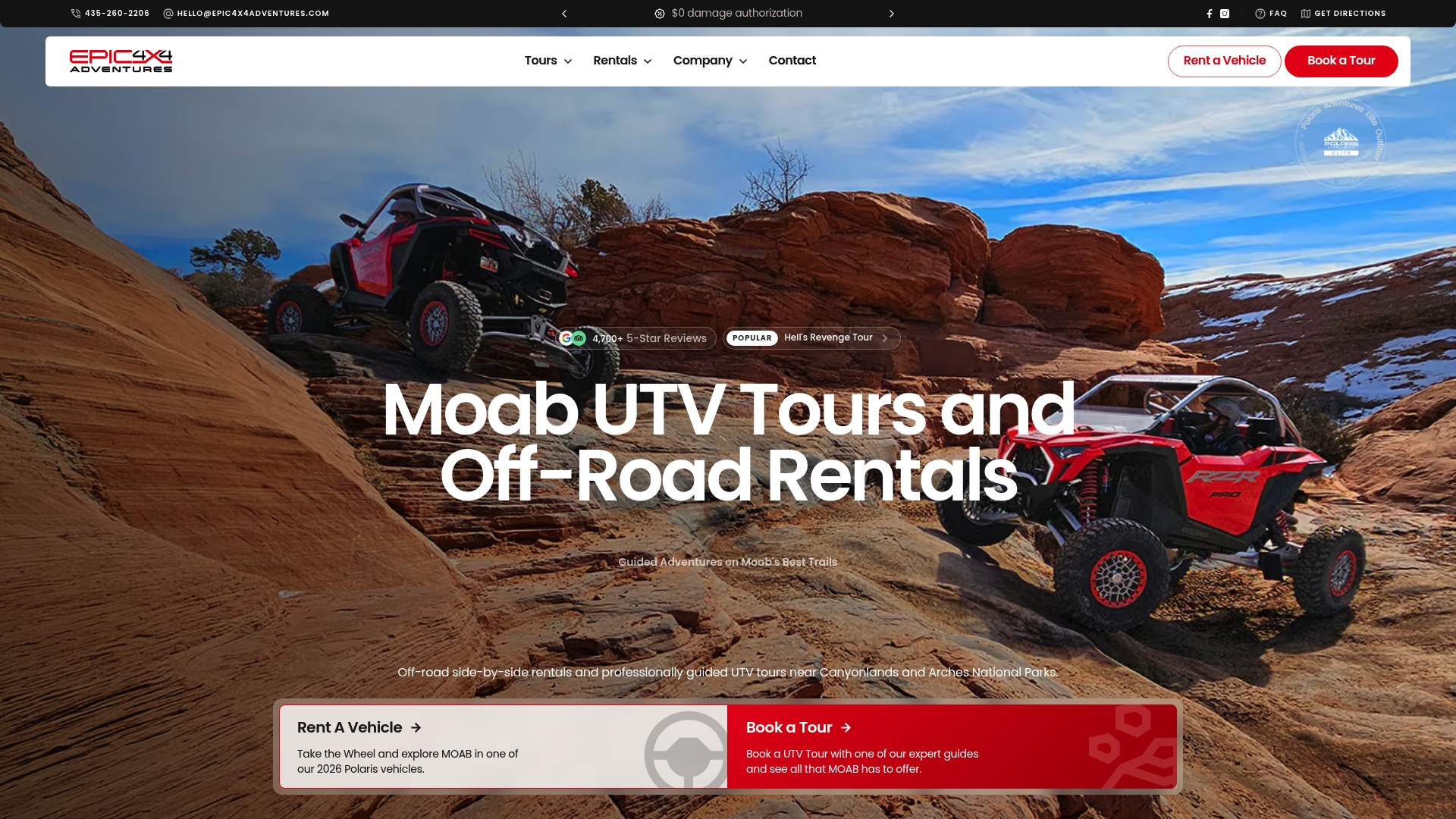
Tours operate using Polaris vehicles with built-in GPS navigation, and guides have the authority to alter routes or end rides when conditions change. If you’d rather go without a guide, the UTV rental fleet comes with the same $0 damage deposit option and climate-controlled vehicles, so a sudden downpour doesn’t mean a ruined trip. Before you book, confirm the weather and cancellation policy for your specific date, and ask what safety gear comes included.
If you want the terrain knowledge built in, browse the full guided tour lineup, including routes suited to variable weather days. Book now and mention the forecast when you call. Epic4x4adventures will help you pick a tour or rental window that keeps your trip on track no matter what the sky is doing.
Sources
FAQ
Is It Possible to Ride a UTV in Moab, Utah?
Yes, UTV riding is a major activity around Moab year-round, with trails ranging from beginner-friendly slickrock loops to advanced routes like Hell’s Revenge. Riders need a registered vehicle and, depending on age, an OHV education certificate before riding without supervision.
Can You Drive a UTV on the Road in Moab?
Some UTVs are street-legal in Utah when equipped with required lighting, mirrors, and registration, but many rental and tour UTVs are designed for off-highway use only. Check your specific vehicle’s street-legal status and any local road-use restrictions before assuming you can drive between trailheads on public roads.
Which Month Is the Rainiest in Moab?
Moab’s monsoon season runs from mid-July through September, with afternoon thunderstorms most common between 2 PM and 5 PM during those months. This is also the period with the highest flash-flood risk in washes and canyon drainages, so trip planning matters most during these weeks.
What Is Hell’s Revenge in Moab?
Hell’s Revenge is one of Moab’s best-known UTV trails, known for slickrock ledges, steep drops, and exposed rim sections near Sand Flats Recreation Area. It handles light rain reasonably well thanks to its rock-heavy surface, though steep obstacles carry higher tip-over risk when wet, and Epic4x4adventures offers a guided Hell’s Revenge tour for $336 per vehicle for riders who want local route knowledge on variable-weather days.
Recommended