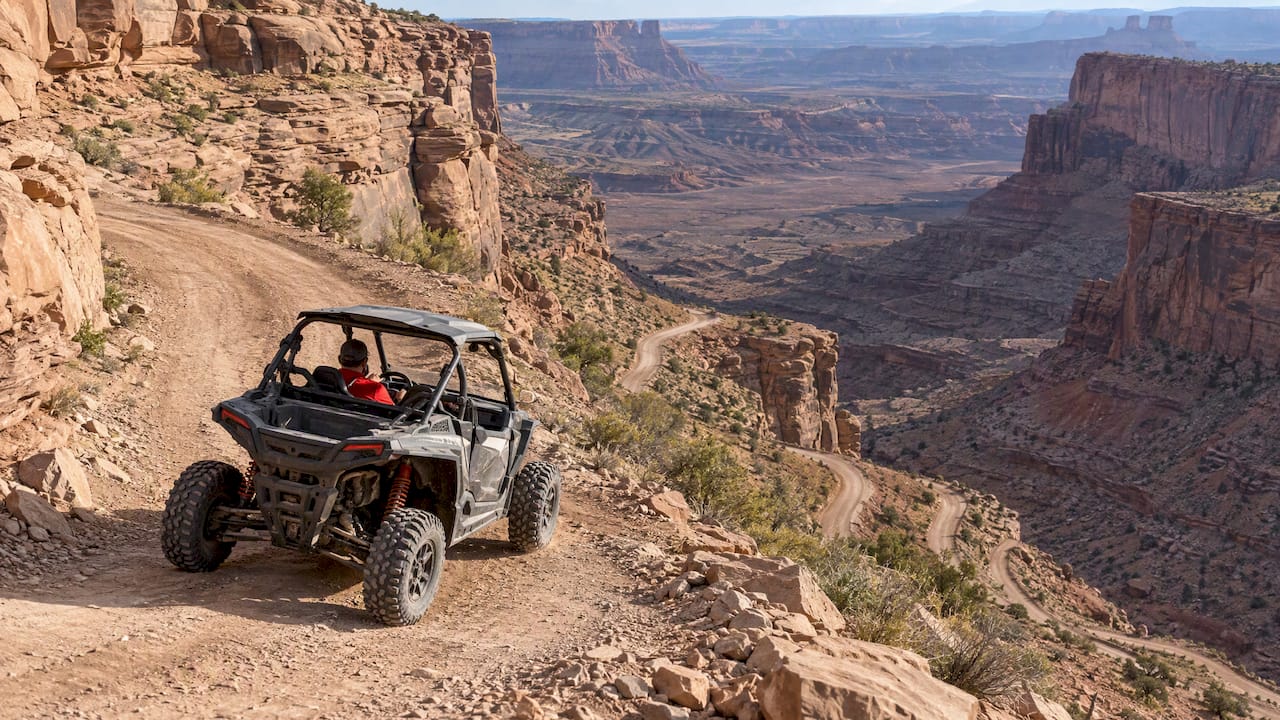
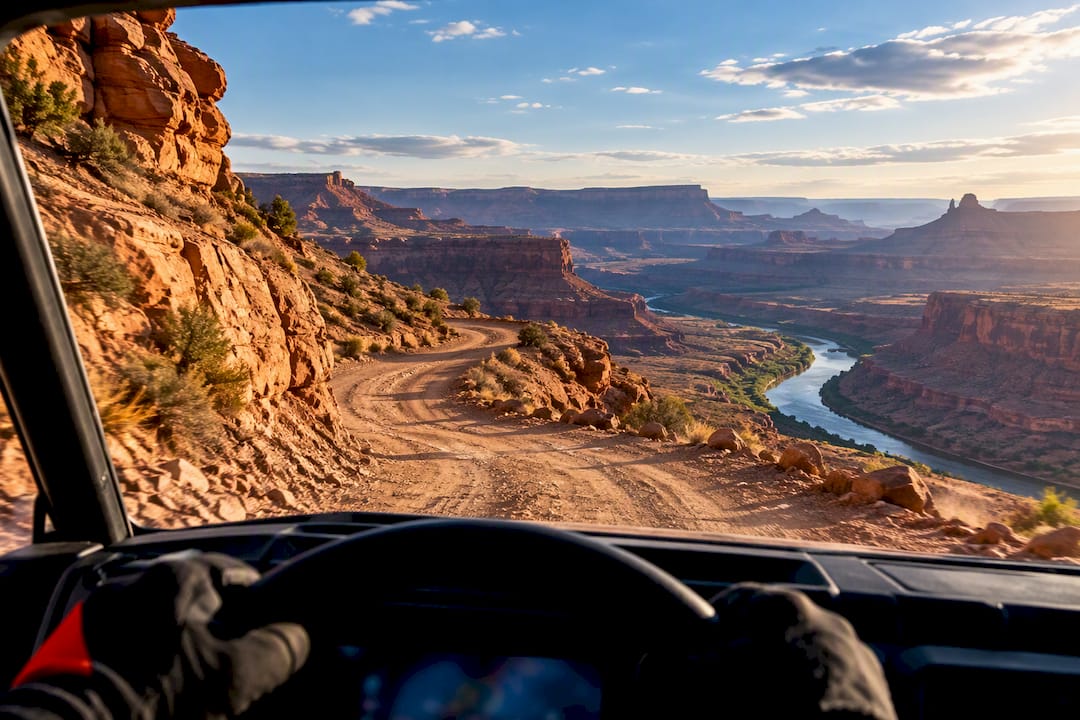
Standing at the rental counter, the choice usually comes down to two machines: a nimble UTV or a classic Jeep. Both will get you onto Moab's red rock, but they deliver very different days out, and the wrong pick can mean missing the exact trail you came for. This guide compares UTV vs Jeep rentals in Moab across capability, comfort, cost, and trail access, so you can match the vehicle to the adventure you actually want.
We rent and ride these machines on Moab's trails constantly, so the comparison below reflects what each vehicle does well in this specific terrain, not generic off-road theory. Rental terms and trail rules vary by company and can change, so confirm the details before you book.
Quick Summary
- UTVs are purpose-built for Moab's technical slickrock, offering agility, high ground clearance, and the ability to run the famous hard trails.
- Jeeps offer more enclosed passenger and cargo space and street-legal highway access, which suits sightseeing and easier trails.
- Many Moab Jeep rentals prohibit Hell's Revenge and other hard trails, while purpose-built UTVs like the Polaris RZR Pro R are made for them.
- UTVs are the better choice for technical off-road thrills; Jeeps are the better choice for long highway drives and hauling gear.
- A UTV rental from Epic 4x4 Adventures includes comprehensive insurance, while many Jeep rentals require proof of your own auto coverage.
- For national park roads, a street-legal vehicle like the Polaris Slingshot opens up Arches and Canyonlands where UTVs cannot go.
- For most Moab visitors chasing real trail adventure, a UTV is the right rental.
UTV vs Jeep: The Core Difference
A UTV, also called a side-by-side, is a compact off-road vehicle with a roll cage, bucket seats, safety harnesses, and a suspension engineered specifically for rough terrain. A Jeep is a street-legal SUV that you can drive from the highway straight onto a trail. The fundamental trade-off is this: a UTV is a specialist built for the trail, while a Jeep is a generalist that balances on-road driving with off-road capability.
In Moab, that distinction matters more than almost anywhere, because the signature terrain here is steep, technical slickrock that rewards a purpose-built machine.
Capability: Which Handles Moab's Trails Better?
For Moab's hardest, most iconic terrain, a purpose-built UTV has the edge. Machines like the Polaris RZR Pro R are engineered with long-travel suspension, high ground clearance, and the agility to pick precise lines through technical slickrock. This is exactly the kind of terrain that defines trails like Hell's Revenge and Fins and Things.
Here is the practical reality many visitors do not learn until they arrive: a large number of Moab Jeep and Bronco rental companies prohibit their vehicles on the hardest trails, including Hell's Revenge, Poison Spider, and other extreme routes, with violation fees attached. Rental Jeeps are typically restricted to easier and intermediate trails to protect the vehicle and inexperienced drivers. So if your dream is to conquer Moab's famous rock-crawling trails, a UTV is often the only rental that can legally take you there.
Jeeps still shine on their own turf. With genuine 4-low, high clearance, and lockers on the right models, a capable Rubicon handles scenic backcountry routes and moderate trails very well, and it does so while carrying more people and gear in an enclosed cabin.
Comfort and Capacity: Space, Seating, and the Ride
This is where Jeeps make their strongest case. A four-door Rubicon seats up to five, offers an enclosed cabin with air conditioning, and has room for coolers, day packs, and gear. For a family that wants to sightsee, picnic, and explore at a relaxed pace, that space and comfort are genuinely appealing.
A UTV trades cabin space for agility and an open, immersive ride. You feel the terrain, the air, and the scenery directly, which is the whole point for many riders. Modern UTVs seat two to five depending on the model and include safety harnesses and capable suspension that smooths out rough ground. The experience is more visceral and more connected to the trail than the view from inside a Jeep.\
Trail Access: Where Each Vehicle Can Legally Go
Access is the deciding factor for many visitors, so weigh it carefully:
- Technical slickrock trails (Hell's Revenge, Poison Spider): A purpose-built UTV is built for these, while most rental Jeeps are prohibited from them.
- Easy and moderate backcountry trails (Shafer Trail, Gemini Bridges, Hurrah Pass): Both vehicles handle these well, and a Jeep's comfort is a plus.
- National park roads (Arches, Canyonlands): UTVs are generally not street-legal for park roads, so a street-legal vehicle is required. A Jeep can drive park roads, and so can a Polaris Slingshot.
- Highway driving between trailheads: A Jeep drives anywhere on the highway, while a UTV usually needs to be trailered or stay on connected trail systems near town.
The takeaway is simple. Choose a UTV when the trail itself is the destination. Choose a street-legal vehicle when highway miles and national park roads are part of the plan.
Cost and What Is Included
Headline rental prices for UTVs and Jeeps in Moab are broadly comparable, but the fine print differs in ways that affect your real cost and risk:
- Insurance. Many Jeep rentals require proof of your own American or Canadian auto insurance and apply a damage deposit that can reach $2,000. Epic 4x4 Adventures includes comprehensive coverage in its UTV rentals, with $15,000 in liability and $25,000 in medical protection per rider.
- Trail limits. A lower Jeep rate can come with strict trail restrictions, so you may pay for a vehicle that cannot reach the trail you wanted.
- Fuel and returns. Both vehicle types are typically rented full and returned full, and some require washing on return.
When you factor in coverage and trail access, the value comparison often favors a well-equipped UTV rental for the kind of trail riding most visitors come to Moab to do.
How to Choose Between a UTV and a Jeep in Moab
Work through these questions to land on the right rental:
- Identify your must-do trail. If it is Hell's Revenge or another technical route, a UTV is likely your only rental option.
- Count your group and gear. If you need to seat five comfortably with coolers and packs, a Jeep's enclosed space may suit you.
- Decide if national parks are on the list. If you want to drive Arches or Canyonlands roads, you need a street-legal vehicle.
- Check the insurance terms. Confirm whether coverage is included or whether you must provide your own and post a large deposit.
- Match the ride to the experience you want. Choose a UTV for an immersive, agile trail thrill, or a Jeep for comfortable sightseeing and gear hauling.
Why a UTV Rental From Epic 4x4 Adventures Wins for Most Visitors
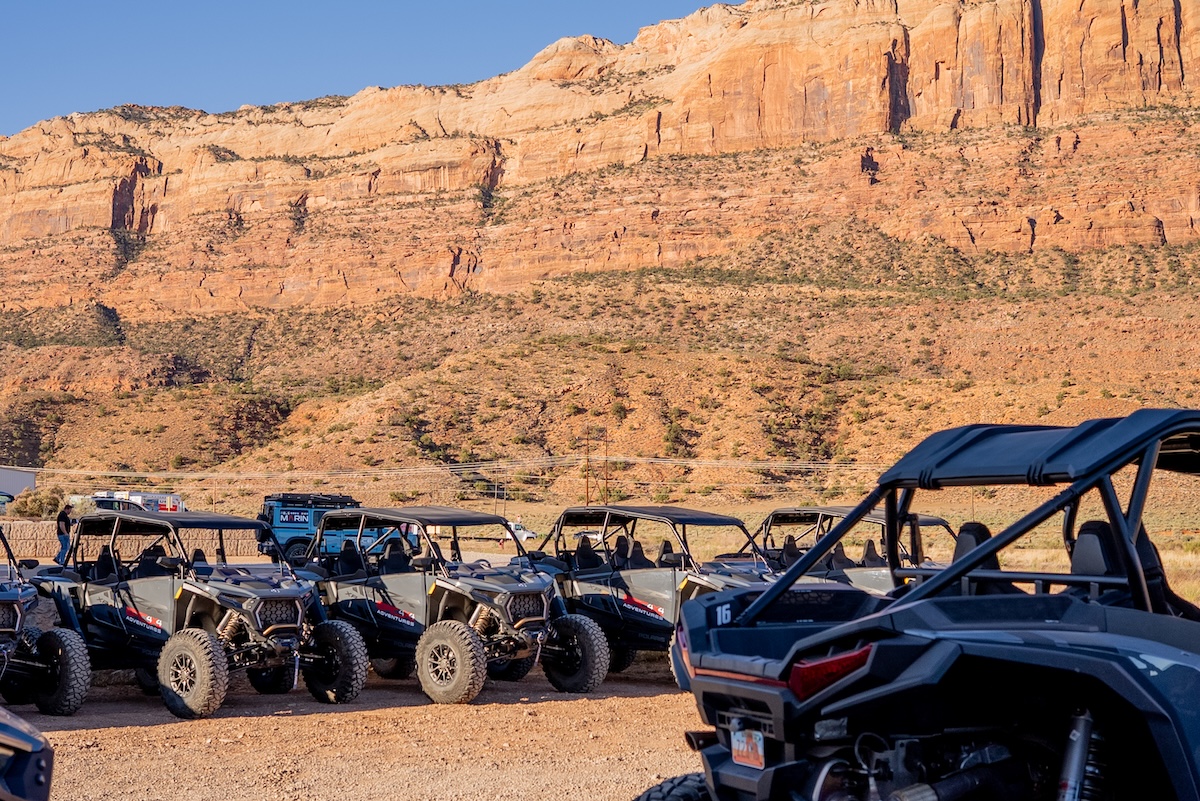
For the majority of people who come to Moab wanting genuine off-road adventure, a UTV is the right call, and Epic 4x4 Adventures rents the right one. We rent current-model Polaris machines, including the RZR Pro R that is naturally suited to Moab's demanding terrain, with a fleet that turns over twice a year so you never get a worn-out unit. As a Polaris Adventures Elite Outfitter, our rentals come with curated GPS routes built around your preferred riding style, instead of a photocopied paper map and a wave goodbye.
Every UTV rental includes comprehensive insurance with $15,000 in liability and $25,000 in medical coverage per rider, 24/7 roadside assistance, and a full vehicle orientation. A $0 deposit option keeps booking simple, and self-drive renters need to be at least 25 years old. If your plans include national park roads, our Polaris Slingshot rentals give you street-legal access to Arches, Canyonlands, and the scenic byways where UTVs cannot go.
That combination means you spend your time on the trail you actually wanted, properly covered and properly equipped.
Conclusion: Match the Machine to the Adventure
The UTV vs Jeep decision in Moab comes down to what you want from the day. A UTV is the specialist, built for the technical slickrock and the famous hard trails, and often the only rental allowed on them. A Jeep is the comfortable generalist, better for hauling gear, seating a full group, and combining highway and park driving with easier trails. For most visitors chasing real off-road thrills, the UTV is the smarter rental.
When you want a UTV that is genuinely built for Moab, with coverage and curated routes included, call Epic 4x4 Adventures at 435-339-2982 or email hello@epic4x4adventures.com. We will match you to the right machine for your trails, your group, and your plans.
Frequently Asked Questions
Is a UTV or Jeep better for Moab?
It depends on your goals. A UTV is better for Moab's technical slickrock and famous hard trails like Hell's Revenge, since it is purpose-built for that terrain and most rental Jeeps are prohibited from those trails. A Jeep is better for hauling gear, seating a full group, and combining highway and national park driving with easier trails.
Can you take a rental Jeep on Hell's Revenge in Moab?
Usually not. Many Moab Jeep and Bronco rental companies prohibit their vehicles on Hell's Revenge and other hard trails, often with violation fees. A purpose-built UTV like the Polaris RZR Pro R is designed for that terrain, so a guided tour or UTV rental is typically how visitors experience Hell's Revenge.
Are UTVs allowed in Arches and Canyonlands National Parks?
UTVs are generally not street-legal for national park roads, so they cannot be driven into Arches or Canyonlands. To explore park roads, you need a street-legal vehicle. A Polaris Slingshot, which Epic 4x4 Adventures rents, provides street-legal access to those parks and the surrounding scenic byways.
Do Moab UTV rentals include insurance?
It varies by outfitter. Some UTV rentals include comprehensive coverage, while many Jeep rentals require proof of your own auto insurance plus a large deposit. Epic 4x4 Adventures includes vehicle damage protection, $15,000 in liability, and $25,000 in medical coverage per rider in its UTV rentals.
Which is cheaper to rent in Moab, a UTV or a Jeep?
Headline prices are broadly comparable, but the true cost depends on what is included. A cheaper Jeep rate may come with trail restrictions, required personal insurance, and a deposit up to $2,000. A UTV rental that includes coverage and access to technical trails can offer better overall value for trail-focused visitors.